










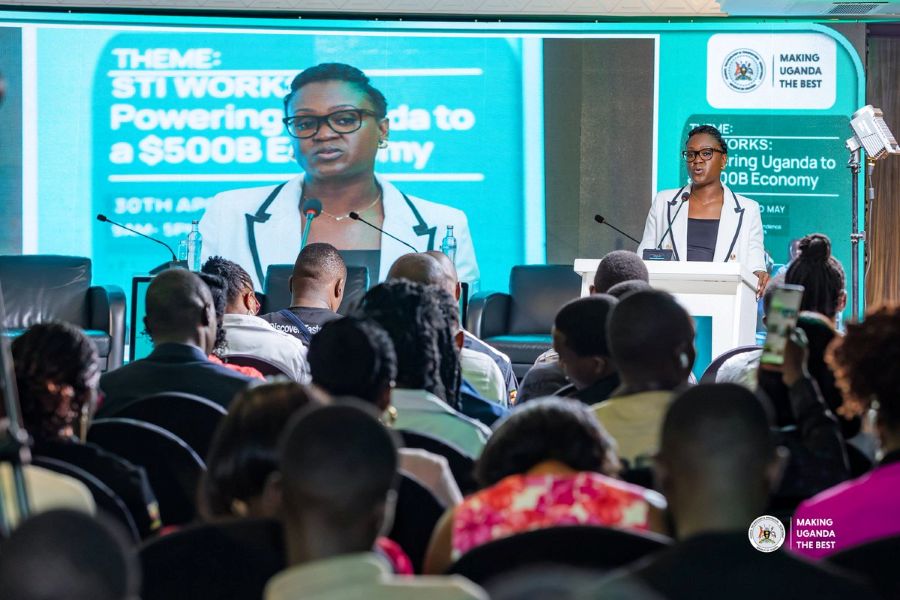
Ugandan innovators have a chance to secure up to Shs300 million in project funding following the launch of the National Science Week 2026 Innovation Challenge by the Science, Technology and Innovation (STI) Secretariat under the Office of the President.
The week-long “Future Makers” hackathon, running from April 28 to May 3, is positioning itself as a results-driven platform aimed at turning ideas into tangible, market-ready products capable of addressing Uganda’s most pressing economic challenges.
According to Cathy Mwumuza, Superintendent of Support Services at STI and lead for National Science Week, this year’s challenge is intentionally designed to prioritise execution over theory.
“Most times hackathons are known for just producing tech apps, but we want solutions that can be built into real products. Not a wish list, but something practical that can go to market,” she said.
The competition attracted more than 250 applications from innovators across the country, reflecting a growing appetite for problem-solving through science and technology. However, only 10 teams were shortlisted to participate in the intensive hackathon, with three top teams set to walk away with up to Shs300 million each in seed funding.
“That funding is not for consumption—it is to build. We are supporting innovators to move from idea to market,” Mwumuza emphasised.
Participants are tackling a wide range of real-world challenges, including road infrastructure inefficiencies such as pothole management, electricity grid optimisation, post-harvest losses in agriculture, and early detection systems for disease outbreaks.
Organisers say the focus is on developing functional prototypes or Minimum Viable Products (MVPs), alongside clear concept notes and pitches that demonstrate scalability and economic impact.
Among the innovators is engineer Benjamin Ojede, team lead of the Juiza project, which is developing a digital platform to enable seamless payment for electric vehicle charging across different stations.
“With rising fuel prices, electric vehicles present a viable solution. We are already seeing electric bikes and buses in Uganda. Building solutions around this space can address key challenges locally and across Africa,” he said.
Ojede, however, pointed to limited exposure as a persistent barrier for many innovators.
“Most solutions are built for small communities because we lack exposure to larger markets. Opportunities like this help us think beyond borders and build globally competitive products,” he added.
In the health technology space, Maureen Kisaakye Malinga, co-founder of Impala Health Tech Research Company Limited, is using the platform to refine a solution aimed at improving diagnostic services.
Her innovation connects smaller health facilities to laboratories to ensure proper testing before treatment, a critical step in tackling antimicrobial resistance.
“Antimicrobial resistance is a global threat. Our solution ensures patients are properly diagnosed before treatment, which is key in addressing this challenge,” she said.
Malinga noted that limited capital and slow adoption of digital solutions in healthcare remain major hurdles for startups, but expressed optimism about the opportunities presented by the challenge.
“This platform gives us visibility and a chance to secure funding that can help us scale our innovation into a viable product for Uganda and beyond,” she said.
Beyond the prize money, winning teams will gain access to mentorship, strategic partnerships, and exhibition opportunities during National Science Week, providing a pathway to commercialisation.
The STI Secretariat says the initiative is part of a broader government strategy to leverage science and technology as a driver of economic transformation, job creation, and industrial development.
By placing Shs300 million on the table, the government is betting on local innovation to deliver practical solutions with measurable impact.