











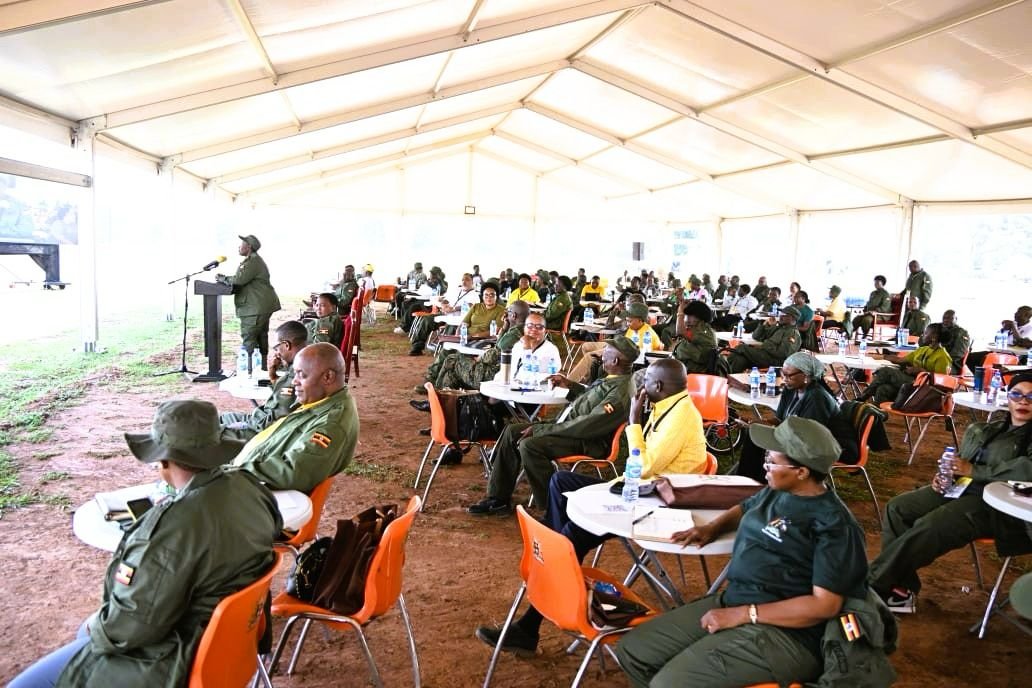
Newly appointed Cabinet Ministers have been urged to strengthen oversight of government programmes while deliberately avoiding interference in day-to-day administrative and operational processes to safeguard accountability and curb corruption.
The call was made by Deputy Inspector General of Government, Anne Twino Muhairwe, during her presentation to ministers attending an induction retreat at Nali in Kyankwanzi District.
Addressing ministers on “The Mandate of the Inspectorate of Government and the Role of the Executive in the Fight Against Corruption,” Twino emphasised what she described as the “Eyes-on, Hands-off” principle—encouraging political leaders to supervise institutions without taking over functions assigned to technical officers.
She cautioned that when ministers cross into operational responsibilities, they risk creating conflicts of interest and opening avenues for corruption.
“The law assigns the responsibility of recruitment processes, procurement award decisions, and other day-to-day administrative functions to accounting officers. Where a Minister identifies wrongdoing, the appropriate action is to refer the matter to the competent authority rather than assume functions assigned to others,” she said.
Twino warned that weakening institutional safeguards could reverse years of governance reforms and expose public systems to abuse.
“Strong oversight and respect for institutional processes must go hand in hand. A minister who remains independent retains the moral authority necessary to supervise others and demand accountability,” she said.
She explained that oversight and institutional integrity should not be viewed as competing responsibilities but as complementary pillars necessary for effective anti-corruption efforts.
At the same time, the Deputy IGG challenged ministers to exercise active political leadership by regularly monitoring projects and ensuring government programmes deliver visible results to citizens.
“Political leadership becomes more meaningful when it translates into visible improvements in the lives of people. Ministers must ask questions. They must challenge poor performance. They must insist on results,” Twino said.
She reminded the ministers that citizens judge government performance based on tangible outcomes rather than promises, urging them to strengthen monitoring and evaluation mechanisms across public institutions.
Twino also called on ministers to place public interest above personal ambition and lead with integrity, accountability and commitment to national development.