










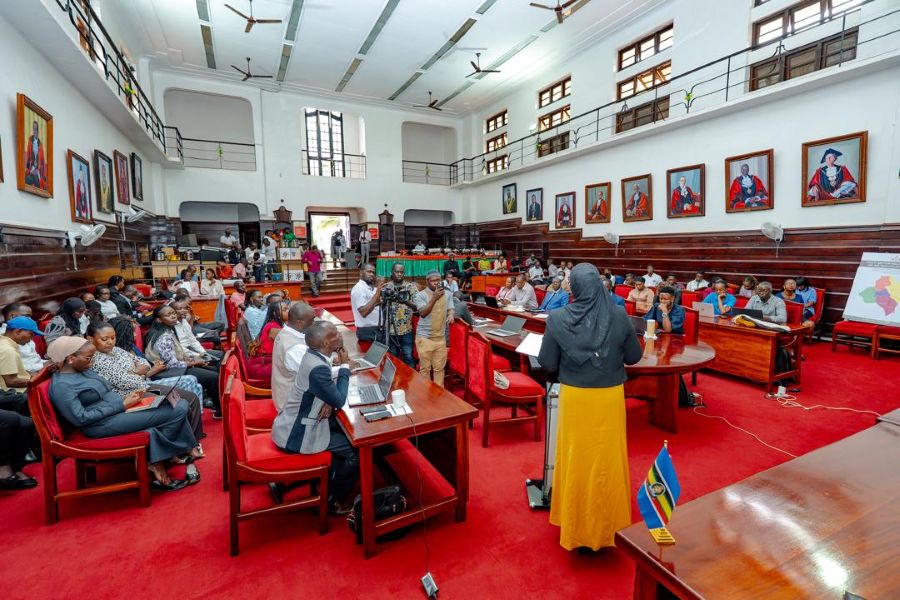
Kampala Capital City Authority (KCCA) has convened a high-level public dialogue bringing together multi-sectoral stakeholders to strengthen collective efforts in tackling air pollution in Uganda’s capital.
Held under the theme “Clean Air, Shared Responsibility: Advancing Multi-Sector Action for Urban Air Quality,” the dialogue attracted key institutions including the Ministry of Energy and Mineral Development, Ministry of Works and Transport, National Environment Management Authority (NEMA), Makerere University, Kyambogo University, Solutions for People, and members of the media. Participants committed to a unified approach anchored in accountability and coordinated action.
The engagement aligns with the KCCA Clean Air Action Plan (2025–2030), which targets a 35–55 percent reduction in harmful particulate matter (PM2.5).

The plan prioritizes stricter emissions controls, investment in green infrastructure, and increased adoption of renewable energy, alongside improved enforcement and air quality monitoring systems.
Air pollution remains a major global and national concern, contributing to an estimated 7 million deaths annually worldwide and nearly 30,000 deaths each year in Uganda. In Kampala, the problem is largely driven by vehicle emissions, open waste burning, biomass fuel use, and expanding industrial activity—factors that continue to strain public health systems.
KCCA Executive Director Sharifah Buzeki called for urgent and coordinated intervention, warning that worsening air quality threatens both public health and the city’s long-term sustainability.
“Kampala’s rapidly growing population will only intensify air pollution challenges if we fail to act collectively,” she said, adding that future efforts will focus on expanding monitoring networks, enhancing data sharing, and strengthening community engagement.
Director of Public Health and Environment at KCCA, Dr. Sarah Zalwango, emphasized shared responsibility across all sectors. “Improving air quality requires deliberate action from individuals, institutions, and government alike,” she noted.
District Medical Officer for Makindye Division, Dr. Alex Ndyabakira, revealed that approximately 20 percent of deaths in Kampala are linked to air pollution. He highlighted KCCA’s evidence-based interventions since 2018, aimed at delivering measurable public health outcomes.

At the same forum, Eng. Bainomugisha, Professor of Computer Science at Makerere University and founder of AirQO, urged residents to adopt air quality awareness practices. He pointed out that areas such as Kawempe frequently record poor air quality, with pollution peaks occurring between 4:00 a.m. and 10:00 a.m., and again from 6:00 p.m. to 2:00 a.m.
KCCA Deputy Executive Director for Public Health and Environment, Dr. James Bond Kunobere, reiterated the importance of collective responsibility. “KCCA cannot address this challenge alone. Every stakeholder has a role to play in improving the air we all depend on,” he said.
The Authority continues to roll out interventions including expanded air quality monitoring, promotion of cleaner transport systems, improved traffic management, and development of non-motorised transport corridors. Additional initiatives include tree planting, enhanced waste management, and urban planning approaches designed to reduce pollution exposure. Plans are also underway to introduce electric buses as part of efforts to ease congestion and cut emissions.
In her closing remarks, Sharifah Buzeki stressed that clean air is fundamental to a healthy and livable city, calling for sustained partnerships and increased public awareness to safeguard Kampala’s environment.