











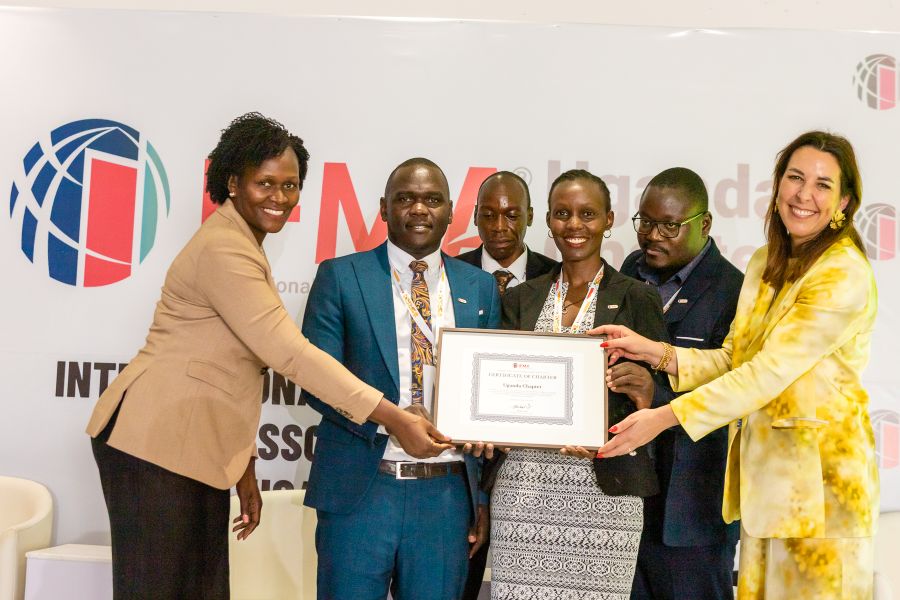
The International Facility Management Association (IFMA) has officially launched its Uganda chapter, marking a significant step toward professionalising the country’s facility management sector.
The launch brings Uganda into IFMA’s growing global network, making it the association’s fourth chapter in Africa.
Speaking at the launch, the Commissioner for Housing Development and Estate Development in the Ministry of Lands, Irene Umoja, welcomed the establishment of the Uganda chapter, describing it as a major milestone for the sector.
“The ministry looks forward to working closely with IFMA International and the Uganda chapter to strengthen facility management practices and ensure Uganda’s infrastructure is well managed, sustainable, and delivers long-term value,” Umoja said.
She also reflected on the government’s divestiture of properties in the 1990s, noting that the policy shift at the time was driven by fiscal pressure as government struggled to sustain aging and inefficiently managed buildings.
However, she emphasized that the underlying challenge was not ownership, but the absence of structured facility management systems capable of sustaining public infrastructure over time.
“The challenge was not ownership alone but management of facilities,” she said, adding that Uganda’s rapid urbanisation now demands a lifecycle approach where maintenance and operational planning begin at the design stage.
Umoja stressed that under Vision 2040 and the National Development Plan IV, government is investing heavily in infrastructure, but warned that construction without maintenance planning risks repeating past inefficiencies.
She further highlighted ongoing regulatory reforms, including the Building Control Amendment Act 2025, the Valuation Act, and the proposed Real Estate Bill, all aimed at strengthening safety, transparency, and professionalism in the built environment.
IFMA Managing Director Lara Paemen said the expansion reflects increasing demand for structured facility management across the continent.
“We are very proud to launch the IFMA Uganda chapter today. It is our fourth chapter in Africa,” she said, noting that the region holds significant potential for growth in the profession.
Paemen said the new chapter will focus on raising awareness of facility management as a profession while standardising and professionalising the sector in Uganda.
She explained that many people working in buildings and infrastructure are already performing facility management roles without formal recognition.
“There are different levels of maturity when we talk about facility management, and many people do not even realise that they are already working within the facility management industry,” she said.
The Uganda chapter will aim to bring professionals together, promote training, and build a structured industry aligned with global standards.
“We want to professionalise, standardise, and grow the FM industry in Uganda,” Paemen added.
She said IFMA will support the development of local professionals through established international frameworks and training programmes, drawing on experience from long-standing chapters in countries such as Nigeria and Ghana.
IFMA Uganda Chapter President Henry Mulindwa said the association will support both government and private sector institutions in addressing long-standing gaps in infrastructure management.
He noted that many developers and institutions continue to prioritise construction while neglecting sustainability and operational efficiency.
“People rush to construct expensive infrastructure but pay little attention to its management, sustainability, and long-term value,” he said.
Mulindwa emphasized that the chapter will promote international standards such as ISO 41000 and introduce structured training and certification programmes, including Facility Management Professional qualifications, to build a skilled workforce.
He added that institutions such as the National Social Security Fund (NSSF), which already has certified facility management professionals, provide a model that can be replicated across government and the private sector.
“This is what our country needs—professionals who manage what already exists and ensure what is being developed delivers long-term value,” he said.
Mulindwa also noted that IFMA Uganda is the fourth chapter in Africa, pointing to more mature chapters in countries such as Nigeria and Ghana as benchmarks for industry growth.
Broll Uganda Managing Director Moses Lutalo, who is also a member of IFMA, said the launch marks the first formal effort to professionalise facility management in Uganda.
He defined facility management as the coordination of building systems, people, and support infrastructure to ensure safety, efficiency, and optimal performance.
“Facilities management involves systems like air conditioning, lifts, generators, security, cleaning, and catering—services that ensure a building operates efficiently and safely,” he said.
Lutalo contrasted facility management with property management, noting that while property management largely focuses on rent collection and administration, facility management goes further to protect asset value, reduce operational costs, and ensure long-term building performance.
He stressed that modern construction projects increasingly require facility management input at the design stage to ensure buildings perform effectively over decades.
“Facilities managers understand how buildings will perform over 40, 50, or even 100 years. That input is critical at the planning stage,” he said.
Lutalo added that IFMA Uganda aims to bring together professionals across sectors to align local practice with global standards and improve investor confidence in Uganda’s built environment.
He also highlighted the need to shift from reactive maintenance to preventive systems that anticipate failures and reduce long-term operational costs.