








Government has tasked Uganda’s diplomatic missions abroad with prioritising the search for export markets for products produced under the Parish Development Model (PDM), saying access to international buyers is critical to transforming increased production into household incomes and economic growth.
Speaking at the close of the Ministry of Foreign Affairs’ Annual Retreat on the implementation of Uganda’s Economic and Commercial Diplomacy (ECD) Strategy, Acting Minister of Foreign Affairs Haruna Kyeyune Kasolo said Uganda’s embassies must evolve from traditional diplomatic outposts into economic centres that connect local producers to global markets.
“Our missions abroad are not simply Uganda’s political representatives. They are increasingly this country’s commercial frontline,” Kasolo said.
He said diplomats should prioritise promoting Ugandan products, including coffee, milk, fish, fruits, matooke and other agricultural commodities, during international engagements.
“It is the promotion of Ugandan products abroad, especially coffee, milk and other products. There is a lot of demand there, but no one is able to promote these products,” he said.
Kasolo linked the directive to the government’s Parish Development Model, arguing that the programme can only achieve its objective of moving households into the money economy if products generated by beneficiaries are connected to profitable markets.
“Many people think PDM is just a domestic programme. That would be a mistake. Economic and Commercial Diplomacy and PDM are two ends of the same value chain,” he said.
The minister said more than 400 beneficiaries in every parish have already received PDM funds, with many investing in coffee, fruit production and other agricultural enterprises.
“Now it is our duty, using Economic and Commercial Diplomacy, to ensure that these products get markets abroad,” he added.
Kasolo said Uganda’s missions should identify international buyers, investors and value-addition partners while working with the Ministries of Agriculture and Local Government to link export opportunities with producer groups across the country.
However, he cautioned that securing markets must be matched with consistent production to avoid supply shortages.
“We are pressurising our Heads of Mission abroad to look for markets for our products, but government agencies here must ensure there is consistency in production because we can get markets but have nothing to supply,” he said.
The Acting Minister also directed diplomats to focus on measurable economic outcomes rather than activities.
“Results-based reporting should be measured in contracts, investments, tourist arrivals and jobs—not meetings attended,” he said.
The Permanent Secretary and Secretary to the Treasury, Ramathan Ggoobi, echoed the call, saying Uganda’s foreign missions must become engines of economic growth.
“Economic diplomacy is no longer a polite supplement to political duties; it is the frontline of Uganda’s economic transformation,” Ggoobi said.
He urged diplomats to strengthen their expertise in trade analytics, investment mobilisation and investor aftercare, saying foreign policy must now be measured by tangible economic results.
“Foreign policy now carries an explicit economic mandate—one measured in dollars of investments secured, product volumes and value exported, number of tourists attracted and receipts brought into the country,” he said.
Ggoobi added that government funding for missions abroad would increasingly be linked to measurable performance.
“Budget prioritisation will directly follow verifiable performance,” he said.
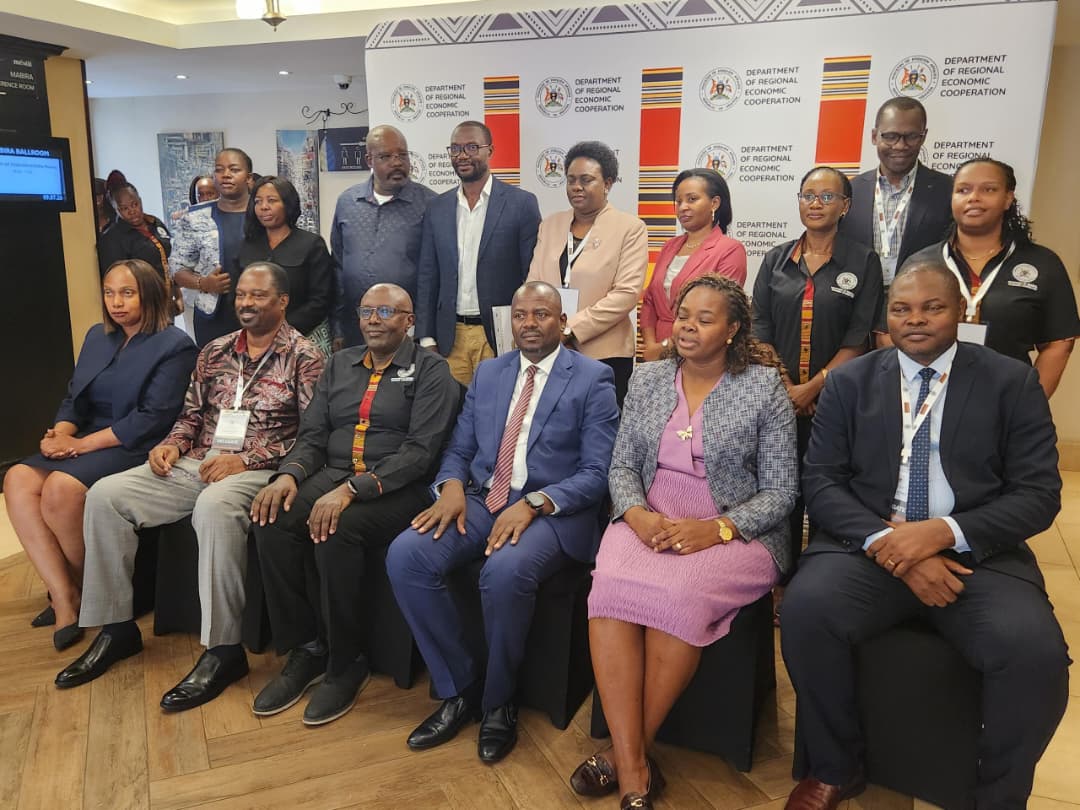
The four-day retreat, held from July 6 to 9 under the theme “Strengthening Institutional Collaboration for Effective Economic and Commercial Diplomacy Implementation,” brought together officials from the Ministries of Foreign Affairs, Finance, Tourism and Energy, as well as Heads of Uganda’s Missions abroad.
Participants reviewed strategies aimed at strengthening trade promotion, investment attraction, market access and private-sector participation under Uganda’s Tenfold Growth Strategy.