










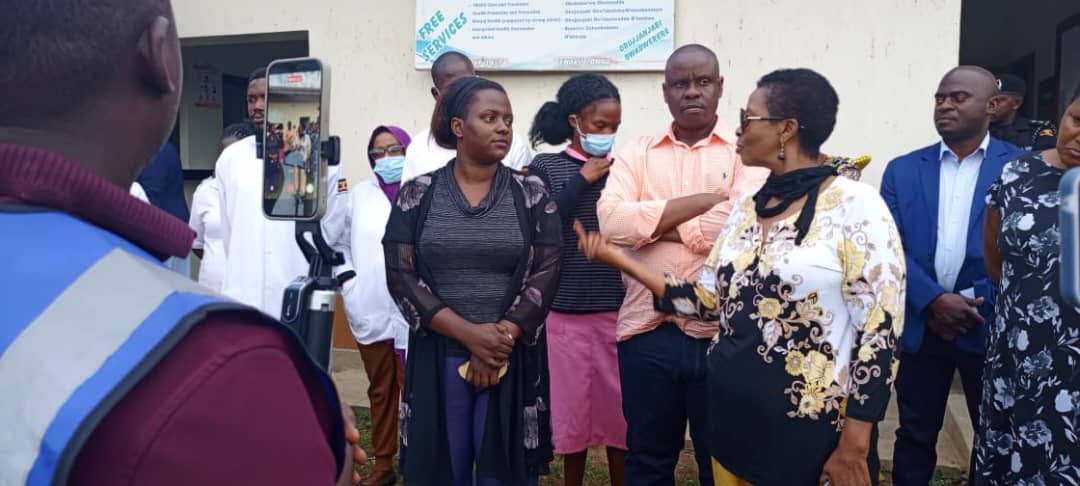
The Uganda Medical Association (UMA) has raised concerns over the manner in which recent hospital inspections led by Local Government Minister Balaam Barugahara and State Minister for Local Government Justine Nameere have been conducted, warning that some methods used could violate patient privacy and undermine the dignity of health workers.
In a statement, UMA said it supports efforts to improve accountability in public health facilities and address challenges such as corruption, extortion, absenteeism, ghost workers and neglect of duty.
However, the association said its concern was not about the objective of the inspections but the approach adopted.
“Our concern is with method, not motive. Recent inspections have brought security details and television cameras into wards, subjected health workers to public interrogation, issued on-the-spot removal orders, and called for arrests before allegations were properly examined,” UMA said.
The doctors’ body warned that such practices could weaken public confidence in the health system rather than improve healthcare delivery.
UMA argued that hospital wards should remain private spaces where patients receive treatment with dignity and confidentiality.
“A hospital ward is not a construction site to be toured for cameras. It is where people are sick, undressed, afraid and at their most exposed,” the association stated.
The association said filming patients in wards, maternity units and consultation rooms without informed consent violates patient rights under the Patients’ Rights and Responsibilities Charter, the Data Protection and Privacy Act, and constitutional protections on privacy.
“Lawful inspection powers do not extend to turning sick Ugandans into a public spectacle,” UMA said.
On allegations of absenteeism among health workers, UMA said inspectors should first verify duty rosters, leave records, night-duty schedules and on-call arrangements before drawing conclusions.
“Finding a health worker away from a station at a given hour proves nothing on its own,” the association said.
UMA noted that healthcare workers are entitled to lawful rest and leave, including compensatory rest after night duty, annual leave, sick leave, maternity and paternity leave, adding that such provisions should not be mistaken for indiscipline.
The association also attributed some challenges in public health facilities to understaffing, inadequate medicines and shortages of essential equipment.
UMA said referrals made by health workers are sometimes necessary when facilities lack required services.
“A clinician who refers a patient elsewhere for a missing test or medicine is doing the only safe thing available to them, not extorting money from a patient,” the association said.
The doctors’ body further criticised public arrests and threats of arrest during inspections, saying complaints should trigger investigations rather than immediate assumptions of guilt.
“A complaint from a patient or community member deserves to be taken seriously. It is a signal to investigate, not a finding of guilt,” UMA said.
UMA has called for a joint inspection framework between the Ministries of Local Government and Health to protect patient confidentiality, restrict filming in active clinical areas, verify attendance records before accusing staff of absenteeism, and ensure disciplinary measures follow due process.
The concerns come after Health Minister Dr. Chris Baryomunsi commented on the inspection approach during a recent surprise visit to Mbarara Regional Referral Hospital, saying government inspections should focus on identifying and solving challenges rather than making arrests.
Baryomunsi called for a system of supportive supervision where inspections are used to guide health workers, improve service delivery and help facilities address operational challenges.