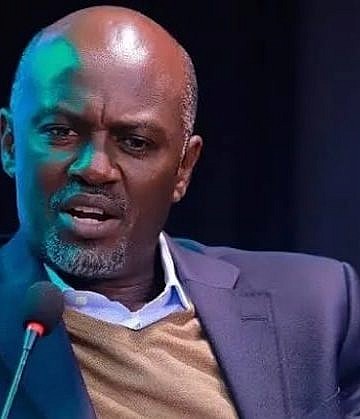










Government has announced a tougher policy for the implementation of road infrastructure projects, declaring that no new civil works contracts will be awarded unless at least 85 percent of the required land has been acquired before construction begins.
The new directive was announced by the Minister of State for Kampala Metropolitan Affairs, Kabuye Kyofatogabye, during an inspection of road projects under the Greater Kampala Metropolitan Area Urban Development Programme (GKMA-UDP) in Wakiso District.
Kyofatogabye said the move is intended to eliminate costly delays caused by land acquisition and utility relocation, which have become a major source of project extensions and escalating construction costs.
“This time round, we are not going to procure any more civil works contracts where land acquisition is not beyond 85 percent. Some people were proposing 75 percent, but I said no. It should be between 85 and 90 percent because I don’t want to hear these stories again,” he said.
He directed local governments and implementing agencies to ensure that land acquisition and the securing of rights of way are substantially completed before contractors are allowed onto project sites.
“For any new projects you are preparing, whether you have money or not, prepare, acquire the land and secure the right of way in advance. If the road is four kilometres, come to us when at least 3.8 kilometres have already been secured. Secondly, relocate the utilities before the contractor begins work,” Kyofatogabye said.
The minister accused some consultants and project managers of deliberately delaying projects to create opportunities for contractors to claim compensation arising from time extensions.
“There is a trick they play. They deliberately cause delays so that contractors later demand compensation for lost time. That compensation comes with contract variations of almost 15 percent. We must open our eyes and stop this practice,” he said.
According to Kyofatogabye, delays caused by unresolved land acquisition and utility relocation have cost the government billions of shillings through contract variations.
“I don’t want to hear more stories of wasting six months. If we are not careful, government will continue losing billions through unnecessary variations,” he added.
The minister also renewed his call for communities to voluntarily donate land for public infrastructure projects, saying the approach had significantly reduced project costs in Kira Municipality.
He revealed that residents along the Najjera–Kungu Road corridor voluntarily donated approximately 234 decimals of land, valued at about Shs70 billion, towards the road expansion project, whose construction cost is approximately Shs72 billion.
“If Ugandans are spoken to and they see the benefit, they contribute. People donated land worth almost Shs70 billion to construct a road worth Shs72 billion. That is why we need a policy on land restoration and voluntary land donation because it will help us develop much faster,” he said.
Kyofatogabye made the remarks while inspecting several GKMA-UDP projects in Wakiso District, including the Najjera–Kungu–Bulindo Road, Bweyogerere–Buto–Namugongo Road, Kireka–Kamuli Road, Ssebuggwawo Link Road, Kitoro–Nakiwogo Road, Bukasa–Sentema–Kakiri Road, and Kisozi–Kitemu–Naggalabi Road.
The inspection also exposed slow progress on the 6.5-kilometre Bweyogerere–Buto–Namugongo Road, where construction stands at only about 2 percent, prompting the government to warn the contractor that failure to improve performance could result in termination of the contract.
Kyofatogabye said the Greater Kampala Metropolitan Area Urban Development Programme (GKMA-UDP) road projects in Wakiso District have so far reached 68 percent completion.
He expressed confidence that, based on assurances from the contractors, most of the roads will be completed and handed over to the government for public use by November 2026.