








Uganda, Kenya, Rwanda and South Sudan have moved to begin a feasibility study for a jointly owned regional communication and broadcasting satellite, in a fresh push to strengthen digital connectivity and reduce reliance on foreign satellite systems.
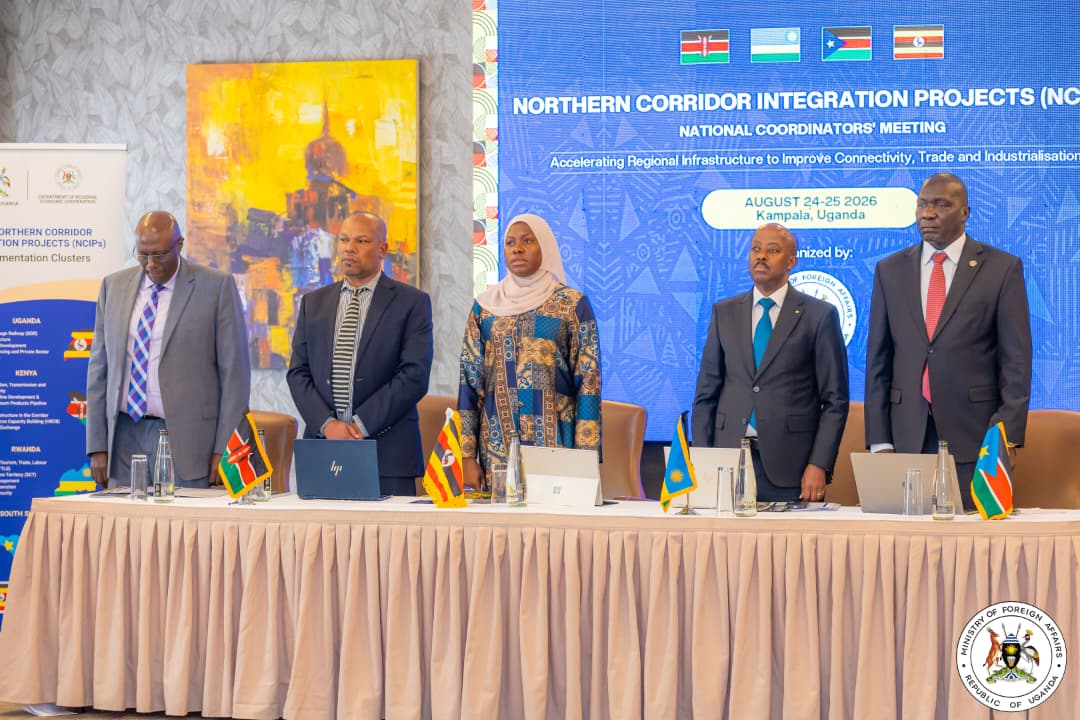
The development was announced during the Northern Corridor Integration Projects (NCIPs) National Coordinators’ Meeting in Kampala, where officials from the four partner states reviewed progress on regional infrastructure projects.
The proposed satellite is intended to strengthen communication and digital services across the Northern Corridor, particularly in areas where terrestrial infrastructure remains limited. The initiative is also expected to support the region’s broader digital integration agenda.
Permanent Secretary in the Ministry of ICT and National Guidance, Dr Aminah Zawedde, said the four countries had mobilised resources to undertake the feasibility study.
“The other project that we are working on is coming up with a regional satellite. We are currently going to embark on a feasibility study where the partner states have mobilised resources among each partner state. We are not getting loans for this feasibility study,” Zawedde said.
She said the study would determine the technical and financial requirements of the proposed satellite, including its cost, location and capacity.
“That feasibility study will inform the cost of that regional satellite, where it will be placed, what kind of capacity we shall need to get it in place,” she added.
The project follows a resolution adopted by ICT ministers from the four countries in April 2026 to pursue a jointly owned regional communication and broadcasting satellite. The feasibility study is expected to assess the technical, financial and legal requirements before the project moves to the next stage.
Ambassador Richard Kabonero, Uganda’s National Coordinator for NCIPs, said the satellite initiative forms part of a broader effort to develop shared infrastructure and reduce the cost of doing business across the region.
“The most important thing is to reduce the cost of doing business,” Kabonero said.
He said the Northern Corridor had already registered progress in several cross-border projects, including ICT connectivity, electricity transmission, roads, customs and major transport infrastructure.
Kabonero cited the recent fibre-optic connection between Uganda and Rwanda at Mirama Hills as one of the region’s digital connectivity achievements.
“We just connected with the Republic of Rwanda at Mirama Hills for the fibre optic cable,” he said.
Uganda is also supplying electricity to Rwanda, while the partner states are working to improve road connectivity with South Sudan, including projects linking Juba and Nimule.
Zawedde said the proposed satellite builds on other ICT initiatives under the Northern Corridor framework, including the One Network Area (ONA), which has significantly reduced roaming costs among the four partner states under applicable temporary-visitor arrangements.
“Today, as long as you are part of these four partner states, when you move from Uganda to Kenya, to South Sudan, to Rwanda, you incur the same costs of communication that you incur when you are doing a normal domestic call,” she said.
According to Zawedde, the initiative has helped lower communication costs, facilitate cross-border trade and strengthen social and economic ties among Uganda, Kenya, Rwanda and South Sudan.
She said the region is also developing other cybersecurity projects, although funding remains a challenge.
“There are a number of other projects in regard to cybersecurity, whose concepts we have built and developed, but we need now to mobilise funding in order to have them implemented,” Zawedde said.
Kabonero said the Northern Corridor Integration Projects were established to accelerate the implementation of infrastructure projects that connect the partner states and facilitate the movement of goods and people.
He said the projects cover areas including ICT, power transmission, customs, roads and railways, with implementation organised around specific regional projects rather than individual countries.
However, he noted that differences in national budget cycles and funding mechanisms had previously slowed implementation.
“The challenges have been on real execution, given the different budget cycles and different funding mechanisms. But we are addressing those,” Kabonero said.
The Kampala meeting is expected to help the four countries coordinate implementation, identify outstanding bottlenecks and prepare for the 15th Northern Corridor Integration Projects Summit, which is expected to be held in Kigali, Rwanda.
Zawedde said the ultimate goal of the integration drive is for the partner states to increasingly operate as one region.
“The intention and purpose of integration is to operate as one,” she said.
The National Coordinators’ Meeting is being held from August 24 to 25 under the theme, “Accelerating Regional Infrastructure to Improve Connectivity, Trade and Industrialization.”