








ActionAid International Uganda (AAIU) has called for increased investment in locally led climate solutions, arguing that communities on the frontline of climate change should be empowered to develop and implement responses suited to their local conditions.
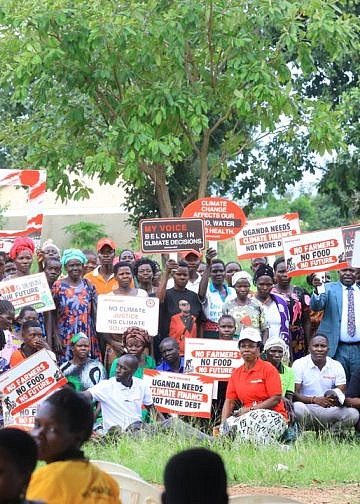
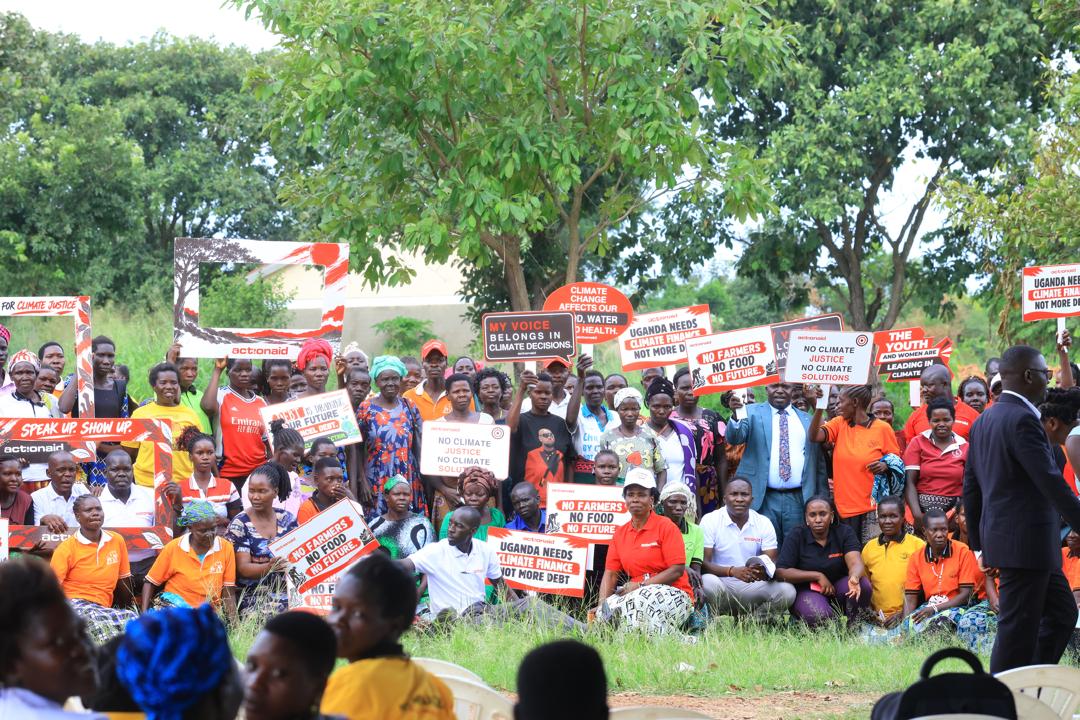
The call was made during a community engagement in Anaka Payira Sub-county, Nwoya District, where more than 150 community members were engaged on climate justice as part of the September Global Week of Climate Actions, held under the theme, “Our Communities. Our Climate. Our Future: Young People Leading Climate Justice.”
Robert Asiimwe, Programme Officer at ActionAid International Uganda in Northern Uganda, said communities should not merely be treated as beneficiaries of climate interventions but should be placed at the centre of designing solutions to the challenges they face.
“We have tested local-led interventions in climate change, like agroecology. Why can’t we invest in agroecology? Why can’t we invest in agroforestry? Why can’t we invest in research that brings out the traditional knowledge, and we test this vis-à-vis the scientific knowledge to see that solutions are customised to the local context?” he said.
Asiimwe said climate change was already disrupting livelihoods in rural communities such as Anaka, where people depend heavily on land, rainfall and natural resources.
“We understand that climate change impacts affect people at the frontline in rural communities like where we are here in Anaka. You will find that this community depends on its livelihood, depends on land, depends on natural resources, depends on rain, but we see things are changing, which means their livelihoods are impacted,” he said.
He said unpredictable rainfall was affecting planting seasons and threatening household food security.
“Currently, we cannot tell that we are in a rainy season or we are in dry season. What does it mean for a person in rural Uganda? It means going to affect their planting seasons, which means that they will not be having food in their homes,” Asiimwe said.
He argued that because local communities contribute less to the climate crisis but experience significant consequences, climate financing should prioritise adaptation and resilience at the community level.
“Government needs to invest a lot of adequate resources in building the resiliency of the communities to adapt to the crises that are caused by climate change.”
Asiimwe said ActionAid’s role was to facilitate communities to make their voices heard in climate discussions from the local to the national and international levels.
“For ActionAid, our responsibility is to be a facilitator, a convener, to provide space for these local voices to come up to influence decisions,” he said.
He said local solutions such as agroecology and agroforestry could provide communities with practical ways of adapting to changing climatic conditions when adequately supported.
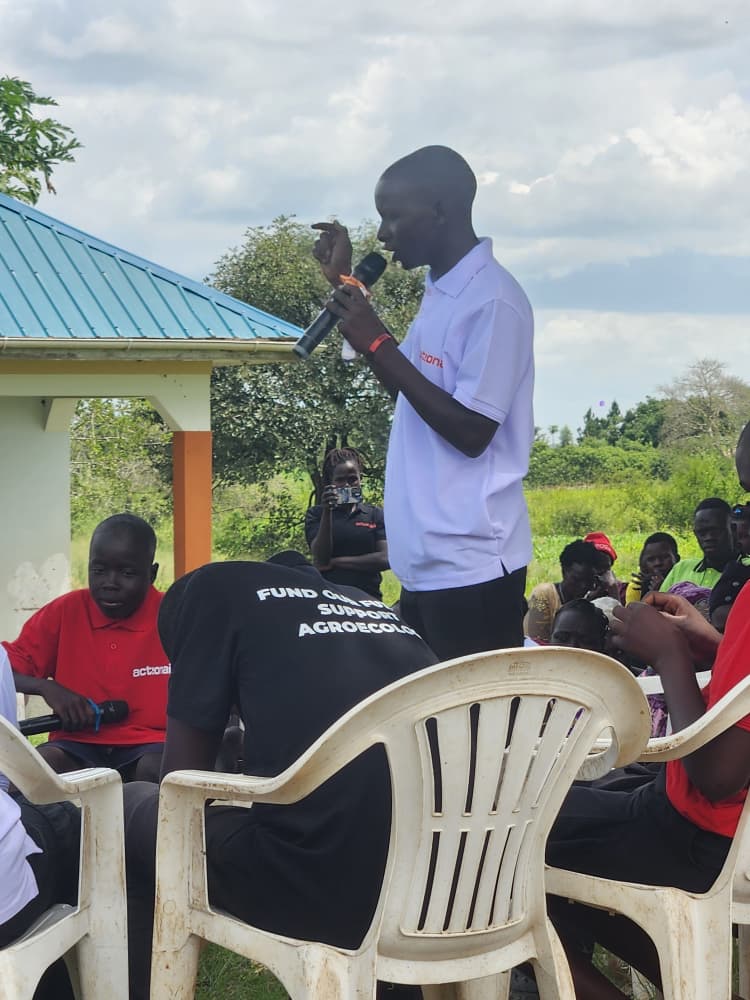
ActionAid has been supporting agroecology initiatives in Northern Uganda, Eastern Uganda and West Nile, including agroecology centres of excellence where young people learn different approaches to sustainable agriculture.
“We’ve been at the forefront of championing, of having the first ever policy in agroecology in Uganda, which we see is at the higher level. The ministry took it up,” Asiimwe said.
He also called for climate financing to reach communities with fewer restrictions and through grants that can support locally identified interventions.
“We need to have funds, the grant-based funding that is just. Because when we talk of climate change, we talk of climate justice.”
Emmanuel Omara, the Nwoya District Forestry Officer, said locally focused climate interventions were important as the district grapples with prolonged drought and declining agricultural production.
He said the current drought had come at a difficult time for farmers, with many areas receiving inadequate rainfall during the second planting season.
“Most especially this year, where we have experienced a very long period of drought than it was in this district before,” Omara said.
He said the district was working with communities to promote drought-resistant seeds, smart agricultural technologies and fertiliser use to help farmers cope with changing climatic conditions.
Omara said the effects of the drought were already visible in farmers’ gardens.
“Crops have dried up, and this is posing a risk of hunger to our people,” he said.
He added that poor agricultural performance could have wider consequences, including children dropping out of school when families struggle to provide food and meet other household needs.
Maurice Ochan, a farmer from the area, provided an example of how farmers are attempting to adapt their livelihoods to changing climatic conditions.
Ochan said he invested Shs2 million in six acres of groundnuts during the first season but failed to harvest anything after the crops were affected by excessive heat and drought.
“I planted six acres of groundnuts, but I never harvested anything due to the temperature and the changes. The sun became too much, and I didn’t harvest anything,” he said.
The loss forced him to rethink his dependence on a single crop.
“I decided to plant some fruits because I know fruit can also bring money, and I also invested in other products like rearing animals. I started rearing goats and pigs, even poultry,” Ochan said.
He said diversification had provided alternative sources of income that could help him meet household needs even when crop production was affected.
Ochan also expressed interest in irrigation, saying farmers could potentially access such technologies through groups.
“We have not yet used that irrigation scheme, but we have heard it, but I hope that if the projects come near us, we are willing to use that irrigation project. Even if it’s expensive, I know that we can be as a group,” he said.
The push for locally led climate solutions comes against the backdrop of growing environmental pressure in Nwoya.
Omara said the district had lost a significant portion of its natural forest cover over the years.
“The forest cover of this district before 2010 was at 59,000 hectares of natural forest. But as of 2020 to 2025, the district had lost about 15,000 hectares,” he said.
He said the loss of forests was contributing to environmental challenges while increasing pressure on communities that depend on natural resources.
Evelyn Acca, the Senior Environmental Officer in Nwoya District, said deforestation, charcoal burning, wetland encroachment and poor waste management were among the environmental challenges affecting communities.
“There is a lot of destruction of the trees. In fact, we have very many commercial farmers within our district. And these people have cleared the land massively for the production of crops,” Acca said.
She said poverty was also pushing some residents into environmentally harmful activities, particularly wetland encroachment.
“Some people, because of poverty, will still go and encroach into the wetlands,” she said.
Acca said the district was responding by promoting energy-saving cookstoves, wetland demarcation and restoration, as well as tree planting.
She said the district had also demarcated sensitive ecosystems and planted bamboo to help protect catchment areas.
“Last financial year, what we did, we did like four kilometres demarcation of those sensitive ecosystems. We demarcated Naga wetland, where we planted those markstones, and also to protect the catchment area,” Acca said.
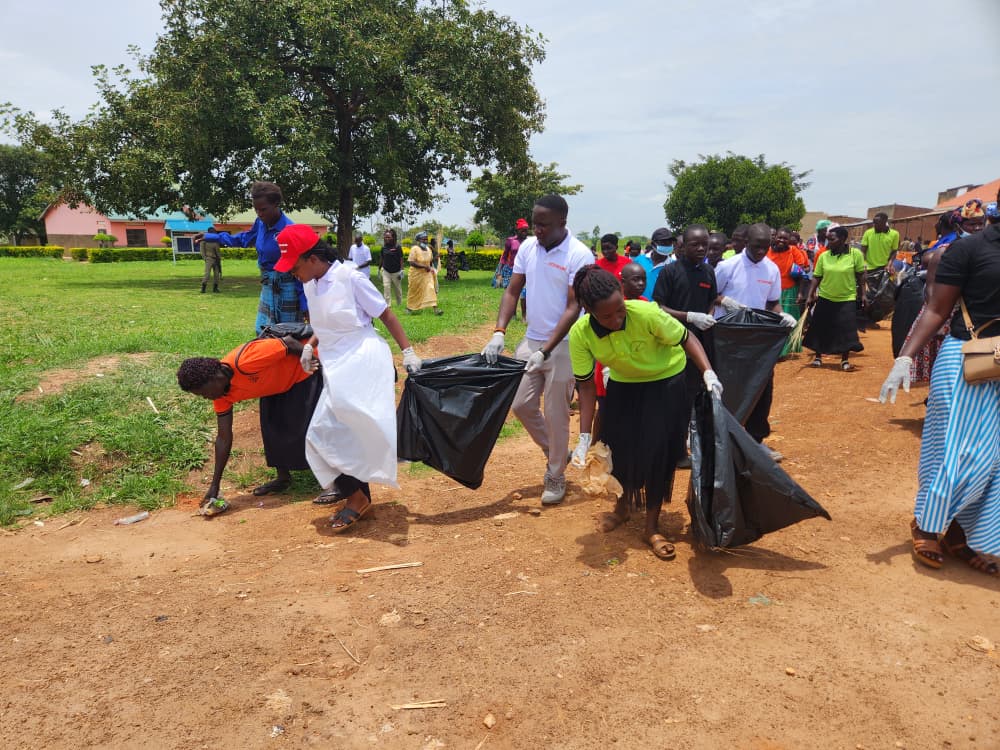
She added that ActionAid had supported environmental initiatives, including tree planting at Gok Primary School and community sensitisation.
Asiimwe said climate action would be more sustainable if the people experiencing its effects were directly involved in identifying and implementing solutions.
“To make action sustainable, people who are affected, they must be at the forefront.”
He said the purpose of taking climate discussions to communities was to ensure residents understood how climate change affected their livelihoods and could subsequently organise and demand accountability from duty bearers.
“When the communities are informed of the issue and how it affects them, they design solutions that are at the forefront. So here you don’t underestimate the voice of the people because it’s the people who are affected, and if they’re empowered, they will take charge.”
He said climate change should not remain an issue discussed mainly at international conferences while communities experiencing its effects are left out of decision-making.
“When you come on ground, the impacts are not abstract. You will see crops are drying in the gardens. You will see animals don’t have water to drink. You will see children going to school affected because of floods that have cut off a certain road,” Asiimwe said.
The campaign seeks to bridge gaps in community knowledge about climate change while creating space for residents to participate in discussions and decisions on environmental conservation, adaptation and climate justice.
AAIU said the campaign would continue to amplify local voices and advocate for increased resources for adaptation, agroecology, agroforestry and other locally led approaches to climate change.