










Housing sector players have called for reforms to make land more accessible, affordable and secure for Ugandans seeking to invest in housing, saying insecure tenure and lengthy land processes are limiting efforts to address the country’s 2.4 million-unit housing deficit.
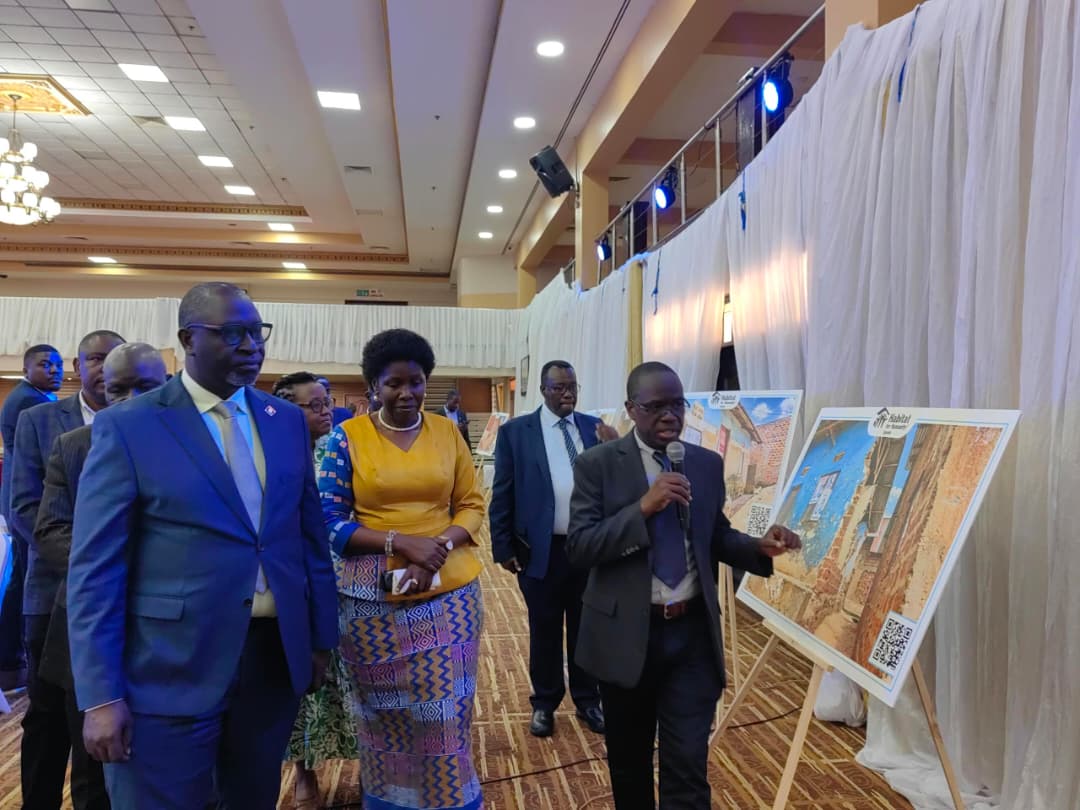
The call was made during the National Housing Dialogue at Hotel Africana in Kampala, where stakeholders said access to secure land must be addressed alongside affordable housing finance and cheaper construction technologies if Uganda is to expand access to decent housing.
Habitat for Humanity Uganda Managing Director Paul Okiring said land remains one of the biggest barriers to housing investment, particularly for low-income households willing to build but lacking secure ownership rights.
“Land is a major constraint. Many people cannot invest in housing because their land rights are uncertain or unregistered, while the processes of securing land can also be lengthy,” Okiring said.
He called for bold reforms to simplify land registration and titling, digitise land administration and strengthen tenure security for people living in informal settlements.
“Systematic land registration and titling, digitising land administration, strengthening women’s land rights and regularising informal settlement tenure are some of the measures that can unlock housing investment,” he said.
Okiring also called for the creation of strategic land banks and the provision of serviced land near rapidly growing urban centres to make it easier for developers and ordinary Ugandans to invest in housing.
He said land reforms should go hand in hand with efforts to expand housing finance, arguing that people with secure land rights should be able to use the asset to access financing for construction.
“Many people cannot invest because land rights are uncertain or unregistered,” he said, adding that land administration systems must be made more accessible and responsive to ordinary citizens.
Minister of Lands, Housing and Urban Development Judith Nabakooba said physical planning and proper land-use allocation are critical to addressing Uganda’s housing challenge.
“The question before us is therefore not simply how do we build more houses. It is how do we build the right houses,” Nabakooba said.
She said poorly planned housing developments can result in urban sprawl, informal settlements, high infrastructure costs and underutilisation of land.
“Development often precedes planning,” Nabakooba said, stressing the need to ensure that housing expansion is supported by proper physical planning and infrastructure.
Nabakooba said the government is working on land and housing reforms, including operationalising the National Land Policy and implementing the National Land Use Plan.
She also pointed to the establishment of 22 National Land Information System zone offices as part of efforts to improve access to land services and strengthen tenure security.
The minister said the government has also facilitated access to land titles and certificates of customary ownership while working to improve housing finance and infrastructure.
She urged private-sector players to take advantage of the housing deficit by investing in affordable and low-cost housing.
“The private sector must increase investment in affordable housing and low-cost houses, and also bring innovation on board. We want to see the cost-effective solutions in the market,” Nabakooba said.
She noted that Uganda requires about 300,000 housing units annually to narrow the housing gap, yet only about 60,000 units are currently produced each year.
Nabakooba said the housing challenge is also an opportunity for investors, financial institutions, manufacturers and construction companies.
“Every house creates demand for land, building materials, transport, engineering, architecture, finance, energy, water and other services,” she said.
Owek Waggwa Nsubirwa, Board Chairman of Habitat for Humanity Uganda, said stakeholders must move beyond discussing the housing deficit to finding practical ways of helping people acquire land and build homes.
“Today I want us to move to the how — practical how,” Nsubirwa said.
He cited the example of a young person who bought a 50-by-100-foot plot of land in Kasanje for Shs12 million and questioned how such a person could be supported to finance construction.
“What are the practical ways we can support the majority?” he asked.
Nsubirwa said the housing conversation must particularly focus on young people, growing families and vulnerable communities that face difficulties securing decent homes.
“We have the statistics. We know the challenge. But how do we move from reciting the statistics, appreciating the challenge to actually starting to talk to young people, to growing families, to those communities, to the vulnerable?” he asked.
He also challenged property developers, financial institutions and pension funds such as NSSF to explore innovative housing products that can enable workers and young people to own homes.
Nsubirwa said Uganda should view housing as both a social need and an investment opportunity.
“We have to think not outside the box, but without the box,” he said.
He proposed the creation of a national housing dialogue platform where stakeholders can share innovations, policies, technologies and successful housing models instead of duplicating efforts.
He also called for quarterly, issue-based workshops where stakeholders would work together on specific challenges, including financing housing for young people, strengthening tenure security and reducing construction costs without compromising quality.
Habitat for Humanity Uganda Programs Director Evelyn Frances Aguti said the dialogue should produce practical reforms and commitments rather than end with discussions.
“We are not here to simply discuss about that challenge, but we want to look at the solutions today,” Aguti said.
She added: “Not just discussing solutions, but of course, these should be practical solutions, and of course, we need to have actions.”
Aguti said housing is more than shelter because it provides dignity, health, security and economic opportunities.
She called for stronger collaboration between government, financial institutions, academia, civil society and the private sector to make housing finance and construction more affordable.
“We need to come up with the commitments that we shall follow up,” she said.
Aguti also challenged stakeholders to review existing housing policies and programmes to determine whether they are delivering the intended outcomes.
“The success of this dialogue is not just going to be measured by the quality of the discussions that we’re having today, but like I mentioned, it will be measured by the actions and the commitments that follow,” she said.
Okiring said no single institution can solve Uganda’s housing challenge, calling for a stronger national housing compact involving government, private investors, financial institutions, communities and development partners.
“The question is now no longer what should be done. The question is how quickly can we get into business to bring ourselves out of the situation we are in,” he said.
The stakeholders said reforms that improve land registration, strengthen tenure security, simplify land administration and increase access to serviced land would give more Ugandans and investors the confidence to put money into housing.
They said such reforms, combined with affordable financing and cost-effective construction technologies, could help unlock private investment and accelerate efforts to close Uganda’s housing deficit.