









Uganda Electricity Distribution Company Limited (UEDCL) has acknowledged growing public frustration over persistent power outages across the country, assuring consumers that interventions are underway to stabilise electricity supply and improve reliability.
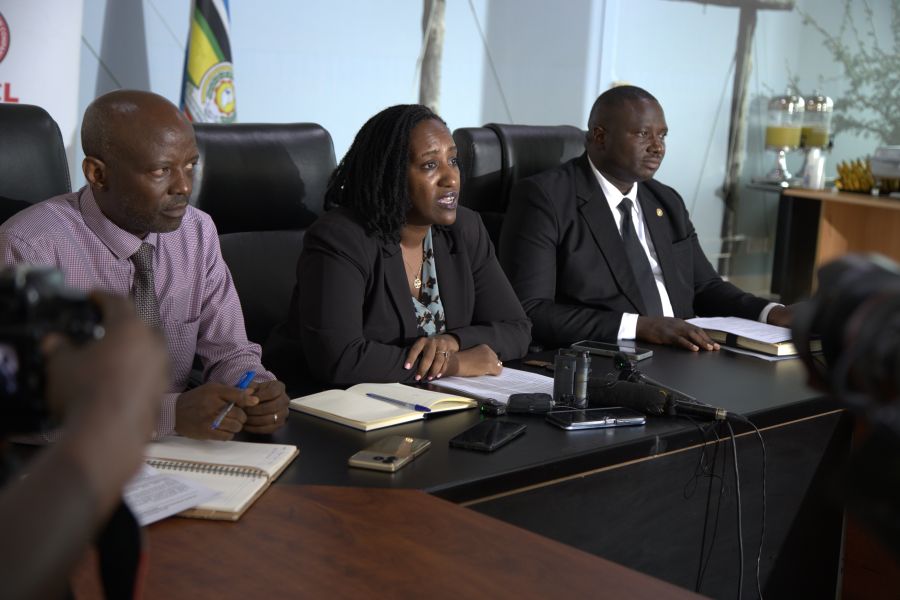
Acting UEDCL Managing Director, Eng. Joselynne Rwabwogo Rwakakooko told journalists the company is aware of the disruptions affecting households, businesses and other electricity consumers but insists that measures being implemented will gradually ease the situation.
“I recognise the frustration customers are experiencing because of recurring power outages. These interruptions affect businesses, households and everyday life. Customers deserve to know what we are doing to improve the situation,” Eng. Rwakakooko said.
She attributed the persistent outages partly to ageing electricity infrastructure and rapidly increasing demand, which she said had outpaced investments in expanding and modernising the distribution network.
According to the acting managing director, UEDCL’s customer base has grown from 1.64 million in 2021 to approximately 2.8 million currently, representing nearly 70 per cent growth.
The company also manages more than 92,000 kilometres of electricity distribution lines, while demand in Greater Kampala alone has increased by approximately 60 per cent over the past five years.
She said the increased demand had placed considerable pressure on existing infrastructure, with some electricity installations operating beyond their intended capacity.
Mutundwe substation is among the most affected facilities, currently carrying approximately 130 per cent of its designed capacity.
“Some parts of the network are operating beyond their intended capacity. Mutundwe substation, for example, has been carrying approximately 130 per cent of its design capacity,” she said.
The capacity constraints have contributed to load shedding in several areas, including Namugongo, Gayaza, Nakwero, Kiwologooma, Kitukutwe, Kijabijjo, Busukuuma and parts of the Kakiri corridor.
Other affected areas include Kabulengwa, Kasengejje, Naluvule, Wakiso, Nansana, Yesu Mala, Kabumbi, Katoke, Kayunga and Wamala.
However, Rwabwogo Rwakakooko said UEDCL was working with the Uganda Electricity Transmission Company Limited (UETCL) to address the challenges and progressively reduce the need for load shedding.
She explained that electricity supply depends on several interconnected systems, including generation, transmission and distribution, meaning that capacity constraints at any stage can affect consumers.
“We recognise that customers in several areas continue to experience load shedding due to network capacity constraints. Our priority is to address these challenges and progressively reduce the need for load shedding,” she said.
UEDCL outlines measures
To ease the situation, the company is implementing targeted interventions to relieve overloaded substations, expand distribution capacity and improve electricity supply in affected communities.
Along Masaka Road, UETCL’s Maya substation is already supplying part of the area, while additional demand is being transferred from Mutundwe to reduce pressure on the overloaded facility.
In Gayaza, UEDCL is commencing work on an additional eight-kilometre electricity line intended to transfer demand to a substation with available capacity.
The company is also coordinating additional interventions with UETCL to address constraints affecting the network.
Rwabwogo Rwakakooko cited improvements in Mubende, where engineers reconfigured the electricity distribution network, reducing recorded outages from 12 in one month to three in the following month.
A larger transformer has also been installed at Nkonge, while other network improvement works have been undertaken in Seeta, Bukerere, Kawanda, Mbarara and the Bombo corridor.
The utility has also completed emergency repairs to underground cables that had affected electricity supply in Entebbe, Namasuba and Kisubi.
The acting managing director said UEDCL was also strengthening its response to electricity faults by deploying additional technical personnel and increasing standby capacity to facilitate faster restoration of supply.
She identified transformer shortages as another challenge that has affected the speed at which electricity supply is restored in some communities.
According to her, the rapid growth in customer connections has increased demand for transformers beyond the production capacity of existing local manufacturers operating under the Buy Uganda, Build Uganda (BUBU) framework.
The company is engaging the Public Procurement and Disposal of Public Assets Authority (PPDA) on supplementary sourcing options while supporting local manufacturers to increase production.
Rwabwogo Rwakakooko said the interventions were already yielding results, with average transformer replacement times reducing from 38 days at the end of June to fewer than 14 days by the end of August 2026.
“Our focus is to reduce these waiting times further. We are exploring ways to increase transformer availability in the short term while supporting local manufacturers to expand their capacity,” she said.
UEDCL has also replaced 1,110 distribution transformers in the financial year ending July 2026, exceeding its target of 853.
Its teams cleared approximately 34,200 kilometres of vegetation along distribution lines as part of efforts to prevent avoidable electricity faults.
Investment plan
Beyond the immediate interventions, UEDCL says it requires approximately $994 million over the next five years to expand electricity access, improve reliability and modernise the country’s distribution infrastructure.
Of this amount, approximately $107 million has been identified for priority projects up to December 2027.
The planned investments will focus on expanding network capacity, rehabilitating ageing infrastructure and strengthening coordination with UETCL to address transmission constraints.
The utility also says it has strengthened meter supply arrangements in collaboration with the Uganda National Bureau of Standards (UNBS), enabling it to connect approximately 80,000 customers over the past two months.
It is targeting 50,000 new customer connections every month and intends to clear outstanding connection applications by December 2026.
Rwabwogo Rwakakooko said the company’s long-term ambition was to build a reliable and financially sustainable electricity distribution utility capable of supporting Uganda’s growing electricity needs.
She also pointed to the reduction in the end-user electricity tariff from approximately Shs486 to Shs396 per unit, representing about 19 per cent, as one of the benefits consumers had experienced.
However, she acknowledged that the company still had considerable work to do to meet public expectations.
“We are not yet where we want to be, but we are making progress. Ultimately, our success will be measured by what customers experience: fewer outages, faster fault resolution and better service,” she said.