









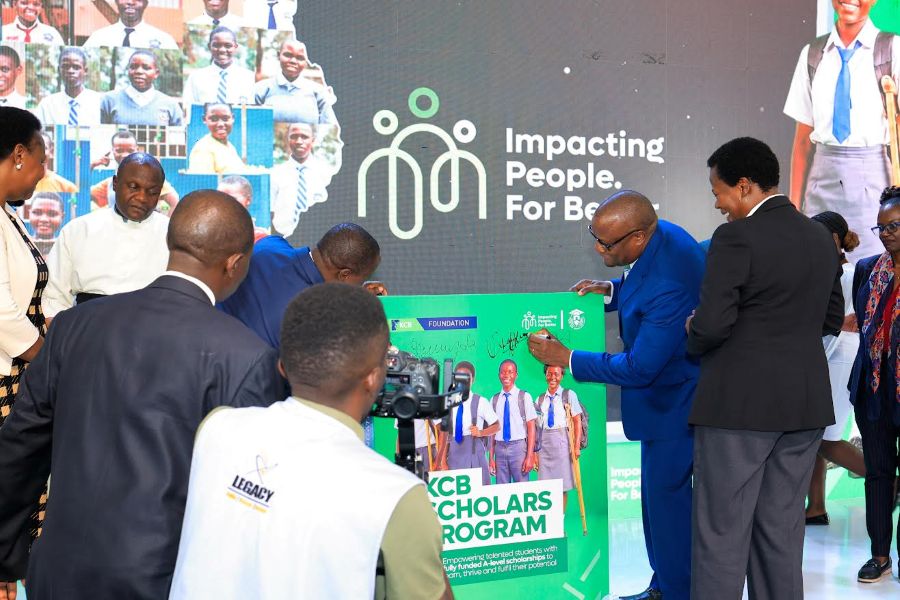
KCB Bank Uganda, through the KCB Foundation, has launched a two-year scholarship programme targeting financially vulnerable students transitioning from Ordinary Level (O-Level) to Advanced Level (A-Level), in an initiative aimed at improving access to secondary education.
The KCB Scholars Programme will support learners from eight government secondary schools across the country, providing financial and academic support to help them complete their A-Level education.
The inaugural cohort comprises 54 per cent girls and 46 per cent boys, while learners with disabilities account for approximately 14 per cent of the beneficiaries. Academically, 79 per cent of the scholars are pursuing science combinations, with the remaining 21 per cent enrolled in arts combinations.
The beneficiaries were selected from Kololo Senior Secondary School, Luzira Secondary School, Kansanga Seed School, Jinja Senior Secondary School, Mpumudde Seed School, Mbale School for the Deaf, Mbarara Secondary School and St. Andrew’s Secondary School Rubindi.
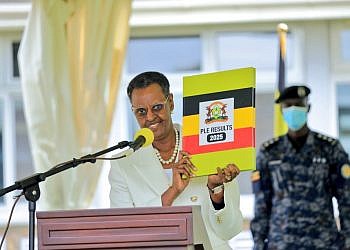
Speaking at the launch, the Permanent Secretary in the Ministry of Education and Sports, Dr Kedrace Turyagyenda, said the initiative complements government efforts to improve school retention and ensure learners complete their education.
“Our children are our future, and investing in education is an investment in Uganda’s future. At the Ministry, our priority is not just getting learners into school, but keeping them there through completion,” Turyagyenda said.
She noted that the transition from O-Level to A-Level remains a major challenge for financially disadvantaged families, often putting the education of academically capable learners at risk.
She commended KCB Bank Uganda for stepping in to support learners who have demonstrated academic potential but face financial barriers.
The Lord Mayor of Kampala, Eng. Ronald Balimwezo Nsubuga, also commended the bank for supporting underprivileged learners, describing education as one of the most important tools for creating equal opportunities in society.
Drawing from his personal experience, Balimwezo said scholarship support had played a significant role in transforming his life, urging the beneficiaries to make the most of the opportunity through resilience, discipline and academic commitment.
KCB Bank Uganda Board Chairman Mathias Katamba said the initiative reflects the bank’s commitment to investing in education and human capital development as part of its broader contribution to national development.
He said the bank recognises that its long-term success is linked to the prosperity and resilience of the communities in which it operates.
“Our support for investments in education and human capital development is not simply an act of goodwill; they are deliberate investment in the capabilities that will shape Uganda’s economic and social progress,” Katamba said.
KCB Foundation Managing Director Mendi Njonjo said the programme was designed to address the gap between academic ability and access to educational opportunities.
She said the foundation believes that financial circumstances should not prevent talented young people from pursuing their ambitions.
“We have deliberately chosen to invest in young people because we recognise their potential and believe that talent should never go to waste simply because opportunity is lacking,” Njonjo said.
KCB Bank Uganda Managing Director Edgar Byamah said the programme demonstrates the bank’s commitment to social inclusion, equity and human capital development.
He noted that the representation of girls and learners with disabilities in the inaugural cohort reflects the institution’s diversity, equity and inclusion agenda.
“Talent exists everywhere, and financial circumstances or disability should not determine how far a young person can go,” Byamah said, urging the scholars to remain disciplined and focused on their studies.
Beyond covering school fees, the scholarship package includes basic scholastic materials, school uniforms and stipends to support beneficiaries throughout their A-Level studies.
The programme will also provide structured mentorship, guidance and life-skills coaching to help learners develop beyond the classroom.
Students who successfully complete their A-Level studies will also be considered for partial scholarships towards undergraduate education.
According to the organisers, the selection process was undertaken in collaboration with District Education Officers, school administrators and community representatives to identify learners with demonstrated academic potential and genuine financial need.