










Absa Bank Uganda has announced that it has surpassed its commitment to plant one million trees, achieving the target ahead of the three-year timeline set at the launch of the programme in February 2023.
By August 2025, the bank had planted a total of 1,281,317 trees across various parts of the country. The milestone was reached through a phased implementation, with 340,590 trees planted in 2023, 372,641 in 2024, and 568,086 in 2025.
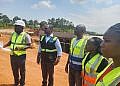
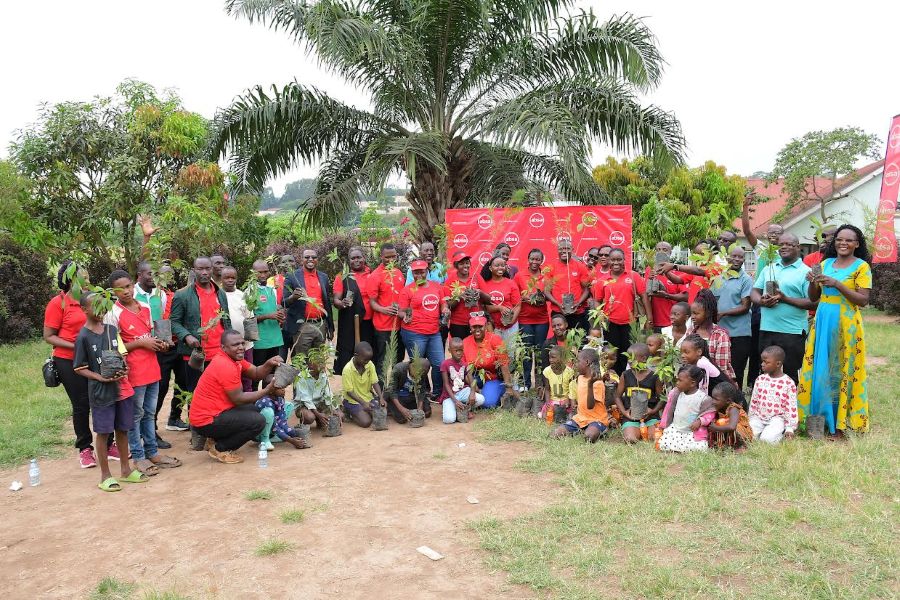
The announcement was made during a tree-planting exercise at Kyanja View Primary School, where Absa’s Marketing and Customer Experience Director, Helen Basuuta Nangonzi, highlighted the role of partnerships in addressing climate change.
She said the achievement reflects Absa’s commitment to environmental sustainability and community resilience, noting that the bank will continue expanding its tree-planting efforts in recognition of the role trees play in biodiversity conservation and climate mitigation.
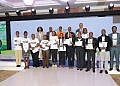
The initiative was implemented in collaboration with several partners, including My Tree Initiative, the Ministry of Water and Environment under the Running Out of Trees (ROOTS) initiative, Kampala Capital City Authority (KCCA), Rotary Uganda, Makerere University, the Uganda Biodiversity Fund, and the Mwiri Old Boys Association, among others.
Basuuta added that the programme is part of Absa’s broader purpose-driven agenda, which focuses on addressing societal challenges such as climate change, financial exclusion, and economic inequality through responsible banking, strategic partnerships, and sustainable capital deployment.
She further reiterated the bank’s focus on financial inclusion, stating that Absa continues to structure credit, expand access channels, and tailor advisory services to support individuals, small businesses, and underserved communities, contributing to job creation and national development.
Enjer Ashiraf, Executive Director of My Tree Initiative, commended Absa for the milestone, describing it as evidence of the impact of collective action in advancing environmental restoration.
Uganda’s National Development Plan (NDP) IV identifies climate change vulnerability as a major threat to sustainable development. The country has experienced a steady decline in forest cover—from 24 percent in 1990 to 13.3 percent in 2022—while wetland coverage fell from 15 percent to 13 percent by 2019, highlighting the urgency of reforestation and conservation initiatives.