










About 40 kilometres from Abim town, the day used to begin before sunrise for the children of Barotukei Primary School. For most of the 1,031 pupils, the first lesson of the day wasn’t on the blackboard but a gruelling two-kilometre trek to fetch water—a task that fell disproportionately on young girls.
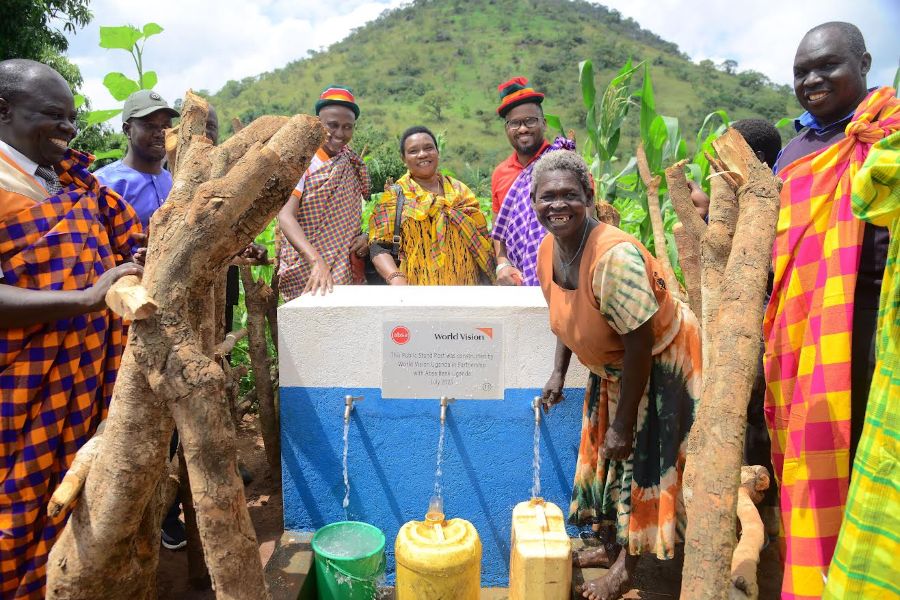
That reality has now changed. The laughter of children in the school compound has replaced those long walks, thanks to a new solar-powered water system, funded by proceeds from the 2025 Absa KH3-7 Hills Run and implemented in partnership with World Vision. The system now serves over 4,000 people in the Barotukei community, marking the second phase of the run’s outreach, following a similar project in Awach community in 2024.
The new facility features a borehole sunk 101 meters deep, powered by solar panels generating 12KW of electricity. A 10,000-liter tank distributes clean, instant water to 12 strategically placed public stand posts, each equipped with three taps—four within the school grounds and eight across the wider community. Where scattered boreholes once required up to two hours of pumping, access is now instant.
Margaret Auma, a lifelong Barotukei resident, described the transformation as deeply personal. “I have always had to rely on streams that required serious boiling before any use,” she said. “I appreciate the opportunity to have access to water that is clear, clean, and nearby.”
The impact on education has been equally profound. Headteacher Ojuma Joel Ploba noted that while enrolment in lower primary is high, girls historically dropped out as they got older due to the burden of fetching water and the absence of menstrual hygiene facilities.
“This water is a big contribution towards the future I envision, where the school can retain and graduate more students,” he said.
The project is complemented by a new WASH facility under the “Keep A Girl Child In School” initiative. For students like Primary Six pupil Apio Martha, it means no longer missing school during critical periods. “I’m grateful for my Senior Woman Teacher,” she shared. “She taught us about menstrual hygiene practices and how to make reusable pads to replace the rags I used during my first periods.”
With community ownership at the core of the project, three members per committee are trained in operational management, while the district water board safeguards the source from potential damage by local warriors.
Janet Grace Akech Okori-Moe, Woman MP for Abim, hailed the initiative at the commissioning, saying, “The people of Barotukei take this project as our own. We thank everyone involved for this transformative gift.”
The 2025 Absa KH3-7 Hills Run has thus not only provided clean water but also strengthened health, education, and community development, creating opportunities for young girls and generations to come.