









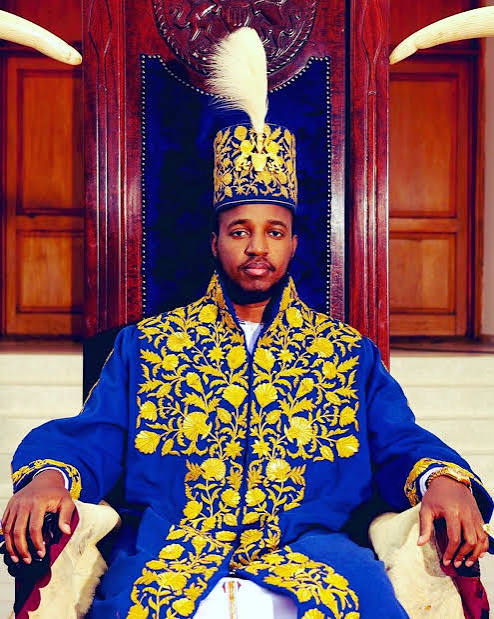
The Kingdom of Buganda has joined the people of Tooro in mourning the death of Omukama Oyo Nyimba Kabamba Iguru Rukidi IV, with Buganda officials describing his death as a loss not only to Tooro but to Uganda as a whole.
The tributes from Buganda have also brought renewed attention to the longstanding relationship between the two traditional kingdoms, which Katikkiro of Buganda Charles Peter Mayiga said has been marked by cooperation and mutual support for generations.
Speaking following the death of King Oyo, Mayiga said Buganda’s King, the Kabaka, was deeply saddened by the news of the death of the Tooro monarch.
“As may be known, the Kingdom of Tooro and the Kingdom of Buganda have been moving together since the formation of the Kingdom of Tooro in the 1830s,” Mayiga said.
He noted that members of the two royal families have historically supported one another, pointing to the period when Oyo ascended the Tooro throne at the age of three following the death of his father.
Mayiga said the Kabaka of Buganda was among those appointed to serve as a guardian when the young Oyo assumed the throne.
“We have always worked together; we have always planned together in the interest of the people of the two kingdoms,” he said.
King Oyo died at about 10 p.m. on August 27, 2026, at the age of 34, according to the Tooro Kingdom. The Kingdom did not disclose the cause of death.
His death brought to an end a reign that began in September 1995, when he was only three years old. Oyo succeeded his father, Omukama Patrick Matthew David Kaboyo Olimi III, who died in August 1995.
Mayiga described the death as a major loss for Tooro, saying the late King had plans aimed at preserving the kingdom’s heritage and improving the wellbeing of its people.
“The demise of King Oyo is a big loss to the people of Tooro because he had many plans for the sustenance of Tooro heritage and for the well-being of the Tooro people. But it is a great loss to Uganda too,” he said.
He called on the people of Tooro to remain united as the kingdom prepares for the traditional ceremonies and rituals that follow the death of an Omukama.
“We join the people of Tooro, we join members of the royal family of Tooro, and indeed we join all Ugandans in expressing our sadness upon the sudden passing of Omukama Oyo,” Mayiga said.
‘Your grief is our grief’
Buganda’s tribute was also delivered by Princess Katrina Sarah Ssangalyambogo, who conveyed condolences on behalf of the Kabaka, the royal family and the people of Buganda.
“Today we bow our heads with you in deep sorrow. The drums of Tooro are silent, the throne mourns, and a great light has gone out in the Rwenzori mountains,” she said.
She described King Oyo as more than the monarch of Tooro, portraying him as a national figure who grew into his role in full public view after ascending the throne as a child.
“King Oyo was not just a King of Tooro. He was a son of Uganda. He ascended the throne as a child, and grew before the eyes of the nation,” Ssangalyambogo said.
She credited him with promoting Tooro’s culture and traditions while working for peace and development in the kingdom.
She also emphasised the historical relationship between Buganda and Tooro, saying the two kingdoms had shared ties through periods of both celebration and difficulty.
“To the Batooro, we say this: your grief is our grief,” she said. “The bond between Buganda and Tooro is a bond of history, of blood, of kingdoms that have walked together through joy and through trial. When one house mourns, the other stands beside it.”
King Oyo’s death has triggered mourning across Uganda, with traditional institutions and political leaders paying tribute to the monarch. The Kyabazinga of Busoga, William Wilberforce Gabula Nadiope IV, also described Oyo as a visionary traditional leader whose commitment to preserving culture and inspiring young people left a lasting mark.
Oyo’s death comes after more than three decades on the Tooro throne. He was formally coronated in 2010 after reaching adulthood, having spent his early years on the throne under regency arrangements.
The Tooro Kingdom has said the continuity of the institution is assured and that the late King left behind a prince who will succeed him. The identity of the heir is expected to be formally revealed in accordance with Tooro traditions and customs.
As Tooro begins the mourning and succession process, Buganda’s message places the loss within a much longer history of relations between Uganda’s traditional institutions — one that, Mayiga said, continues to bind the two kingdoms in moments of both celebration and grief.