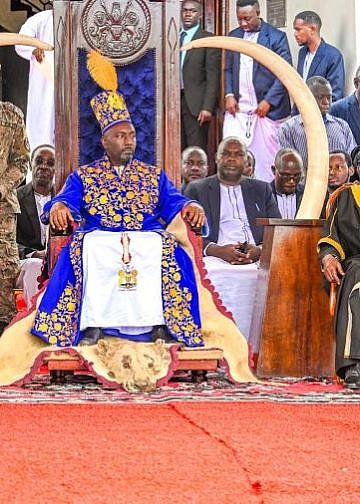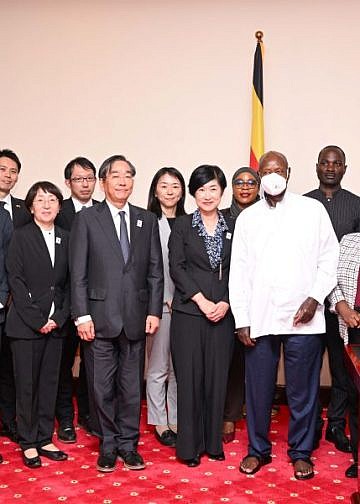





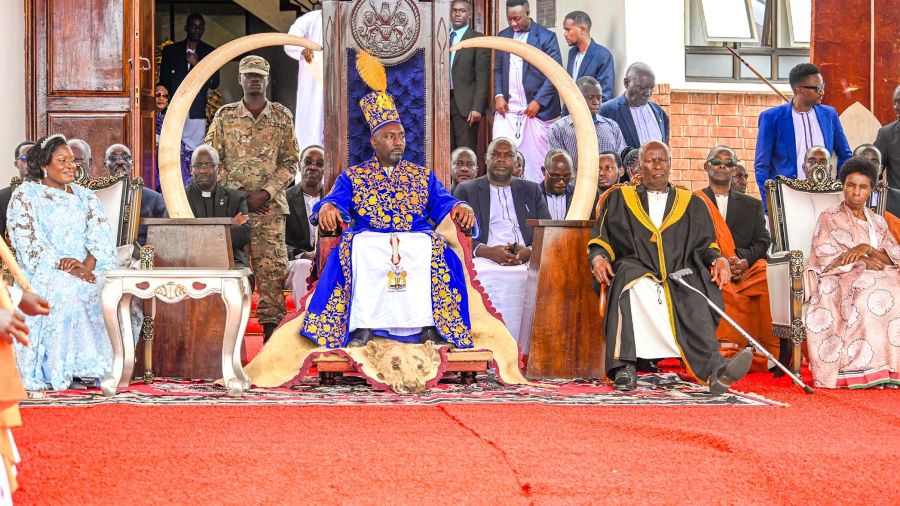
Edward Rukidi Kijjanangoma Nyabongo I has been crowned the 15th Omukama of Tooro at a ceremony presided over by President Yoweri Kaguta Museveni, marking a new chapter for the kingdom following the death of Omukama Oyo Nyimba Kabamba Iguru Rukidi IV.
King Oyo died on August 27, 2026, after a 31-year reign.
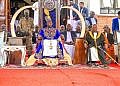
The coronation took place at Karuziika Palace in Fort Portal, where thousands of Batooro and guests from across Uganda and beyond gathered for the historic ceremony.
The event followed a thanksgiving service at St John’s Cathedral led by Bishop Reuben Kisembo before celebrations moved to the palace.
At Karuziika Palace, royal drums that had remained silent during the mourning period were sounded again, while lion statues were unveiled to mark the restoration of customary royal ceremonies following the period of mourning.
President Museveni began his address by paying tribute to the late King Oyo, whom he credited with contributing to the development of Tooro and Uganda.
The President said he was particularly moved after discovering a letter King Oyo had written to him on June 15, 2026, shortly before his death.
“I was very sad because the day after King Oyo was buried here, I was going through my documents and I found a letter which he had written to me on the 15th of June 2026. He was thanking me for a number of things, including appointing ministers from Tooro. This means that by June he was still writing letters,” Museveni said.
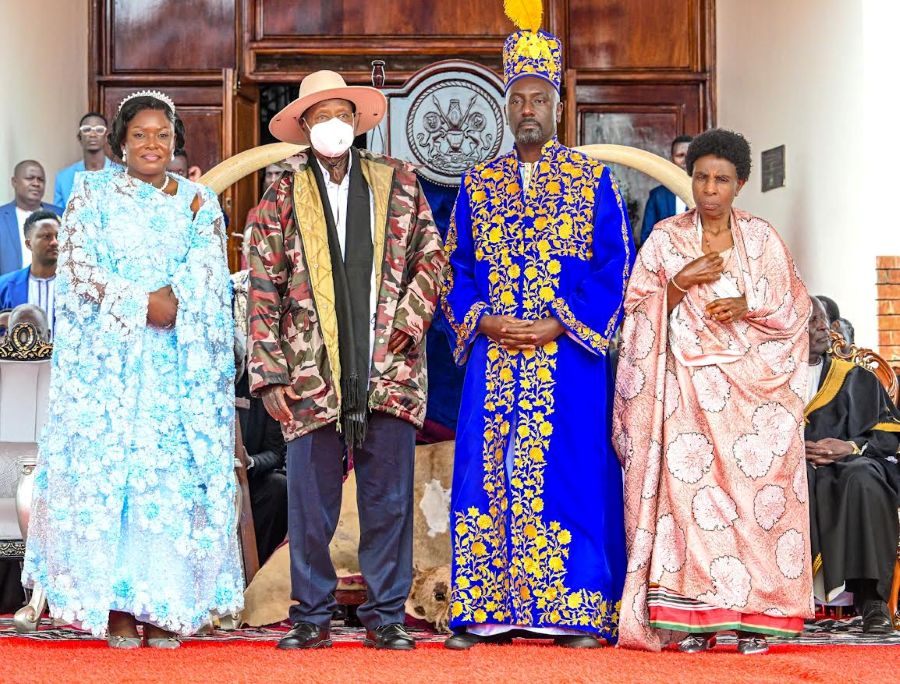
Museveni congratulated Nyabongo I, recalling his previous career as a news anchor and editor.
“I was watching him on the news as a good news reader in English, so I am sure he will do a good job here,” he said.
The President also used the occasion to explain his support for cultural institutions, saying they have a role to play in preserving aspects of society that may not be adequately addressed by modern political institutions.
Museveni said Uganda’s history included tensions between supporters of traditional kingdoms and nationalists and Pan-Africanists, with religion and ethnicity at times shaping political debates.
He said his position was rooted in Pan-Africanism while recognising the importance of cultural identity. He argued that political authority should remain with citizens rather than hereditary institutions.
“When the hereditary leader makes a mistake, what do you do with him? That is why it was wise to say that politics is for the Wanainchi,” he said.
Museveni identified indigenous languages, culture, and indigenous knowledge and science as three areas in which cultural institutions could complement modern government systems.
On indigenous languages, Museveni said languages such as Runyankore contain concepts and expressions that cannot always be adequately captured in English.
“I could see danger. The indigenous languages are not being used, children speak English,” he said.
He called for cultural institutions to work with government to preserve indigenous languages and said he had written a Runyankore dictionary as part of efforts to address what he described as neglect of indigenous languages.
The President also highlighted traditional cultural practices, including family and social systems, which he said provided guidance on marriage, family relations, conduct and social responsibility.
He further called for greater recognition of indigenous knowledge and science, arguing that traditional knowledge should not automatically be dismissed because it does not originate from modern scientific institutions.
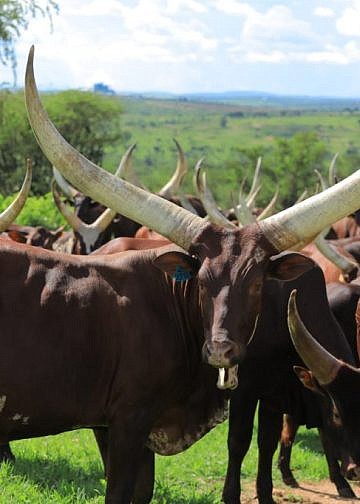
Museveni cited the preservation of Ankole long-horned cattle as an example.
“I insisted on keeping Ankole traditional cows. Now Ramaphosa, the South African President, came and when he saw my cows he bought 43 cows from me. Now in South Africa it is a big story,” he said.
He also warned against practices he said could pose health risks, including the use of polythene materials in food preparation.
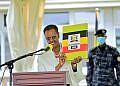
The President displayed wooden household products produced by Matongo Limited, saying some traditional Ugandan products and practices had been overshadowed by modern alternatives.
Museveni congratulated Nyabongo I, blessed his reign and presented him with 100 cows.
Nyabongo pledges inclusive reign
In his maiden address as Omukama, Nyabongo I welcomed the people of Tooro and paid tribute to his predecessor.
He thanked Queen Mother Best Kemigisa for her support during King Oyo’s illness and expressed condolences to President Museveni, the royal family and the people of Tooro.
The new Omukama also thanked Museveni for supporting Tooro throughout the transition.
“He has been with us throughout and has even blessed this day,” he said.
Nyabongo I also recognised the role of the Chief of Defence Forces, Gen. Muhoozi Kainerugaba, and security agencies following King Oyo’s death.
He thanked the Babiito clan for entrusting him with the throne and commended Omujwera Musuuga Charles Kamurasi for his leadership during the transition.
The new King also acknowledged his wife, Omugo Rebecca Omoding Akiiki, his mother, Omujwera Nyina Omukama Yusta Asiimwe Kijanangoma Amooti, and his late father, Prince Christopher Paul Kijanangoma, whom he credited with laying the foundation for his life.
He also thanked the people of Tooro and Ugandans for their support, with particular appreciation for the media and Uganda Broadcasting Corporation, where he worked for 12 years as a news anchor and editor.
Outlining his vision, Nyabongo I pledged to lead an inclusive kingdom that serves all people without discrimination while preserving the culture, traditions and way of life of the Batooro.
He said the kingdom would work closely with the central government to support national development.
“We shall work together in unity, trusting that the Lord shall protect and bless the people of Tooro,” he said.
He also pledged to promote peace and wealth creation in partnership with religious leaders and elders.
Speaking on behalf of Tooro leaders, Minister of Tourism, Wildlife and Antiquities Tom Butime described the coronation as a historic occasion for Tooro and Uganda.
He thanked President Museveni for his support and commended the Batooro for maintaining unity during the transition.
Omujwera Musuuga Charles Kamurasi welcomed the President and thanked him for the support extended to King Oyo throughout his life, including during his illness.
“Thank you for loving Tooro and the people of Tooro,” Kamurasi said.
He also commended the UPDF Engineering Brigade for rehabilitation works at the palace and thanked Gen. Kainerugaba for deploying teams to support preparations for the coronation.
Kamurasi acknowledged Lt. Gen. Kayanja Muhanga, Minister Butime, Gen. Henry Tumukunde, members of the organising committee and others who contributed resources and expertise towards the event.
He said Tooro would remember King Oyo for his advocacy against HIV and AIDS and praised the people of the kingdom for coming together during the transition.
Kamurasi formally handed over authority to the new King.
“I have given you all the power since I am the one who has been holding power during the time since Oyo’s death,” he said.
Minister of Gender, Labour and Social Development Gen. Henry Tumukunde also recognised the contribution of the late King Oyo and thanked the Babiito for their cooperation during the transition.
The coronation marks the formal beginning of Nyabongo I’s reign and the continuation of the Tooro Kingdom’s traditional institution under a new monarch.