











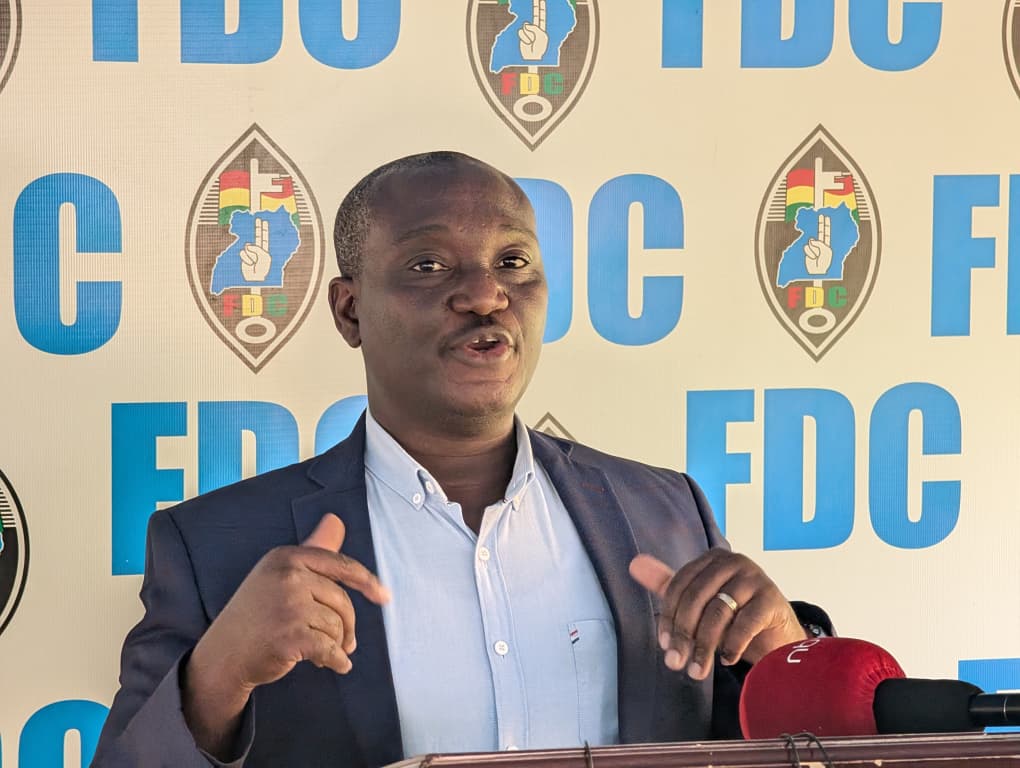
Forum for Democratic Change (FDC) has raised alarm over the growing burden of money lending in Ugandan communities, warning that limited access to affordable formal credit is pushing ordinary citizens into debt traps that threaten their land, businesses and livelihoods.
The party says the proliferation of money lenders in villages and trading centres is a sign of a wider failure in Uganda’s financial system, where many citizens cannot access affordable credit from formal institutions.
Robert Centenary Franco, the FDC Vice Chairperson, said many Ugandans are being forced to rely on money lenders, mobile lending applications and asset-financing companies because the formal financial system has failed to adequately serve low-income borrowers.
“There is one condition that makes predatory lending possible: poor access to affordable credit,” Centenary said.
According to the FDC, more than half of adult Ugandans have borrowed money in the past five years, with many relying on lenders outside the banking system.
The party says the registered money-lending sector alone handles more than Shs1 trillion annually through about 1,800 licensed lenders, while unregulated lenders and digital loan applications have further expanded access to high-cost credit.
Franco said the problem is particularly acute in rural communities, where borrowers can easily fall into arrangements that put their property at risk.
The FDC alleges that some borrowers are persuaded to surrender national identity cards or sign documents presented as loan agreements, only to discover that the documents have been structured as sale agreements for their property.
“When they default, there is therefore no conventional loan to dispute,” he said.
The party argues that the growing presence of money lenders in villages should not be viewed simply as a problem of irresponsible borrowing, but as evidence of a gap in Uganda’s formal financial system.
Boda bodas caught in debt cycle
The FDC also linked the credit crisis to Uganda’s boda boda economy, which it says has become a major source of employment for young people who cannot find opportunities in the formal labour market.
Many riders, according to the party, acquire motorcycles through hire-purchase arrangements offered by asset-financing companies and micro-credit firms.
Under these arrangements, riders make an initial deposit followed by daily or weekly payments. But when a rider falls behind, the motorcycle can be repossessed even after substantial payments have been made.
The party says this can leave riders without an income almost overnight.
“When the bike is taken, the rider’s income stops the same day,” the statement says, warning that some riders who cannot recover their motorcycles may be pushed into criminal activity.
FDC says the solution is not simply to regulate lenders after borrowers have fallen into distress, but to expand affordable credit options so that Ugandans have alternatives.
The party is calling for cheap capital with minimal collateral requirements for women, youth, persons with disabilities, the elderly, pensioners and veterans.
It also wants farmer banks established within agricultural zones to provide affordable financing for land, seeds, pesticides and irrigation, alongside the restoration of the Cooperative Bank and recovery of cooperative assets.
The party further proposes the formation of leadership SACCOs at parish, sub-county and district levels, backed by direct government capitalisation.
For boda boda riders, FDC is proposing a Boda Boda Savings and Protection Cooperative Scheme that would provide access to medical, pension and accident insurance while giving riders an alternative to asset-financing companies.
The party is also demanding stronger enforcement against illegal and unregistered money lenders and digital lending applications that use threats, blackmail and harassment to recover debts.
It wants national identity cards and land titles protected from being used as informal collateral outside registered lending arrangements.
Centenary said tackling predatory lending requires government to address the root cause — the lack of affordable credit — rather than only dealing with borrowers after they have fallen into debt.
The FDC argues that unless affordable credit reaches villages, agricultural communities and informal workers, money lenders will continue to fill the gap left by formal financial institutions, leaving vulnerable Ugandans exposed to increasingly costly debt.