







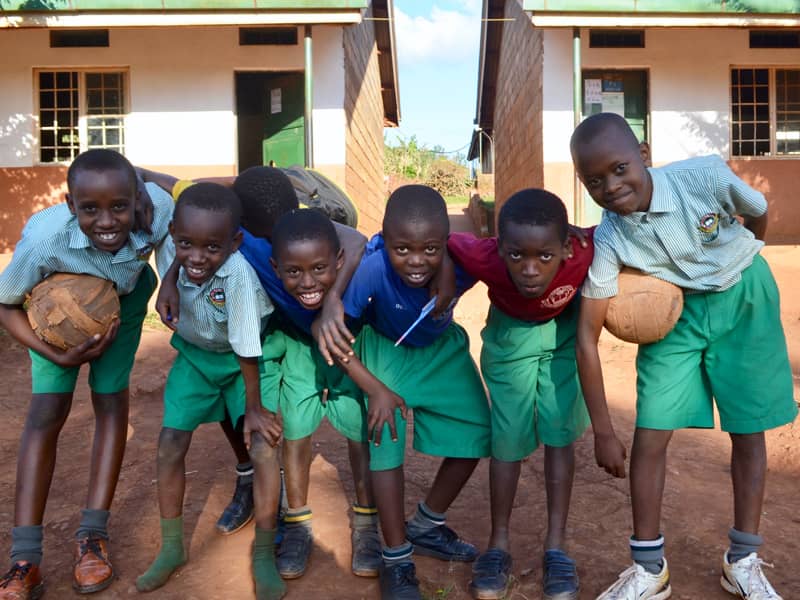
Supporting vulnerable children requires more than paying school fees, providing scholastic materials and meeting their immediate needs. It also requires strengthening the economic circumstances of the families responsible for raising them.
This is the philosophy guiding Adonai Family Uganda, a locally established non-governmental organisation located in Nsaggu, in Wakiso district that is increasingly integrating household economic empowerment into its interventions for orphans and vulnerable children.
The organisation says that while supporting a child through education and other essential services is important, the impact may remain limited if the family continues struggling to meet basic needs.
Aloysius Luswata, the Founding Director of Adonai Family Uganda, says the organisation has deliberately expanded its interventions beyond individual child sponsorship to address the broader economic challenges facing vulnerable households.
He explained that families are central to children’s welfare and that interventions targeting children should also consider the circumstances of the households in which they grow up.
“When you support children and forget the family, you have not addressed the entire problem. In most cases, we support one or two children from a particular household, but that does not mean the other challenges facing the family have disappeared. The parents and guardians may still be struggling to provide food, meet medical expenses and take care of other household responsibilities,” Luswata said.
He noted that this realisation informed the organisation’s decision to strengthen its community development programme through initiatives aimed at improving household incomes and enabling families to become more self-reliant.
Moving beyond child sponsorship
Adonai Family Uganda operates in three main areas: education, healthcare and community development.
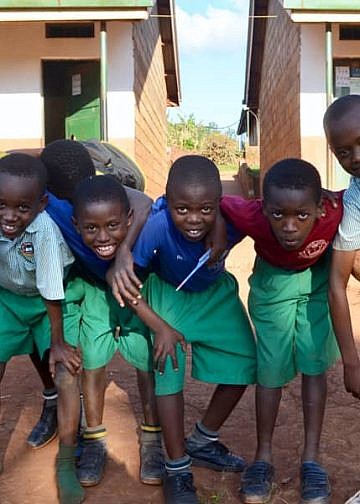
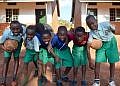
Under education, it runs Adonai Junior School, which provides learning opportunities to orphans and vulnerable children while also admitting pupils from other backgrounds. Its sponsorship programme further supports selected children through secondary education and, depending on individual circumstances and available resources, higher institutions of learning.
The organisation also operates Adonai Medical Centre, which provides services including general treatment, antenatal care, maternity services, dental care, laboratory investigations and diagnostic scanning.
However, Luswata says the organisation recognises that these interventions must be accompanied by efforts to improve the economic capacity of families.
“We want to support a child, but we also want that child’s family to be in a position where they can continue providing for them. If we only concentrate on the child and leave the family struggling, we may not achieve the level of transformation we desire. Our intention is to help families develop the capacity to meet their needs rather than remain dependent on assistance,” he explained.
According to Luswata, empowering households creates an opportunity for parents and guardians to participate more actively in their children’s education, healthcare and general welfare.
One of the initiatives through which Adonai Family Uganda is pursuing household empowerment is its pig farming project, designed to help selected families establish small-scale livestock enterprises.
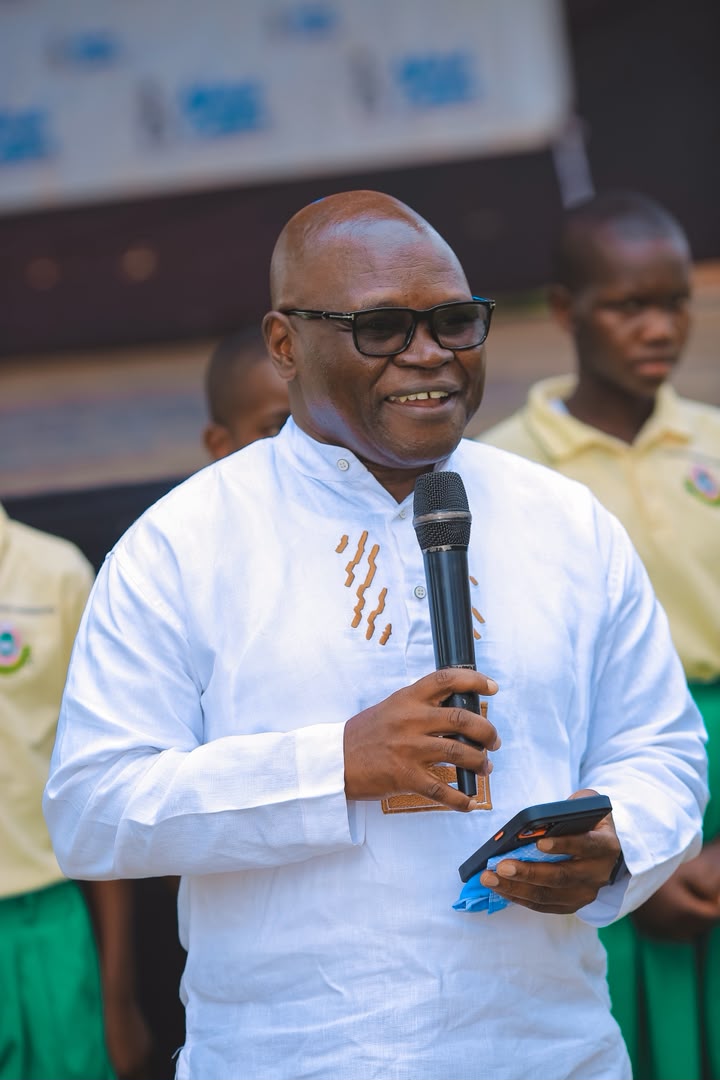
Under the initiative, beneficiary households receive two piglets and support to help them raise the animals productively.
The organisation hopes that the project will enable families to develop an additional source of income while gradually extending the benefits to other households.
Luswata said the programme is designed around the principle of shared responsibility, where beneficiaries who become established are encouraged to support another family.
“Right now, we are running a pig project through which we identify families and give them two piglets. We support them to ensure that they can raise the animals productively. As they progress, we encourage them to extend the same opportunity to another family. That way, we are not only helping one household, but also creating a system through which the support can reach other families in the community,” he said.
He explained that the initiative is intended to create opportunities for families to generate income and gradually reduce their dependence on external assistance.
The approach also seeks to promote a culture of community responsibility in which people who benefit from development interventions become active participants in improving the welfare of others.
Beyond livestock farming, Adonai Family Uganda supports families involved in agriculture and small-scale business activities as part of its broader poverty reduction strategy.
Luswata said the organisation believes that families should be supported according to their abilities, interests and available opportunities.
Some households may benefit more from livestock projects, while others may have greater potential in agriculture or small businesses.
“We support those involved in agriculture and small businesses because we want families to have something they can depend on. We cannot expect a family to become self-reliant if we only provide support to one child and do nothing to strengthen the household’s ability to earn an income. We must look at what the parents or guardians can do and help them improve those activities,” he said.
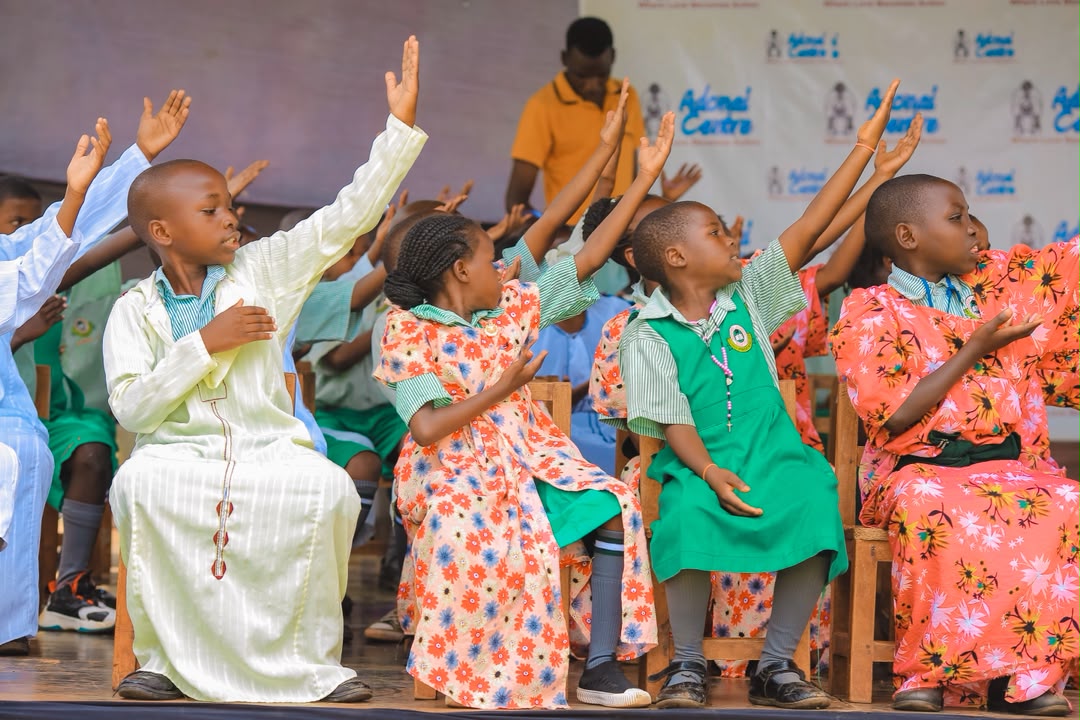
He added that the organisation’s long-term ambition is to see families develop sustainable economic activities that can help them meet their children’s needs even beyond the period of direct sponsorship.
Adonai Family Uganda is also using agricultural production to reduce its operational costs, particularly those associated with feeding children under its care.
The organisation grows maize, cassava, potatoes, beans and vegetables to supplement its feeding programme.
Luswata said the agricultural activities are part of a broader strategy to ensure that the organisation can sustainably provide for children while directing available resources towards other essential services.
“Some of our children are accommodated here, and we provide meals for them. Feeding is therefore a continuous responsibility. We cannot always depend on purchasing everything we need from the market. That is why we grow maize, cassava, potatoes, beans and vegetables so that we can produce some of the food required for our feeding programme,” he said.
The organisation is also planning to establish a maize milling facility to reduce the cost of processing its agricultural produce and generate additional income by serving other customers.
Luswata said such income-generating activities would help strengthen the organisation’s capacity to continue supporting vulnerable children and families.
For Adonai Family Uganda, the ultimate objective of household empowerment is to address the conditions that perpetuate poverty across generations.
Luswata said the organisation wants children who benefit from its programmes to grow into responsible and economically independent adults who can support themselves and their families.
He emphasised that education should not be viewed exclusively through academic achievement but also through the practical skills that enable individuals to earn a living.
“We want to raise purpose-driven and value-oriented children. By the time a child completes our programme and moves into independent life, we want them to have the ability to support themselves and their families. If a child is not able to progress far academically, we should identify their strengths and help them acquire vocational skills that can enable them to earn a living,” he said.
He argued that practical skills in areas such as mechanics and agriculture can provide young people with opportunities to become productive and contribute to the development of their communities.
The organisation believes that when children acquire skills and families become economically stronger, the likelihood of households depending indefinitely on external assistance can be reduced.
Appeal for wider support
Despite its education, healthcare and livelihood interventions, Adonai Family Uganda says additional support is needed to expand its programmes and reach more vulnerable households.
The organisation currently relies on a combination of international partners, local individuals, churches, community contributions and its own agricultural activities to sustain its work.
Luswata appealed to government, development partners, the private sector and well-wishers to support initiatives that address both children’s immediate needs and the economic challenges facing their families.
He said additional resources, qualified personnel and institutional partnerships would help strengthen the organisation’s capacity to deliver services.
“Our appeal is for more people and institutions to understand that supporting vulnerable children also means supporting the families around them. When a family becomes economically stable, it becomes easier for that family to provide food, healthcare and education for its children. We therefore need partnerships that go beyond short-term assistance and help us build sustainable solutions,” he said.
For Adonai Family Uganda, the vision is to move from supporting individual beneficiaries to strengthening entire households and communities.
Its approach rests on the belief that a child’s future is closely connected to the well-being of the family, and that meaningful efforts to break the cycle of poverty must address both.