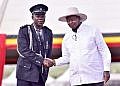











President Museveni has defended the government’s trade order against street hawking, saying the practice is harmful to both the economy and public health.
Addressing the nation on Saturday, Museveni revealed that the Inter-Religious Council of Uganda had raised concerns with him about the implementation of the trade order, noting that some people’s livelihoods had been affected.
In response, he insisted that hawking has never been beneficial to the country’s economy or the health of its citizens.
“Hawking is an economy and health killer,” Museveni said. “It kills the economy by denying users of shops and markets business because customers buy from hawkers who cannot pay tax or rent. What kind of economy is that?”
He argued that businesses operating in shops and markets meet obligations such as paying rent and taxes, unlike hawkers, making the practice unfair to compliant traders and reducing government revenue.
“How will the economy survive if people do not pay taxes on rent or pay taxes on sales?” he asked.
On public health, Museveni warned that products sold in open spaces, especially food, are exposed to dust and other contaminants, putting consumers at risk.
“Having products exposed to the atmosphere, including food, is very dangerous. Yet the person selling a dangerous product is not identifiable,” he said.
The President also said street hawking blocks pedestrian walkways, forcing people onto roads where they compete with vehicles and motorcycles, increasing the risk of accidents and traffic congestion.
“Blocking pedestrians from using sidewalks and forcing them to compete with cars and boda bodas on narrow roads leads to accidents and traffic congestion,” he said.
Museveni maintained that traders should operate from shops, markets or supermarkets where they can be registered, licensed and held accountable.
“People must be in shops, markets or supermarkets. Even there, you must be registered so that you are accountable for what you sell and you also pay tax,” he said.
However, he directed local governments to explore providing land where former street hawkers can legally operate, while emphasising that every trader must be licensed, identifiable, accountable and tax compliant.
Drawing a comparison with past public health campaigns, Museveni joked that efforts to reduce deaths from diseases such as HIV/AIDS, Ebola, COVID-19 and measles could one day attract complaints from coffin makers whose business depends on mortality.
“Yes, coffin makers will lose business because it is a bad business that is at the expense of society. Instead, they should make chairs and beds for Ugandans who do not die,” he said.