









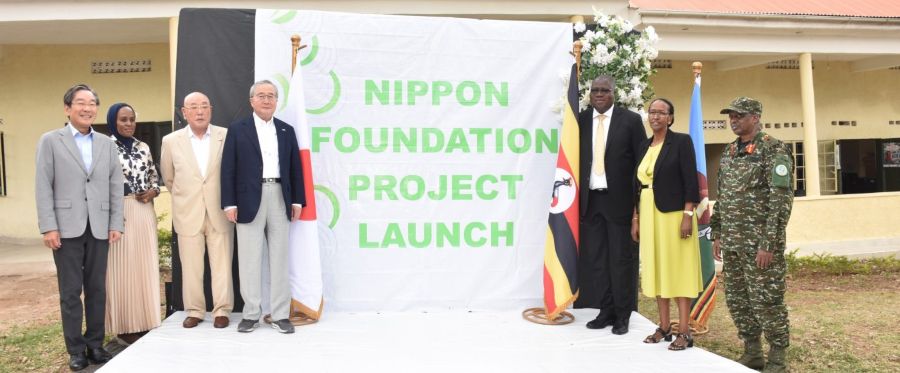
In a landmark initiative to support Uganda’s war-affected veterans, the Minister of Defence and Veteran Affairs, Jacob Marksons Oboth, has officially launched a Japan-funded project aimed at rehabilitating injured servicemen and women while equipping them with psychosocial and vocational skills.
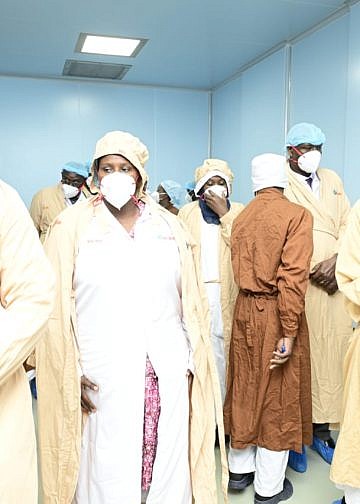
The launch took place at the Defence Forces Rehabilitation and Vocational Centre in Mubende.
The USD 478,577 project, financed by the Nippon Foundation, operates under the program “Consolidating Physical and Psychosocial Services at Mubende Rehabilitation Centre and Establishing a Veterans Skilling Centre in Kakiri.”
Its objectives include improving medical rehabilitation, counselling, vocational training, and the broader community reintegration of injured soldiers, veterans, and their families.
Oboth lauded the Government of Japan and the Nippon Foundation for their generosity, describing the initiative as a milestone in the ongoing support of those who have sacrificed for Uganda’s peace.
“This project represents a significant step forward in strengthening the welfare and dignity of our veterans and serving soldiers who have sacrificed for the peace and security of our beloved country,” he said.
Reflecting on Uganda’s turbulent post-independence history, Oboth recalled the nation’s eight government changes in just two decades, a period that left deep institutional scars.
He acknowledged the physical and psychological toll on soldiers while highlighting Uganda’s current role as a key peacekeeper on the continent.
“The Nippon Foundation project is a blueprint for inclusive development, a model for civil-military synergy, and a testament to Uganda’s enduring commitment to peace, dignity, and transformation. Let us build as we heal,” he appealed.
Japanese Ambassador to Uganda, Takuya Sasayama, underscored the significance of supporting veterans, linking Japan’s contribution to long-standing cooperation between the UPDF and the Japan Self-Defence Forces in UN peacekeeping missions.
“I commend my seniors for keeping their word made more than seven years ago, which today has become a reality. This project reflects our shared belief that security is not only about military strength, but also about how we care for those who have borne the burden of defending our nations,” Sasayama said.
Permanent Secretary for Defence, Mrs. Rosette Byengoma, highlighted the holistic nature of the project, stressing that rehabilitation goes beyond physical recovery to rebuilding confidence, resilience, and dignity.
“True security is measured not only by military strength, but by how a nation cares for its veterans,” she said, expressing gratitude to Japan for the continued partnership.
Mr. Takeju Ogata, Chairperson of the Nippon Foundation, said the donation would significantly improve the lives of injured soldiers and veterans.
He described the day’s rainfall as symbolic of the bond between nature and humanity and of the growth of Uganda–Japan friendship.
“We are grateful that our Foundation can contribute to the welfare of soldiers injured in war, especially those who served to protect people outside Uganda. I hope for a day when the world will be free of conflict, but until then, we must care for those who continue to be wounded while sacrificing their lives for others,” he said.
Brig Gen Moses Kwikiriza, Commandant of the Defence Forces Rehabilitation and Vocational Centre, welcomed the project as a boost to ongoing efforts to rehabilitate and reintegrate veterans.
“Today’s occasion marks a vital step forward in our commitment to care, rehabilitate and reintegrate our injured service personnel and veterans into society. The equipment donated will make a real difference in the lives of those undergoing the rehabilitation program,” he said.
Brig Gen Kwikiriza further explained that the new facilities and training would expand and modernise the Centre’s programs.
“This effort would not have been possible without the support of His Excellency the President, the UPDF leadership, our Japanese partners, and the dedicated staff and healthcare professionals whose work reflects the highest standards of service and compassion,” he added.
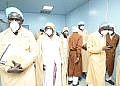
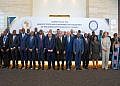
The launch was attended by senior UPDF officers, Ministry of Defence officials, Japanese representatives, local government leaders, and veteran association members.
Established in 1986, the Defence Forces Rehabilitation and Vocational Centre—formerly the Chieftaincy of Mubende Rehabilitation Centre—has been central to rehabilitating soldiers disabled in war.
Its services include prosthetic limbs, hearing aids, mental health support, and vocational training, all aimed at restoring dignity and livelihoods while preparing veterans for civilian employment or redeployment.