







Kampala has been ranked among cities experiencing some of the worst air pollution levels globally, the Kampala Capital City Authority (KCCA) has warned, calling for urgent collective action to protect the environment and public health.
Speaking during the launch of the ‘My Green Action’ campaign at Kitante Hill School, KCCA Deputy Executive Director Benon Kigenyi said air pollution remains one of the city’s least discussed but most serious challenges.
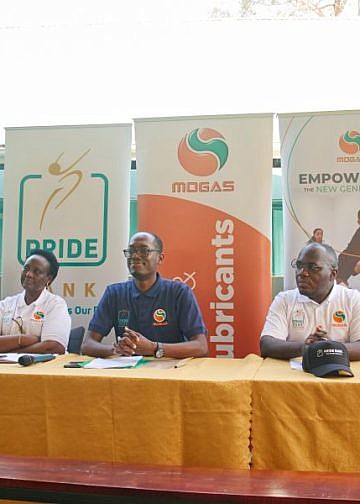
The campaign, led by UNICEF Uganda in partnership with KCCA, Roofings Limited, Volcano Energy and Fresh Yard, seeks to empower young people in schools to participate in climate action through tree planting, environmental awareness and sustainable practices.
Kigenyi said Kampala’s air pollution levels should concern residents because of the health risks associated with poor air quality.
“On the global scale, Kampala Capital City has been recorded as one of the cities with the worst cases of air pollution, coming in very close in comparison with Delhi,” Kigenyi said.
“That must worry you and me because air pollution exposes us to a lot of diseases.”
He urged young people to take environmental conservation seriously, saying their future depends on the actions taken today.
“You need to be alive, you need your lungs, you need to be available for tomorrow to take the leadership that is not only promised but which you are already doing through engagements of leading the change for environmental upgrade,” he said.
Kigenyi said KCCA, through its Directorate of Public Health and Environment, was committed to improving environmental quality and promoting sustainable development across the city.
However, he stressed that government interventions alone would not be enough without public involvement.
“KCCA alone would fail if we do not have anchors in the people whose tomorrow can only be guaranteed by a good environment,” he said.
He commended Kitante Hill School for hosting the launch, describing it as one of Kampala’s green spaces that demonstrates the importance of protecting urban vegetation.
He said the campaign should encourage more institutions and residents to embrace tree planting and environmental conservation.
“From our vantage point as Kitante Hill, we must spread the gospel of green in Kampala and make it our action, making it our mission for tomorrow to be better than we found it,” Kigenyi said.
He said the Kampala Climate Change Action Strategy targets a 22 percent reduction in greenhouse gas emissions by 2030 as part of efforts to transition the city towards a low-carbon future.
Kigenyi highlighted initiatives including the introduction of electric buses, expansion of non-motorised transport corridors and the Kampala Urban Forest Management Plan aimed at increasing tree cover.
He said residents should embrace tree planting because Kampala lacks the space for large forests similar to Mabira and Budongo forests.
“We cannot take KCCA to Mabira or to Budongo, but we can increase tree cover and make Kampala green and livable,” he said.
Kigenyi said KCCA continues to preserve and maintain green spaces including Centenary Park, Children’s Park and Nakawa Park, alongside expanding walking and cycling corridors.
He said these efforts are intended to improve air quality, reduce urban heat, enhance biodiversity and promote healthier urban living.
The Deputy Executive Director commended UNICEF and other partners for supporting the My Green Action campaign, saying it would help young people become environmental ambassadors.
“Building a greener, cleaner and more resilient future is a shared responsibility which requires collective commitment and action,” he said.
Fatuma Namukose, the U-Report Programme Manager at UNICEF Uganda, said the initiative aims to increase youth participation in environmental protection.
She said young people have the potential to drive meaningful climate action if equipped with the necessary knowledge and skills.
“We believe that power is in the young people. If we change the minds of young people by training and skilling them, we stand a higher chance of changing the world,” Namukose said.
She explained that UNICEF uses platforms such as U-Report and Fundoo to equip young people with skills, including green skills, that enable them to participate in climate action within their communities.
Namukose said tree planting was chosen as one of the campaign’s practical activities because young people often benefit from trees without understanding the effort required to grow and protect them.
“You are eating a mango or jackfruit because someone planted the tree. Can you also plant one that another person will eat tomorrow?” she asked.
She encouraged students to embrace environmental activities that will contribute to creating a sustainable future.
Kitante Hill School Headteacher Samuel Kamukamu Balwana said the My Green Action campaign complements Uganda’s secondary school curriculum, which promotes responsible citizenship and environmental awareness.
He said learners are already introduced to issues such as climate change, conservation, natural resource management, waste management and sustainable development through subjects including agriculture, biology and geography.
Balwana said the initiative provides students with practical opportunities to apply classroom knowledge through environmental activities.
“The My Green Action Campaign complements classroom learning by providing practical opportunities for students to translate knowledge into meaningful environmental action,” he said.
He added that school environmental clubs encourage activities such as tree planting, plastic recycling and environmental clean-ups.
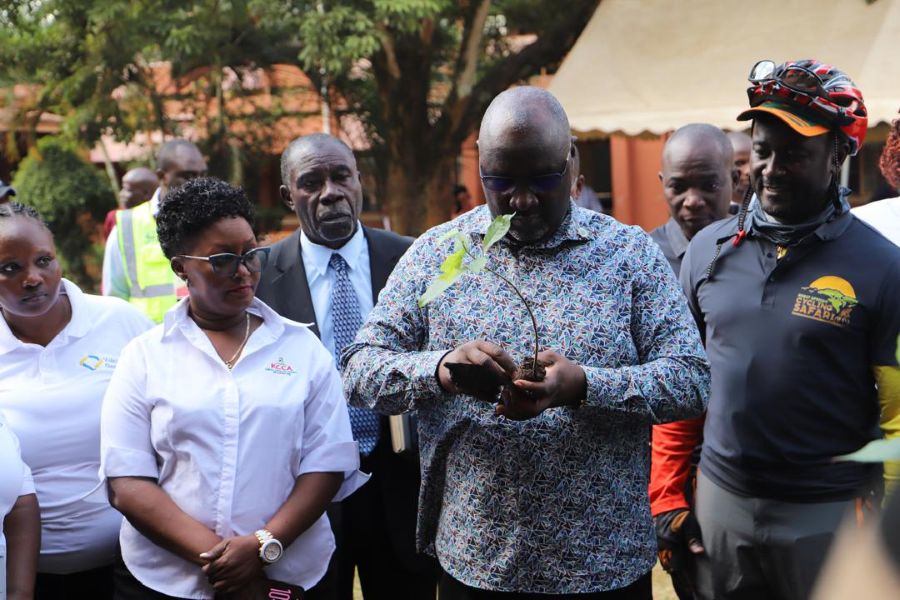
Balwana pledged that Kitante Hill School would maintain the tree planted during the campaign launch as a symbol of commitment to environmental sustainability.
“We pledge to nurture the tree planted today so that when you return, you’ll find a thriving forest, a lasting symbol of our commitment to environmental sustainability,” he said.
The My Green Action campaign will be implemented in schools to promote climate awareness, environmental stewardship and sustainable lifestyles among young people.