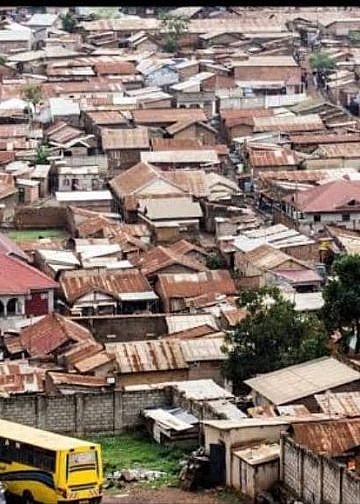












Katwe in Makindye Division has emerged as a leading air-pollution hotspot in Kampala, with fine-particle pollution more than seven times the World Health Organization’s (WHO) annual guideline and above Uganda’s national standard, according to a government report.
The Ministry of Water and Environment’s FY2025/26 performance report, presented by Water and Environment Minister Kahinda Otafiire, shows that Katwe recorded an annual average concentration of 35.3 micrograms per cubic metre (µg/m³) of PM2.5, compared with Uganda’s national standard of 25 µg/m³.
The Katwe concentration was also more than seven times the WHO’s 2021 annual guideline value of 5 µg/m³.
PM2.5 refers to fine particulate matter that can penetrate deep into the respiratory system.
The report states that “air-pollution hotspots remained evident in the Greater Kampala Metropolitan Area and other urban locations.”
It specifically identifies Katwe among areas recording elevated pollution levels, while Banda recorded a much lower annual PM2.5 concentration of 12.8 µg/m³.
“Katwe in Makindye Division recorded PM2.5 of 35.3 ug/m³, while Banda recorded 12.8 ug/m³; Buwenge North in Jinja City was also identified as an area of elevated particulate pollution,” the report says.
The ministry notes that several hotspot readings exceeded both Uganda’s reported National Ambient Air Quality Standard of 25 µg/m³ for PM2.5 and the WHO’s 2021 annual guideline value of 5 µg/m³.
According to the report, the findings point to the need for targeted measures to tackle pollution from vehicles and industries, as well as improvements in urban planning and traffic management.
“The evidence supports more targeted action on transport emissions, industrial emissions, urban planning, traffic management and public awareness,” the report says.
At the national level, aggregated monitoring data showed an annual average PM2.5 concentration of 13 µg/m³ and an average PM10 concentration of 32 µg/m³ during the financial year.
The report also highlights other environmental achievements during FY2025/26, including the creation of approximately 1,250 green jobs in Kampala through activities such as urban forestry, tree planting, landscaping, waste collection and recycling, urban agriculture, electric mobility and green infrastructure.
On water quality, the ministry reported that compliance of drinking water with national potable-water standards increased from 70.2% in FY2024/25 to 73.5% in FY2025/26, while wastewater-discharge compliance rose from 48.9% to 49.2%.
The ministry also reported that 3,605 Environmental and Social Impact Assessment (ESIA) applications and reports were processed and approved out of 4,437 reviewed, representing an approval rate of 81.25%.
Minister Otafiire presented the ministry’s FY2025/26 performance statement, detailing the country’s progress and challenges in environmental and water-resources management.