










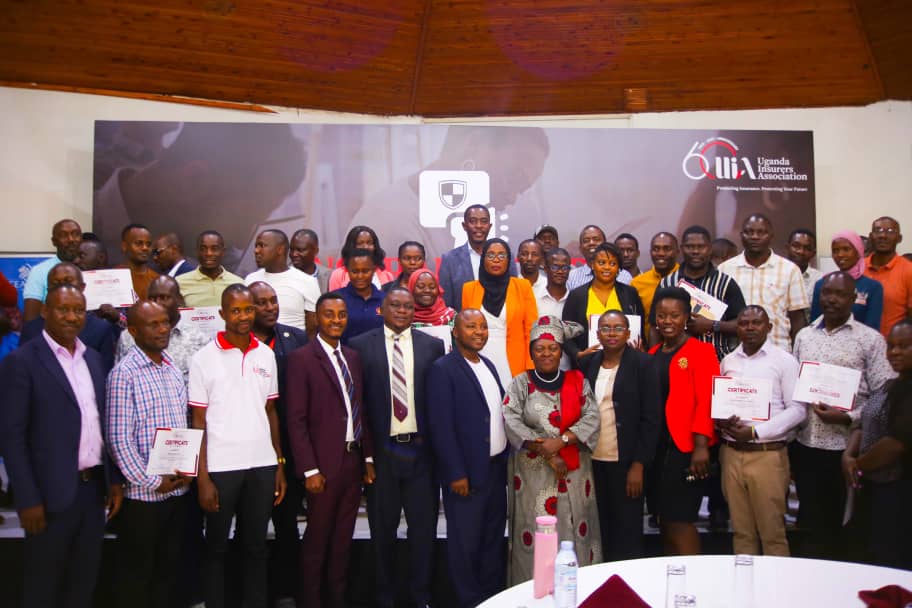
Uganda’s insurance industry leaders have called on journalists to simplify complex concepts and spotlight the positive impact of insurance in order to boost public confidence and uptake.
Speaking during a Uganda Insurers Association (UIA) media workshop at Fairway Hotel in Kampala, Dr. Al-Haji Kaddunabi Lubega, Chief Executive Officer of the Insurance Regulatory Authority (IRA), said the sector paid out more than shs 800 billion in claims over the past year, representing over 50% of premiums collected.
“The ultimate goal of insurance is that in the unfortunate event of a loss, you will be paid,” Kaddunabi said. “If shs 800 billion has been paid back in claims, it means that the reason people insure is being achieved. Insurance is not a luxury, it is a necessity that supports economic resilience and individual stability.”
He urged more Ugandans to take up policies, noting that with insurance penetration at only 0.8%, many still lack protection.
“If you do not have an insurance policy now, you only have yourself to blame. The regulator is here to ensure that if you have insurance and a problem arises, you will be compensated,” he stressed.
Kaddunabi also encouraged journalists to avoid jargon when reporting on the industry.
“Your reporting can either build or break public confidence. Explain penetration, claims, and products in simple language so that people can make informed decisions,” he said, highlighting the importance of microinsurance for farmers, market vendors, and other vulnerable groups.
Jonan Kisaakye, CEO of UIA, said the workshop aimed to bridge the gap between insurers and the media by “demystifying complex insurance concepts” and equipping journalists with accurate, accessible content.
“We want to expose insurers to the realities of modern youth empowerment and decision-making, while building long-term relationships with the media,” Kisaakye noted.
UIA Chairperson Ruth Namuli described the event as “a strategic conversation” rather than a one-off engagement.
“Media is not just a conduit for information—it is a force that shapes perception and drives accountability,” she said.
“We must deliberately build shared understanding between the insurance industry and the media. We can’t afford to have clients interpreting insurance through misunderstanding or silence caused by jargon and small print,” she added.
Namuli urged insurers to be “more transparent, accessible, and responsive” and called for ongoing structured engagement through technical briefings and open discussions.
Journalists at the workshop also shared their perspectives on boosting public awareness.
Nebert Rugadya of Uganda Radio Network urged insurers to use social media creatively.
“Look at the URA page, it might look unserious to many, but you keep reading, and the message is received. Let’s use platforms like X to share simplified, engaging information,” he said.
Ben Mwine from Next Media called on insurers to provide “clear, accessible, and well-structured data” alongside regular training for journalists.
He emphasized the need for “open dialogue” between the media and the insurance industry to strengthen collaboration and understanding.