









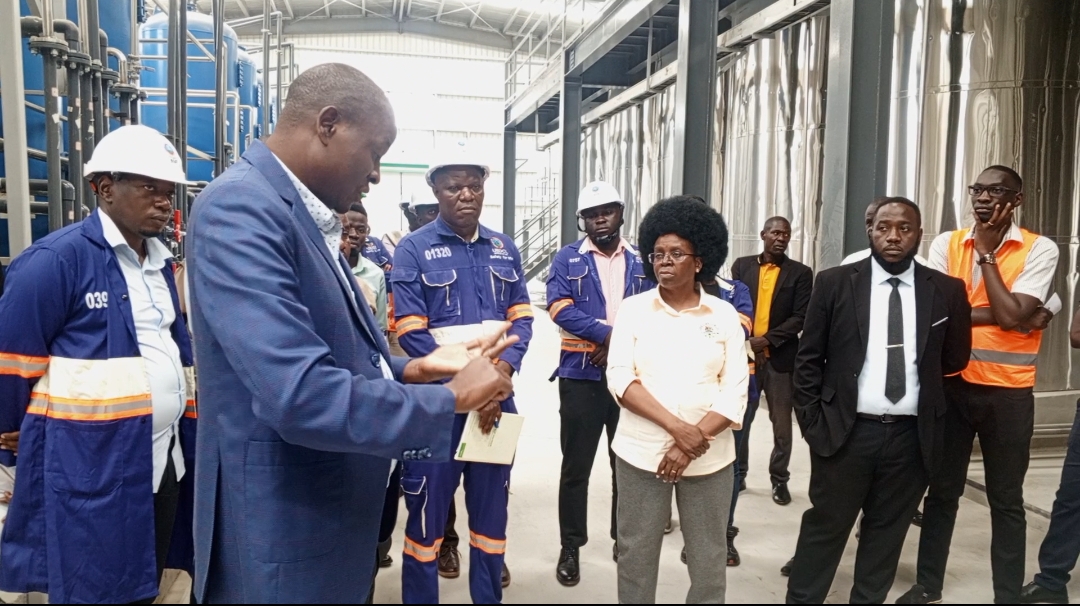
The Uganda Electricity Distribution Company Limited (UEDCL) has been given two weeks to connect the Dei BioPharma Ltd cassava processing plant in Kamuli District to the national electricity grid after prolonged power challenges limited production.
The directive was issued by Energy Minister Dr Monica Musenero during a visit to the facility on Wednesday, where she met UEDCL officials to discuss the plant’s electricity requirements.
The facility, owned by Dei BioPharma proprietor Dr Matthias Magoola, has been ready for commercial production for about 18 months but has relied on diesel generators because it is not connected to the national grid.
President Yoweri Museveni commissioned the facility on November 20 last year.
Magoola told the minister that the plant spends about Shs15 million to operate one generator for a single shift, making sustained full-scale production prohibitively expensive.
“It has been painful having completed this facility for about one and a half years. We started production in June last year when we began testing it, but we have been using very expensive means of running generators,” Magoola said.
He said the plant requires more than 5 megawatts (MW) of electricity to operate at full capacity.
Musenero said the government would intervene to ensure the industrial facility does not remain underutilised because of inadequate electricity supply.
“I am a hands-on minister, and my coming to this facility demonstrates that. I called my team at UEDCL to find a solution to this problem,” she said.
She said the government had set a two-week timeframe to address the plant’s power challenge.
“We are not only working to solve the power problem at this plant. We want to ensure that unreliable electricity supply is no longer a challenge to industries,” Musenero added.
According to Magoola, UEDCL committed to connecting the plant to the grid and upgrading the supporting electricity infrastructure, including replacing conductors, within two weeks.
“They have assured us that this will be done in two weeks. When you come back here, you will be shocked because we are going to start full production,” he said.
Power constraints limit cassava processing
The lack of a reliable grid connection has also affected the plant’s ability to process cassava consistently.
Magoola said the facility requires about 500 metric tonnes of cassava each day when operating at full capacity. The crop is sourced from Busoga and other parts of Uganda, including Teso, Arua, Gulu, Lira and Bukedea.
However, he said the plant currently operates only about once a week because of the cost and limitations associated with generator power.
“We have been buying cassava from everywhere, but because of power we produce once a week. Even with that production, we are not getting the required quantities of cassava,” Magoola said.
He said scaling up production would create jobs and provide a larger market for cassava farmers.
Dei BioPharma is also encouraging farmers to increase cassava production as the company plans to develop a range of products from the crop and eventually expand processing to other agricultural commodities, including sweet potatoes and maize.
The Kamuli facility uses industrial processing technology to convert cassava into pharmaceutical-grade starch and industrial sugars, including glucose and maltose.
Magoola said the products are intended to supply the company’s pharmaceutical and vaccine manufacturing operations at Matugga in Wakiso District, with some output destined for export markets.
“Our campus in Matugga cannot produce vaccines and drugs without the products we produce here,” he said.
The Kamuli facility forms part of Dei BioPharma’s wider investment plans in pharmaceutical manufacturing, biotechnology and agro-processing.
The company has outlined plans for investments of up to US$10 billion in advanced manufacturing facilities, including pharmaceutical and veterinary vaccine production.
The Dei BioPharma Advanced Agro-Processing and Biotech Park at Namasagali in Kamuli District was launched by President Museveni on November 20 last year. The president also commissioned the company’s cassava starch manufacturing plant, which represents a reported US$50 million investment.
The facility is designed to produce pharmaceutical-grade starch and industrial products for the pharmaceutical and food sectors.
According to the company, the wider project is planned on a 5,000-acre estate and is expected to include additional agro-processing and biotechnology facilities.
The proposed developments include an organic fertiliser plant using animal waste, a veterinary vaccine manufacturing facility and other biotechnology operations.
The company has also outlined plans for a biotechnology hub that would include a 1,000-bed hospital specialising in sickle-cell disease and cancer treatment.
The planned veterinary vaccine complex is expected to include a foot-and-mouth disease vaccine facility with a projected annual production capacity of up to 100 million doses.
For the Kamuli cassava plant, however, reliable electricity remains an immediate requirement for moving from limited testing and intermittent production to sustained commercial operations.
If the grid connection and infrastructure upgrades are completed as committed, the intervention is expected to reduce the plant’s dependence on diesel generators and allow it to increase cassava processing and purchases from farmers.