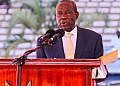









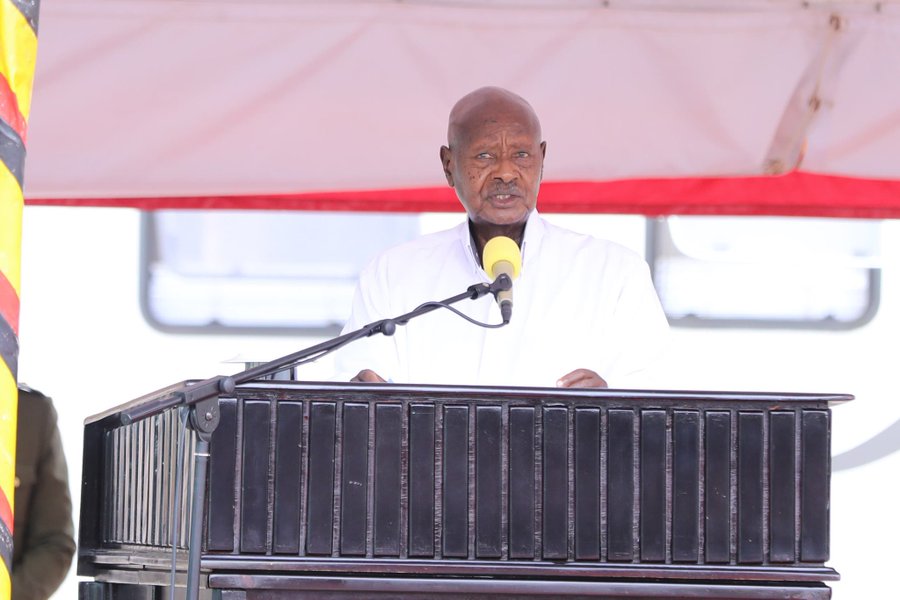
President Museveni has waded into the ongoing Israel-Iran tensions with a rare public statement, taking a sharply neutral but historically reflective stance.
In a detailed comment on Tuesday , Museveni offered a pointed critique of all parties involved Israel, Iran, Western powers, and foreign interventionists blaming them collectively for deepening instability in the Middle East.
His statement followed the recent concerns raised by the Iranian Ambassador to Uganda over Kampala’s perceived silence, Museveni clarified that Uganda had deliberately withheld comment due to the conflict’s complexity and Uganda’s longstanding cordial relations with both Israel and Iran. But now, he said, it was necessary to offer Uganda’s principled view.
Museveni categorized the parties responsible for perpetuating the crisis into four groups each playing a unique role in shaping decades of conflict.
First, he faulted Iran’s hardline Islamist factions for denying Israel’s right to exist.
“I told them that according to the Bible, Israel is part of that area. The United Nations was right to partition Palestine between two peoples. It was wrong for some Arabs and Iranian Islamists to reject that historical solution,” Museveni stated.
He dismissed the Iranian narrative that describes Israel as a Western transplant in the region, calling it both historically and theologically inaccurate.
But he didn’t spare Israel either. Museveni turned his attention to Israeli hardliners, accusing them of undermining peace by refusing to recognize Palestinian rights and the two-state solution.
“It is not correct for them to say Palestinians do not belong there. What would you say about Europeans who migrated to the Americas or Australia just 400 years ago?” he posed, likening Israeli attitudes to the infamous expulsion of Asians from Uganda under Idi Amin.
The third group in Museveni’s crosshairs were the Western imperial powers. He singled out the United States’ CIA for orchestrating the 1953 coup that toppled Iran’s Prime Minister Mohammad Mosaddegh, calling it a pivotal moment that fueled resentment and opened the door for clerical rule.
“They created the resentment that gave rise to clerical rule in Iran. I was amazed they didn’t even know their own history. I had to remind them of the Persians and Medians from the Bible,” he noted with disbelief.
Museveni concluded his critique by warning against the repeated use of foreign military interventions, which he said often fail to deliver sustainable peace and instead provoke long-term backlash.
“The use of external force is not a solution; it only invites reactions. Ask the Austro-Hungarian Empire, ask the 14 powers that tried to crush the Soviet Union. Where are they now?”
Grounding his message in the ideology of Uganda’s National Resistance Movement, the President reiterated that chauvinism whether based on race, religion, tribe, or gender has no place in global politics.
He called on nations to engage based on legitimate interests, not emotion or identity, and to approach the Middle East conflict with historical understanding and mutual respect.
Tensions reached a critical point on June 13, 2025, when Israel and Iran exchanged direct military attacks, marking a dangerous escalation in their conflict.
The hostilities were triggered by Israeli airstrikes aimed at Iran’s nuclear facilities and military sites. In retaliation, Iran launched a series of missile strikes against Israeli cities
Iran’s Health Ministry reported that the Israeli bombardment resulted in over 220 fatalities. On the other side, Israeli officials confirmed that 24 civilians were killed in the Iranian missile attacks.