






President Museveni has pledged Shs2 billion to a newly formed SACCO for pastors while commending Pastor Robert Kayanja for extending his ministry into agriculture and community development.
Museveni made the remarks on Saturday, September 26, while addressing Christians attending the Big Fix Holy Spirit Global Conference at Miracle Centre Cathedral in Rubaga, Kampala. The seven-day conference, hosted by Pastors Robert and Jessica Kayanja, runs from September 21 to 27.
Museveni said the formation of the pastors’ SACCO was a positive development and pledged government support for the initiative.
“Finally, I am glad the pastors have formed a SACCO. Now it’s true, I am going to put Shs2 billion,” Museveni said.
The President used his address to highlight what he described as Kayanja’s efforts to translate his ministry into practical economic and community interventions.
He specifically pointed to agricultural activities associated with Kayanja in Karamoja and Kiryandongo, saying the pastor had demonstrated how talents could be put to productive use.
“I am happy to be here and find Pastor Kayanja showing us what he has done in Karamoja, multiplying the talents, what he has done in Kiryandongo, multiplying his talents and inviting other Christians from different parts of the world,” Museveni said.
Kayanja’s ministry has been involved in agricultural interventions in Karamoja, including the “Plough, Plant, Produce” initiative, while his activities in Kiryandongo include Gold Meadow Farm, where livestock and crop production have been undertaken alongside employment and skills development.
The ministry describes its Karamoja work as part of efforts to move beyond emergency relief towards longer-term agricultural production and livelihood support. Its official profile also lists agricultural projects and the Karamoja Project among its community initiatives.
Museveni used the occasion to reiterate his argument that economic transformation depends on production and the creation of wealth rather than dependence on handouts.
“You cannot achieve prosperity by begging. You need to produce a good or a service and sell it. That is how wealth is created,” he said.
He said this approach was linked to the National Resistance Movement’s emphasis on patriotism, arguing that economic activity requires Ugandans to work and trade across ethnic and regional boundaries.
Museveni also connected Uganda’s production growth to the need for wider African markets, citing maize, milk, sugar and bananas as examples of products that require access to consumers beyond Uganda.
“When Uganda began to stabilise, we found ourselves stuck with surplus maize, milk, sugar and bananas. That’s when we said, ‘Have you heard of Africa?’ Because if Ugandans cannot buy what you produce, your neighbours can. And so came our second principle: Pan-Africanism,” he said.
He said greater African integration would provide producers with a larger market and reduce barriers to trade between countries.
Museveni said he was particularly pleased by discussions at the conference on African and East African integration.
“I am very happy to hear Pastor Kayanja and other pastors talking about integration of Africa, political integration of East Africa. It is all music to my ears,” he said.
He said East African countries should consider deeper cooperation in areas such as defence, foreign policy, citizenship and the common market, while individual countries could retain responsibility for sectors such as education and agriculture.
Museveni also cited the African Continental Free Trade Area as an important step towards creating a larger continental market.
“When I came here and heard Pastor Kayanja talking about African integration, I said, ‘Praise the Lord,’ because we have already started the AfCFTA, the Continental Free Trade Area,” he said.
The President further called for greater global economic cooperation, saying countries should focus on producing goods and services in which they have an advantage and trading with one another.
“I am for global affluence; let everybody produce what they can produce better and we trade. Instead of fighting, what we want is a win-win formula,” Museveni said.
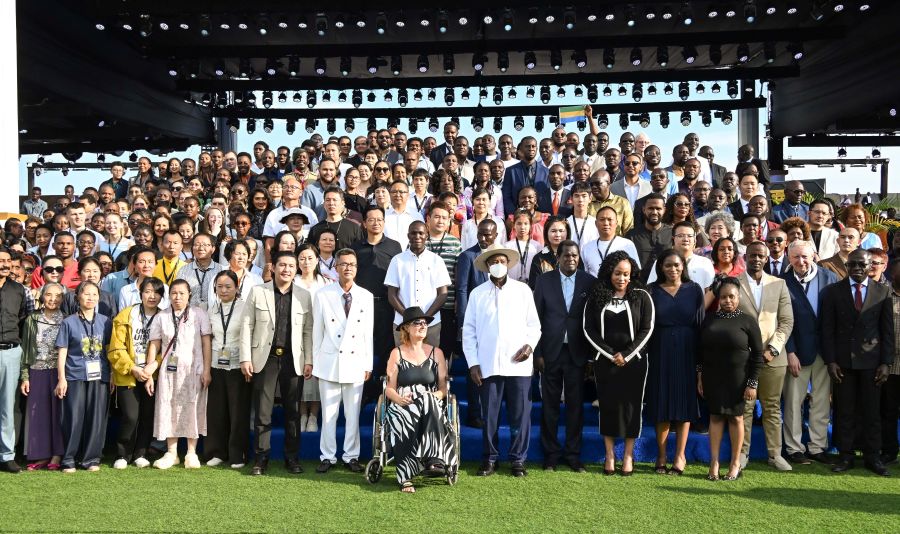
Pastor Kayanja thanked Museveni for attending the conference and said the gathering had brought together participants from Uganda, Africa and other parts of the world.
He said delegates had travelled from countries including the United States, China, Germany, Ukraine, India, Turkey, Australia, Kenya, Tanzania, Zambia, Ethiopia, Botswana, Nigeria, South Sudan, Burundi, Eritrea and Liberia, among others.
Kayanja also thanked Uganda’s security agencies for maintaining an environment in which international visitors could gather for worship and fellowship.
The Big Fix conference, which is centred on spiritual restoration and the Holy Spirit, opened on September 21 and has featured local and international Christian leaders.
Beyond its religious programme, the conference has also provided a platform for discussions on economic and social development. Earlier in the week, Kayanja hosted an international partners’ meeting at Miracle Centre Cathedral, where participants discussed economic development, agriculture and the potential for greater cooperation across Africa.
Kayanja also announced plans for a Shs5 trillion milk project under a proposed “Cow Bank” initiative, which he said would mobilise Christians to participate in cattle rearing and large-scale milk production.
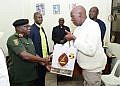
At the conference, Museveni also launched Kayanja’s book Smile Karamoja: From Hunger to Hope and Harvest, which focuses on the region and its agricultural transformation.
The conference is scheduled to conclude on today Sunday, September 27, at Miracle Centre Cathedral in Rubaga.