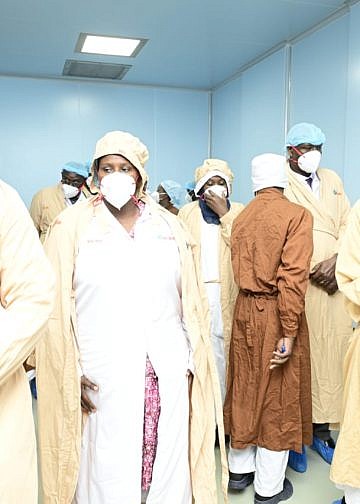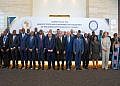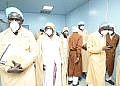











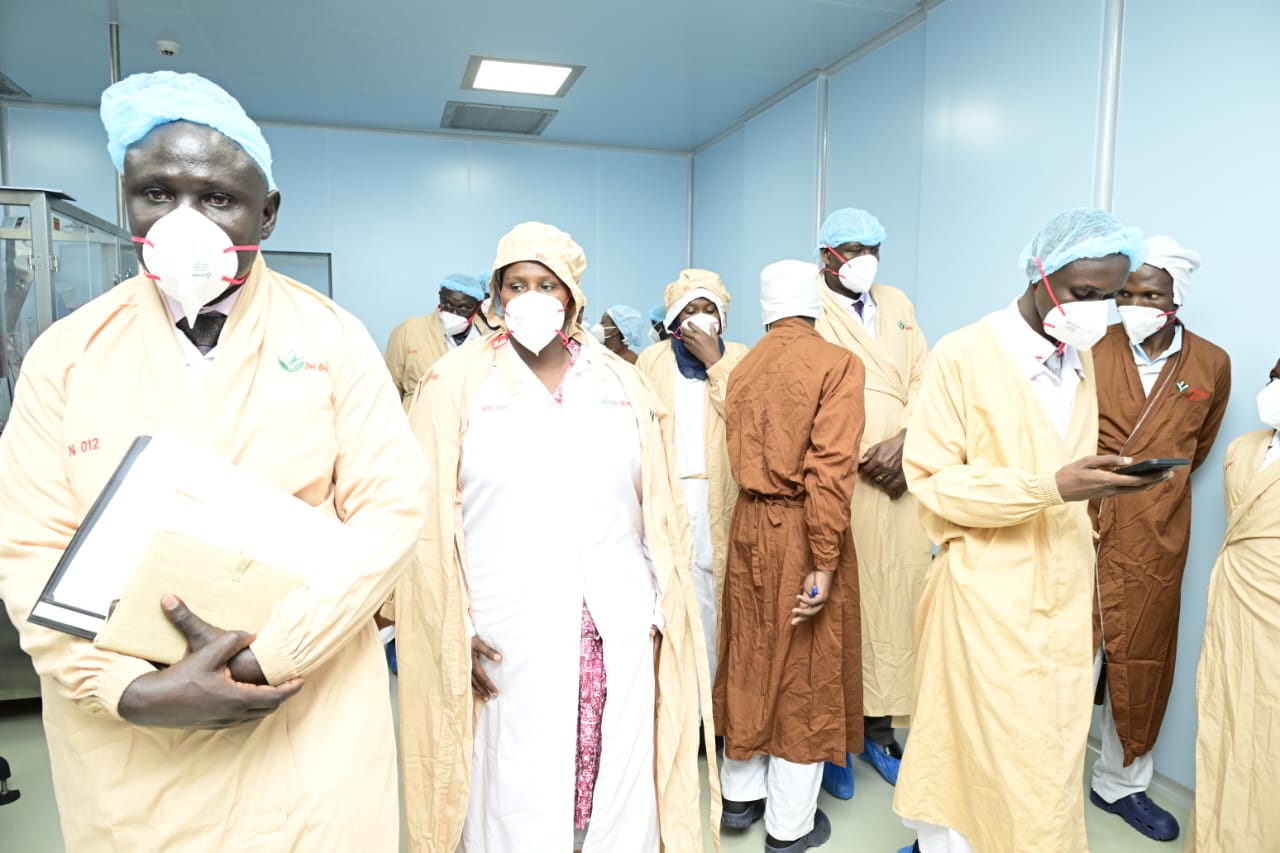
A team of senior State House officials has inspected the Dei BioPharma pharmaceutical and vaccine manufacturing plant in Matugga, Wakiso District, to assess progress on the project and establish whether government investment is delivering value for money.
The delegation, led by State House Comptroller and Permanent Secretary Jane Barekye, visited the facility on Wednesday as the government continues to engage with the company over its funding requirements, accountability and plans to commence large-scale production.
The team included Peter Ourien, Undersecretary in the Ministry of Science, Technology and Innovation; Dr Herbert Kawawa, Senior Presidential Advisor on Audit and Accountability; and Brenda Nakazibwe, team lead for the Pathogen Economy in the same ministry.
Barekye said the inspection was intended to establish the relationship between public funding and tangible project outcomes.
“We are here to establish whether money plus output are equal and to create a relationship,” she said.
She explained that the delegation’s role was to advise President Yoweri Museveni, while established government institutions would continue providing oversight, with the Auditor General responsible for conducting audits.
The officials described the facility as a substantial investment and called for closer collaboration with Dei BioPharma founder Dr Matthias Magoola, particularly in accounting for public funds already committed to the project.
Barekye also conveyed Museveni’s willingness to provide the outstanding funds required to complete the plant, saying the money would be released progressively in line with construction and implementation milestones.
“The beauty is that President Museveni is willing to give you all the balance you need to complete this project, but this money will be given progressively as work progresses,” she said.
Dei BioPharma requires an estimated Shs1.736 trillion, equivalent to about $430 million, to complete the facility and begin full-scale production.
The total investment in the project is projected at Shs4 trillion, or approximately $1.1 billion, with about Shs2.5 trillion reportedly raised so far.
The facility, located in Matugga, was commissioned by President Museveni in July 2021 alongside William Ruto, who was then Kenya’s Deputy President.
It is designed to manufacture a range of pharmaceutical products, including messenger RNA (mRNA) vaccines, oncology treatments, insulin, monoclonal antibodies and generic medicines for malaria and chronic diseases.
The plant is expected to have the capacity to produce up to one billion doses of mRNA vaccines annually once fully operational.
Magoola has also asked the government to support the expansion of the 250-acre campus, including the relocation of nearby residents to help the facility meet international pharmaceutical manufacturing standards.
Magoola welcomed the inspection and pledged to account for public funds invested in the project, acknowledging the responsibility that comes with receiving taxpayers’ money.
“I am aware that once you take taxpayers’ money you have to account for it,” he said.
He said transparent reporting would help address misinformation surrounding the project and demonstrate whether the investment was delivering value for money.
The founder thanked the government for its support, singling out Museveni and Energy Minister Dr Monica Musenero for their role in facilitating full-scale production at the company’s cassava starch plant in Kamuli through the provision of a dedicated electricity line.
Magoola expressed hope that a similar power connection would be installed at the Matugga facility, where inadequate electricity supply has reportedly left some production lines idle.
He said resolving the power supply constraints would enable the company to increase production shifts and recruit additional workers.
The latest inspection underscores continued government engagement with Dei BioPharma as the company seeks additional financing and infrastructure support to complete the plant and advance its pharmaceutical and vaccine manufacturing ambitions.
The project’s next phase will depend on continued financing, effective accountability for public funds and the resolution of operational challenges affecting production.