






President Museveni has urged National Resistance Movement (NRM) Members of Parliament to return to grassroots methods of leadership by regularly engaging citizens, monitoring government programmes and addressing challenges affecting communities.
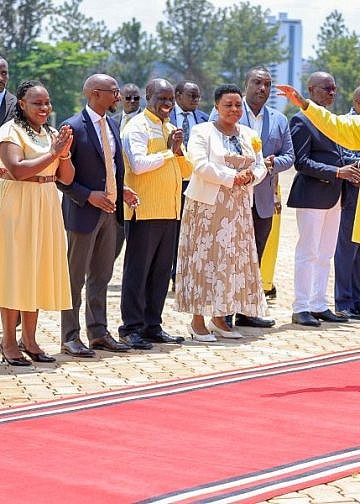
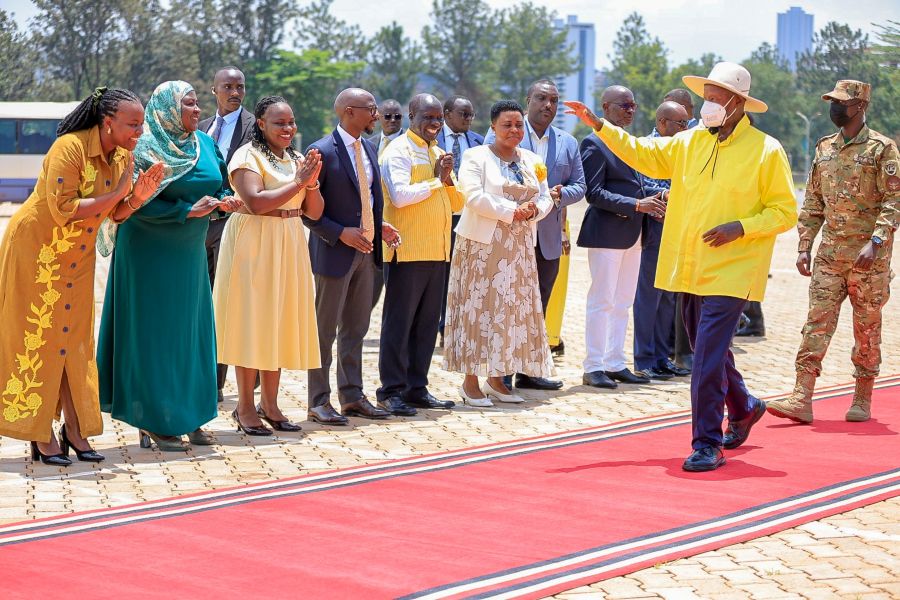
Mr Museveni, who is also the NRM National Chairperson, made the remarks on Friday, October 2, 2026, while addressing the NRM Parliamentary Caucus at Kololo Independence Grounds in Kampala.
The meeting was the fourth session of the first session of the 12th Parliament and came as NRM MPs returned from a three-week parliamentary recess.
Mr Museveni also cautioned the lawmakers against corruption and encouraged them to adopt grassroots approaches in the fight against the vice.
He cited the approach being promoted by Local Government Minister Balaam Barugahara as an example of direct engagement with communities, saying it was similar to methods that helped the NRM build support among citizens.
“Some people miscalculated, but slowly we have taken the role in fighting corruption in the army and now we are beginning to wake up. Balaam is implementing what I have been talking about all the time,” Mr Museveni said.
He said the NRM gained public confidence because its leaders were directly involved in addressing problems at community level.
“What Balaam and Nameere are doing; they are fighting corrupt people. That is why I put them into the local government. We fought corruption in the army and now the vice has been in the villages,” he said.
Mr Museveni urged MPs to organise barazas and other grassroots engagements in their constituencies instead of relying heavily on highly organised events.
“I appeal to you to interact with the people directly. You will see, it will be easy to solve people’s problems. This business of bringing food, water and musicians to sing, it is because you have detached from the people. But deal with the problems. So please go back to the work methods of the NRM,” he said.
He recalled the 1996 presidential election, saying he nearly missed the nomination deadline after being delayed in Nakasero and eventually used a motorcycle taxi with his wife to reach the venue before the 5pm deadline.
On wealth creation, Mr Museveni tasked MPs with closely monitoring the Parish Development Model (PDM) in their constituencies to establish whether intended beneficiaries are receiving the funds meant to help them participate in the money economy.
“On the issue of PDM, check your areas. Check the families which have got the PDM money and those that haven’t gotten so that we cover the 33 per cent of the people that are not yet in the money economy,” he said.
He urged MPs to ensure that the Shs1 million PDM revolving fund reaches intended beneficiaries and asked them to spend more time in their constituencies monitoring its impact.
“You as leaders make sure that this shs1 million reaches the people. Inspect that. That is your work as MPs. Spend more time in your constituency checking how your people are getting out of poverty,” he added.
Mr Museveni also responded to concerns over the alleged diversion of PDM funds intended for persons with disabilities, warning against misuse of money earmarked for the group.
On insecurity in the Greater Ankole region and neighbouring areas, Mr Museveni directed the Ministry of Internal Affairs and security agencies to investigate reported cases of killings and theft.
He cited reports of more than 15 people being killed in Ibanda, cattle theft in Kyankwanzi and theft in Kagadi as matters requiring attention.
“The police are supposed to be in the sub-county. I will look into the issues of theft and killings in the villages that are being reported. It is a concern. I have been watching crimes on TV,” he said.
He said he would engage the Police leadership over reported gaps in policing and security.
The NRM Parliamentary Caucus later resolved to increase vigilance in monitoring crime, particularly livestock and coffee theft and murders, and to report such cases to relevant authorities.
On agriculture, Mr Museveni said irrigation should no longer be treated as optional, arguing that it is necessary to stabilise production and increase yields.
“Irrigation is now a must. It stabilises agriculture but also increases yield. You can hear in our farm which we run with Dr Muranga, a government farm, we are yielding 53 tonnes per hectare,” he said.
He also reiterated his directive to protect wetlands and remove encroachers.
“All those people in the wetlands must get out. The ones in Busoga, Bukedi and Kigezi, I have a programme to take them back to fish farming. All the others must get out. The wetlands will give us water for irrigation but also give us a source of income unlike rice,” he said.
On energy, Mr Museveni said Uganda currently has a small electricity surplus but must continue developing additional generation capacity, including the proposed Ayago Hydropower Project.
“Electricity, we have a little surplus of electricity, that is why we have to move to Ayago. For electricity we must move,” he said.
He also said the government was considering railway development to Karamoja and the Standard Gauge Railway to northern Uganda to improve transport connectivity and link the country to external markets.
On the oil sector, Mr Museveni said Uganda would continue pursuing value addition, including the development of a petroleum refinery in Hoima.
“Everything we produce must be processed,” he said.
He cited the Dangote refinery in Lagos as an example of domestic petroleum processing and its potential contribution to the wider economy.
Mr Museveni said Uganda’s decision to prioritise refinery development before large-scale crude oil production was deliberate.
“The moment we discovered oil, people were saying we should export crude. I told them very clearly, no refinery, no production. It has been there for decades in the ground, let it stay there,” he said.
He said Uganda accepted the crude oil export pipeline through Tanzania while maintaining that a refinery remained central to the country’s oil development strategy.
Using the shirt he was wearing as an example, Mr Museveni explained the importance of vertical integration and domestic value addition.
“The shirt I am putting on here is a product of that. It was grown in Uganda, ginned in Uganda, knitted in Uganda. In the past it was being exported at that stage. In the NRM we said no, we must add other levels,” he said.
He explained that cotton can be processed locally through several stages, including spinning, weaving, printing and tailoring, before becoming a finished garment.
“That is what we call vertical integration,” he said.
He also cited the dairy industry as an example of horizontal integration, pointing to products such as yoghurt and butter.
Mr Museveni said Uganda’s economy had continued to move forward despite global conflicts, attributing the progress to what he described as the NRM’s long-term economic programme.
“The Bible says whatever a man sows, that is what he reaps. The resistance is what has brought us here. Before some of you were born when we came into government, we put out 10 points. The point that has got us here was point number five which said we shall build an integrated, independent and self-sustaining economy,” he said.
He identified commercial agriculture, manufacturing, services and information and communications technology as key sectors for creating wealth and employment.
He also said the government would continue supporting tea production and value addition, describing tea as a major project in the NRM manifesto.
On garbage management, Mr Museveni said the government would develop proposals to improve waste collection and management, arguing that waste could be turned into an economic resource.
Earlier, Government Chief Whip and Chairperson of the NRM Parliamentary Caucus, Jane Ruth Aceng, thanked Mr Museveni for convening the meeting as MPs returned from recess.
She also conveyed condolences to the Kingdom of Tooro and the royal family following the death of King Oyo Nyimba Kabamba Iguru Rukidi IV and congratulated the new King, Edward Kijanangoma Nyabongo I.
“Allow me to convey our deep condolences to the Kingdom of Tooro and the royal family on the passing on of King Oyo Rukidi IV. Thank you for the solidarity and leadership you portrayed,” Dr Aceng said.
She informed Mr Museveni that NRM members were facing election petitions arising from the 2026 general elections.
“A total of 75 petitions involve our NRM MPs and flag bearers. They are all duly represented by counsel. They are requesting support towards their legal facilitation. Kindly look into this request,” she said.
On legislative business, Dr Aceng reported progress on several matters, including the Agriculture Regulatory Bill, 2026, and a report by the Committee on Physical Infrastructure concerning the Kampala Expressway and toll collections.
She said the report recommended criminal investigations by the Inspectorate of Government, the Directorate of Public Prosecutions, the Criminal Investigations Directorate and the Uganda Revenue Authority.
“Your Excellency, on this one we need to kill many birds with one stone,” she said.
Dr Aceng also thanked Parliament’s presiding officers for allowing MPs adequate time to debate the extensive ministerial report concluded in June.