







President Museveni has backed a proposed partnership between Uganda and South Africa aimed at improving livestock genetics and addressing challenges caused by counterfeit agricultural inputs.
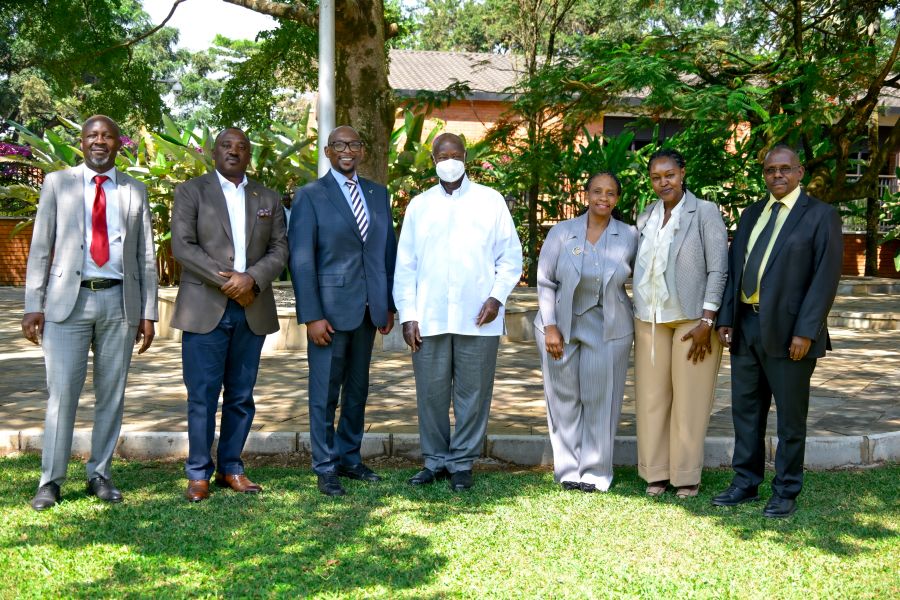
The President expressed support for the Regional Farm Service Centre Initiative during a meeting with a South African delegation led by Mr. Andile Ramaphosa at State Lodge, Nakasero.
The delegation presented a proposed tripartite partnership involving Namunkekera Farm Service Centre, the National Animal Genetic Resources Centre and Data Bank (NAGRC&DB), and Mr. Ramaphosa.
The initiative seeks to establish facilities for the profiling, controlled breeding, harvesting, and export of Ankole cattle genetics to the Southern African Development Community (SADC) region and other markets.
Mr. Ramaphosa said the partnership was intended to improve the quality of cattle breeds in Uganda by adopting advanced breeding approaches.
“We would like to improve the quality of cattle to be like the ones in South Africa,” Ramaphosa said.
Museveni welcomed the proposal, saying such initiatives could contribute to the transformation of Uganda’s agricultural sector.
“I wish to express my gratitude to these people for awakening from slumber and coming up with ideas that can contribute to the transformation of our agricultural sector,” the President said.
The proposed project also includes the establishment of a Build, Operate and Transfer (B.O.T) laboratory to strengthen quality assurance, regulation, and verification of agricultural inputs, in a bid to curb the circulation of counterfeit products.
Museveni urged the partners to focus on selecting cattle breeds based on specific genetic traits that provide economic value.
“If you want to farm, get a specific gene. They must have characteristics; some are fat, some have high-value milk, and others give good offspring,” he said.
The proposed collaboration is expected to support Uganda’s livestock development agenda, enhance the quality of Ankole cattle breeds, and open opportunities for regional trade in livestock genetics.