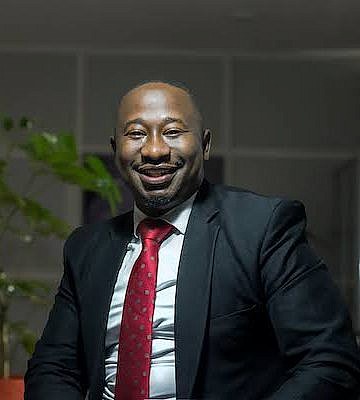












Youth leaders under the NRM Revolutionary Network (NRN) have called for a publicly broadcast debate for all aspirants seeking the Speakership of Parliament, while also questioning the criteria that led to the elevation of Anita Among.
Addressing journalists on Monday at Kati Kati Restaurant in Kampala, the youth pressure group said the Office of the Speaker is too important to be decided without public scrutiny.
Jude Mugagga Wannume, a youth member of the NRN, said the country deserves an open and transparent process.
“The Office of the Speaker of Parliament is one of the highest constitutional offices in the land. It shapes legislative direction, safeguards parliamentary order and influences governance oversight,” Mugagga said.
“We, the NRN, therefore propose a publicly broadcast Speakership Debate involving all legislators who have formally expressed interest in the position for the 12th Parliament.”
He said such a debate would allow candidates to clearly explain their vision for Parliament and give Members of Parliament an opportunity to assess them beyond political alliances.
“Such a debate would allow aspiring candidates to articulate their vision for a people-centered Parliament, enable MPs to evaluate substance over alliances, promote transparency and issue-based competition, and strengthen public confidence in the process,” he said.
He added that parliament belongs to the people, adding that the process of selecting its leadership should reflect openness, intellectual rigor and accountability.
The group also raised concerns about what they described as a growing norm of prolonged occupation of the Speakership.
“While continuity can be valuable, prolonged occupation of the office risks transforming it into a political springboard for presidential ambition. The Speakership is a constitutional stewardship role — not a preparatory stage for higher executive office,” Mugagga said.
The youths went further to question whether the party followed its original principles when selecting the current Speaker.
Ivan Mwijukye challenged the leadership of the National Resistance Movement (NRM) to clarify whether foundational standards were abandoned.
“Did NRM change from the original principles of the NRA, where we chose a Speaker based on clear competencies such as having served as Chairperson of the Parliamentary Legal Affairs Committee or having been a member of the Constituent Assembly?” Mwijukye asked.
He said that historically, leadership within Parliament considered experience and institutional grounding.
“In the past, we considered someone who had chaired the Parliamentary Legal Affairs Committee or been a member of the Constituent Assembly. If those standards are reinstated, they would form a clear benchmark for leadership,” he said.
Mwijukye questioned why those benchmarks were not central when Anita Among rose to the Speakership after the death of former Speaker Jacob Oulanyah.
“If the original NRM principles were set aside when Right Honourable Anita Among became Speaker, then which NRM are we in? Which NRM are we serving?” he asked.
The youths insisted that their concerns are not an attack on individuals but a call for institutional integrity.
“Protecting the integrity of the Office of Speaker is essential for both party stability and national democratic growth,” Mugagga emphasized.
The NRN reiterated that its position is rooted in loyalty to the Movement.
“The future of the NRM depends not merely on electoral victories, but on disciplined internal systems, ideological consistency and leadership structures that strengthen, rather than strain, national cohesion. We remain committed to patriotism above partisanship, systems over personalities and institutional strength over short-term political maneuvering,” the group stated.
The youth leaders urged the party to prioritize competence, transparency and institutional norms in selecting its next Speaker, saying an open debate would restore public trust and strengthen both Parliament and the Movement.