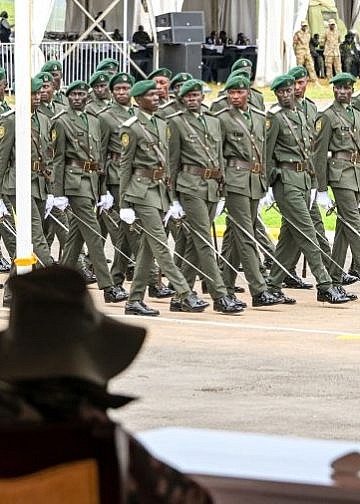










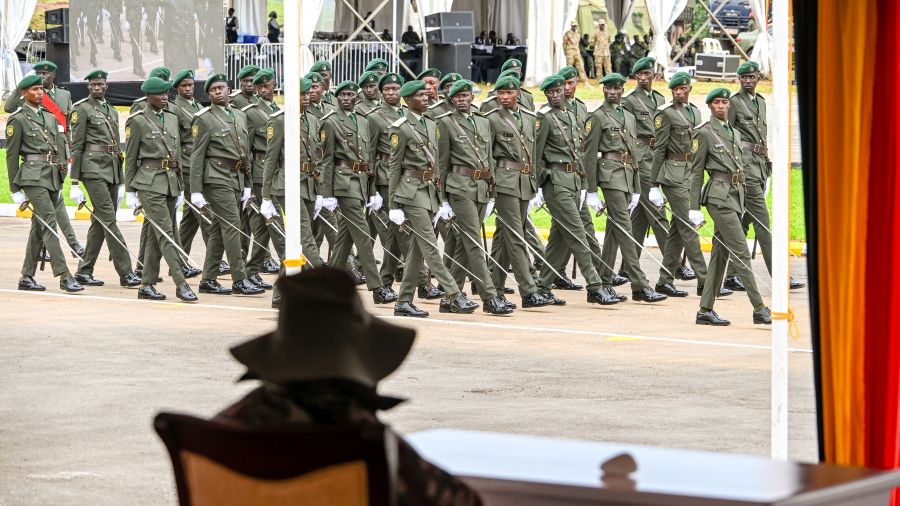
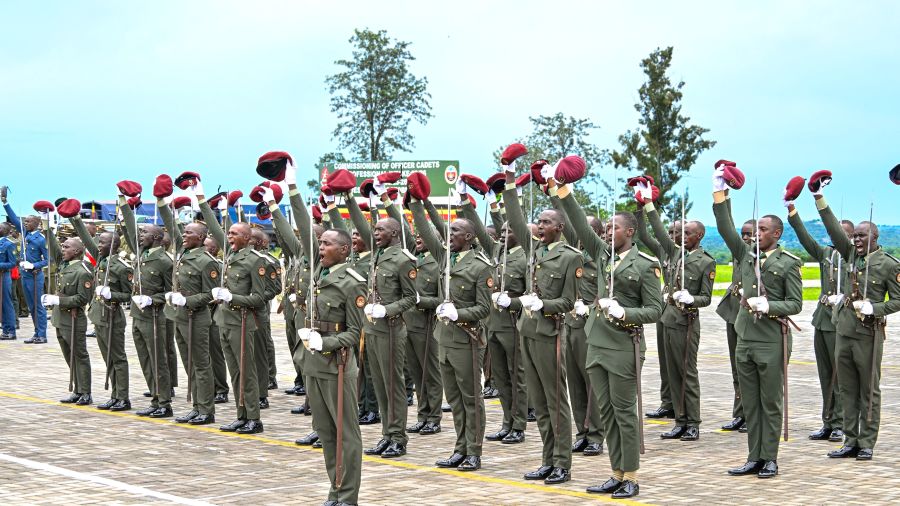
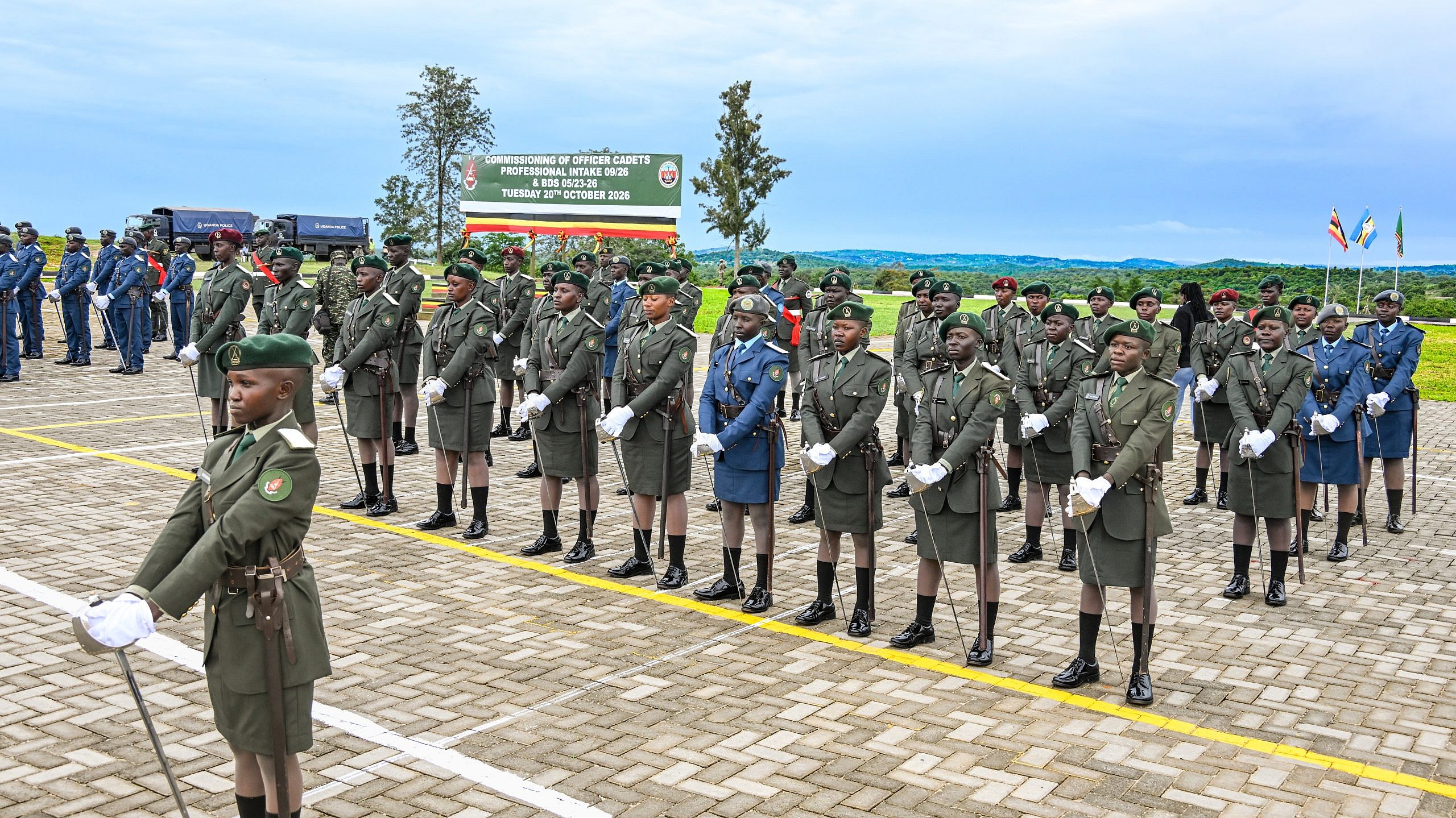
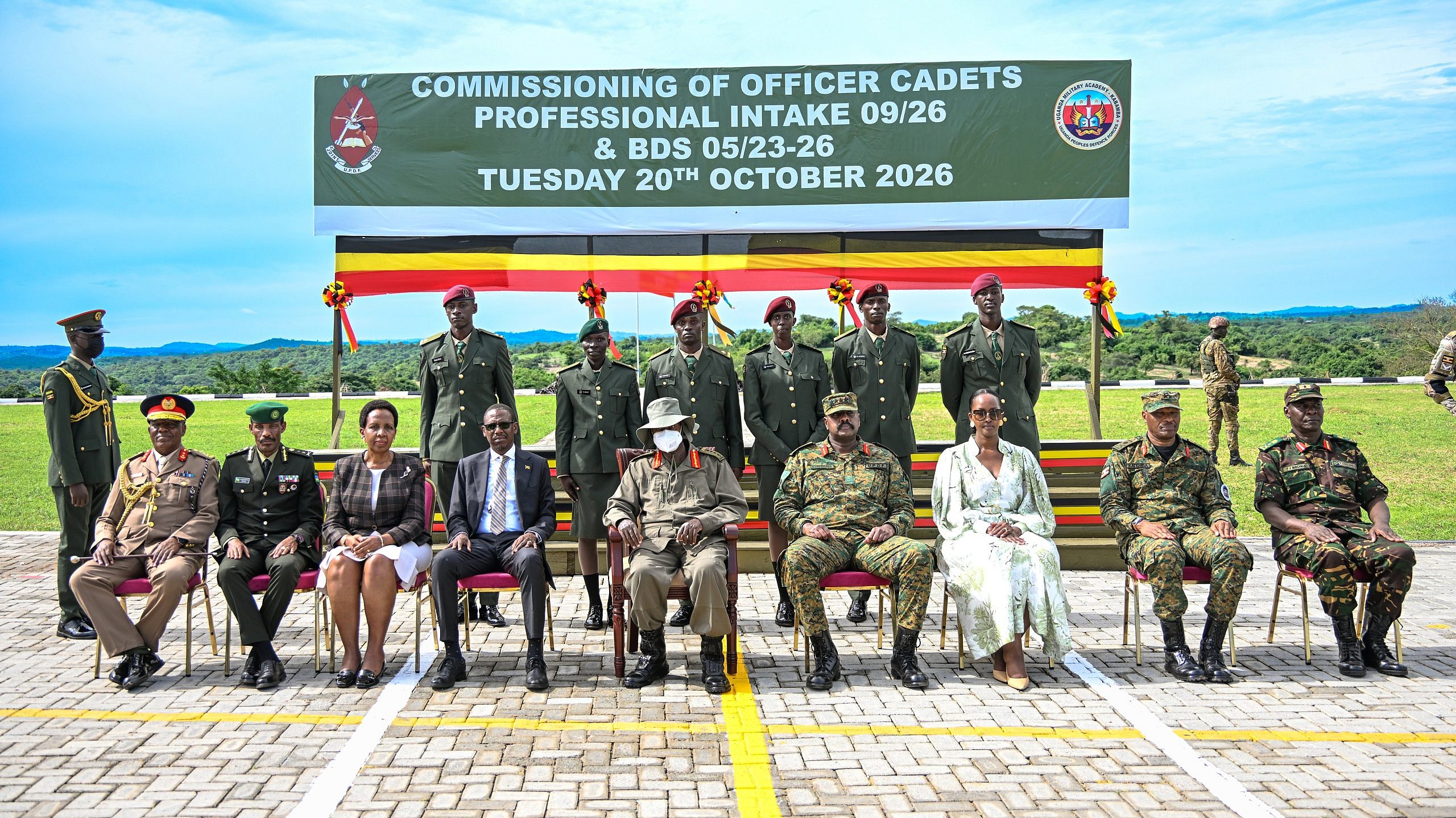
President Museveni has passed out 280 Uganda People’s Defence Forces (UPDF) officer cadets, urging them to uphold discipline, remain focused on their military careers and avoid distractions that could undermine their service to the country.
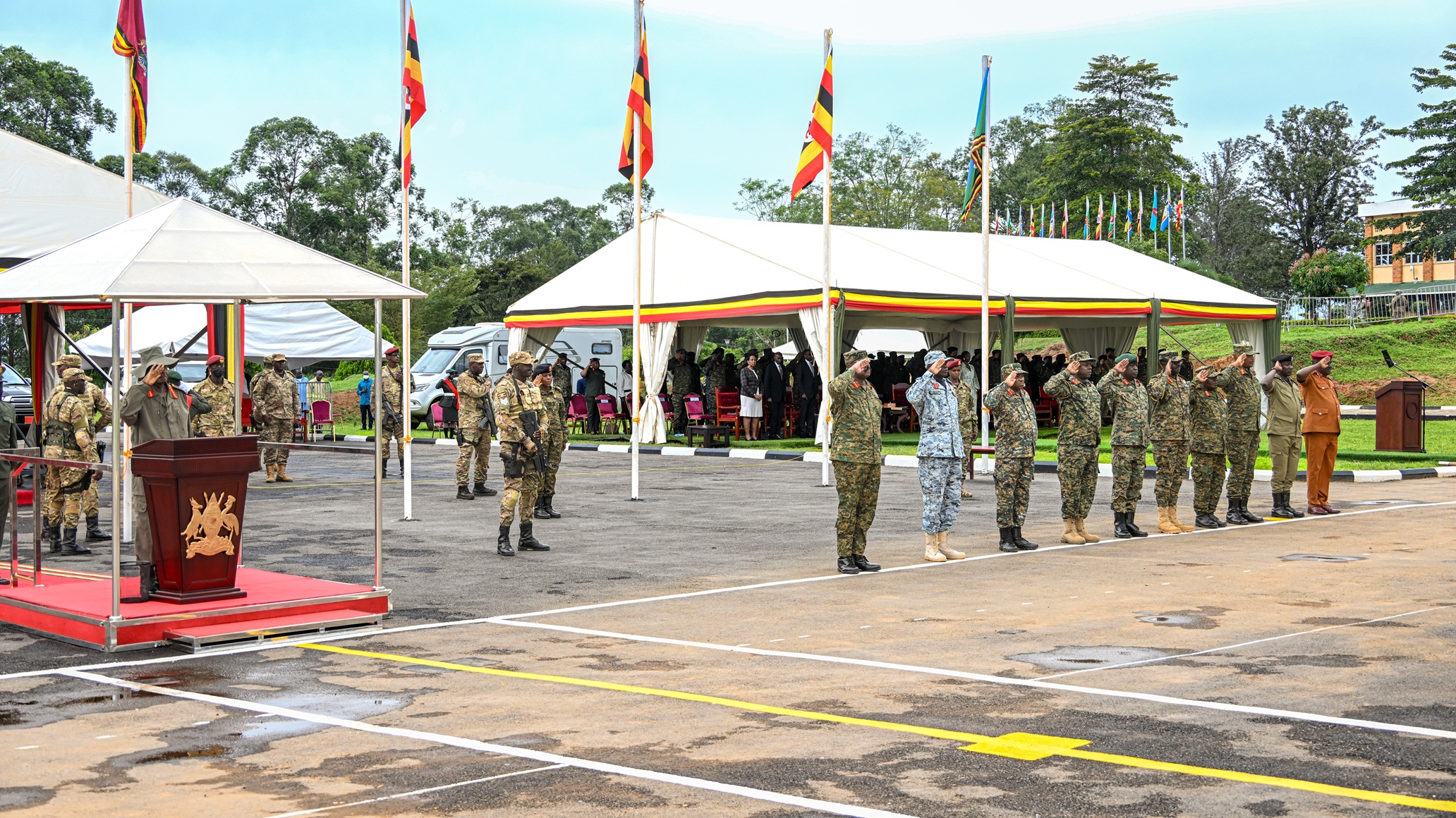
Museveni, who is also the Commander-in-Chief of the UPDF, presided over the commissioning ceremony for Officer Cadets Intake 09/26 and Bachelor of Defence Studies Intake 05/23/29 at Uganda Military Academy-Kabamba in Mubende District.
The commissioned cadets included 187 professional officers who began training in February 2026 and 87 Bachelor of Defence Studies cadets who started their training on September 18, 2023. The latter intake initially enrolled 100 cadets, but 14 did not complete the programme. Eleven of those commissioned were female.
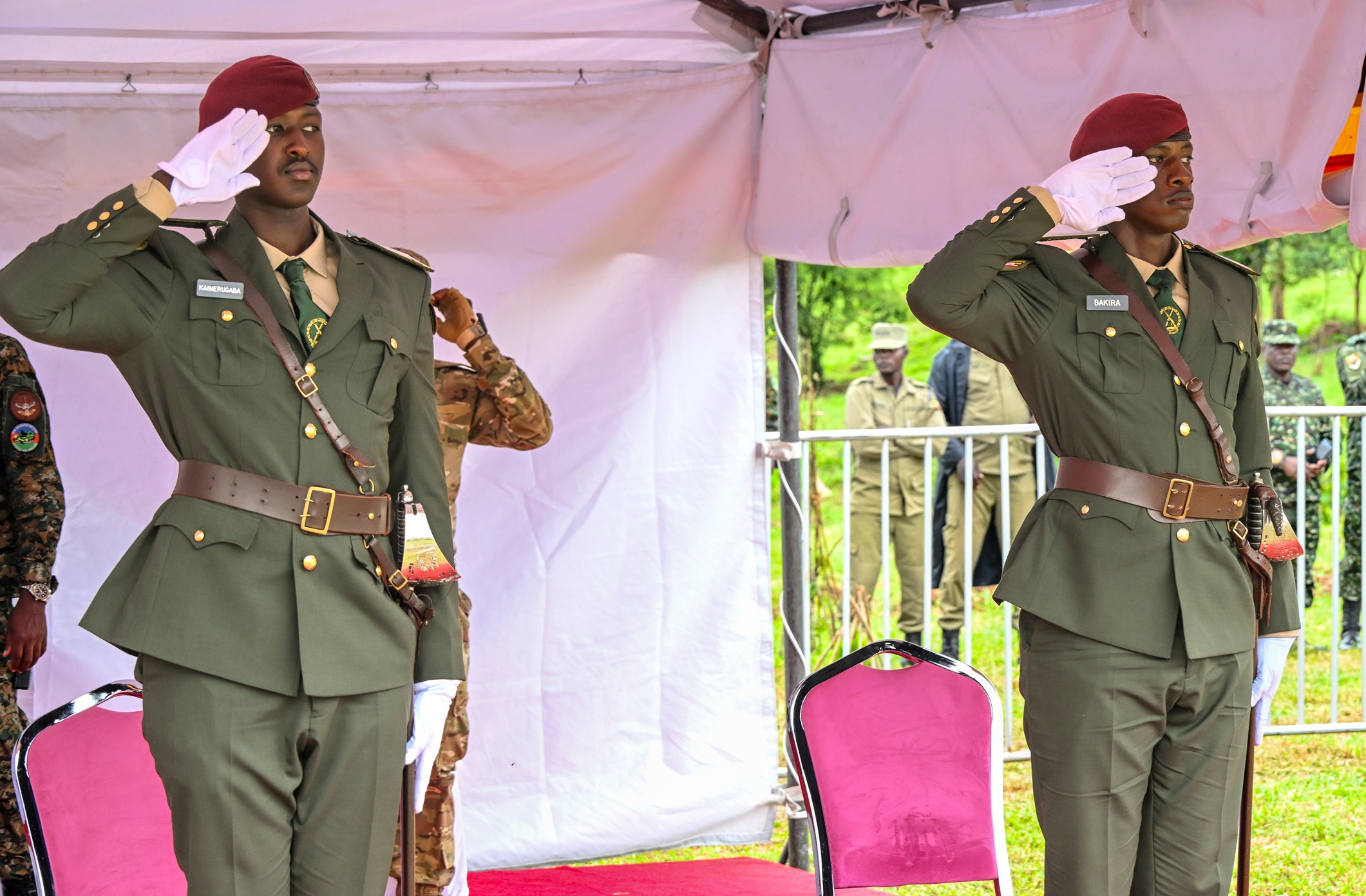
Six additional officer cadets trained abroad, including Ruhamya Kainerugaba and Andrew Bakira, who attended the Royal Military Academy Sandhurst in the United Kingdom, while four others received training in India.
Congratulating the graduates, Museveni described their commissioning as the beginning of a long journey of service in an institution whose effectiveness depends on discipline, commitment and sound leadership.
“First of all, congratulations to the graduates. You have started a long journey in a very honourable organisation, the UPDF. If you do your part and don’t get diverted, you will make a good contribution,” he said.
He thanked the cadets’ families, the academy and the UPDF leadership for supporting their training.
Museveni emphasised that a strong economy was essential to effective national defence, arguing that the military must work alongside other institutions to protect the country’s productive sectors and sustain economic growth.
“Recently, I was talking to the CDFs from a number of countries, and I told them that to have a strong and effective defence of the country, you need a number of factors. One of them is a strong economy which will be able to support a strong army,” he said.
He urged military leaders to identify factors that undermine economic growth and cooperate with relevant institutions to protect wealth creation in commercial agriculture, manufacturing, services and information and communication technology (ICT).
The President also called for firm action against crime in communities, particularly the theft of livestock distributed to farmers under the Parish Development Model (PDM).
“When you get thieves stealing the goats and cows from the farmers which have been given by the PDM, that’s sabotage. It shouldn’t be tolerated,” he warned.
He said such crimes undermine government efforts to improve household incomes and transform communities, urging security agencies to protect farmers and their assets.
Museveni further stressed the importance of maintaining a strong relationship between the army and the population, calling on officers to uphold discipline and respect the communities they serve.
“The strategic relationship between the army and the people [is important]. The army must always make sure that it is like fish in the sea,” he said, recalling how public support had contributed to the liberation struggle despite shortages of weapons.
He identified continuous training and the development of soldiers’ capabilities as essential pillars of national defence. He also called for increased investment in science and technology to address technological gaps across Africa.
“We were still using arrows and spears when the Europeans were using gunpowder. It was that which caused problems in the last 500 years. Therefore, we must make sure that we enhance science and technology,” he said.
On regional security, Museveni urged African countries to strengthen strategic coordination and develop joint capabilities across land, air, maritime and space domains.
He also commended the UPDF leadership for efforts to combat corruption and improve soldiers’ welfare through better pay, accommodation and other support services.
Museveni said the government would prioritise modernising military training institutions to ensure that their facilities met high international standards.
He urged the newly commissioned officers to safeguard their health, citing his own experience of remaining active at the age of 82 despite decades of political activism and armed struggle.
Chief of Defence Forces Gen. Muhoozi Kainerugaba, who attended the ceremony, said the security situation in Uganda and the wider region was relatively calm, with UPDF peace and stabilisation missions in the Democratic Republic of Congo, South Sudan and Somalia continuing to make progress.
However, he expressed concern over an increase in violent crime in some parts of Uganda, where criminals were reportedly using machetes and, in some cases, firearms to rob, kill and sexually assault victims.
The CDF said security agencies were coordinating operations to identify, arrest and bring those responsible to justice.
“No effort will be spared until the sanctity of the right to life and property is fully restored for all the people in our country,” he said.
Gen. Kainerugaba also highlighted improvements in soldiers’ welfare, including pay, accommodation, logistics, healthcare and education. He said the UPDF would continue strengthening military training, acquiring equipment and improving troop welfare.
He urged the newly commissioned officers to report to their assigned units and gain practical experience.
“I urge you to immediately join your assigned units and gain experience. You are now the future of the UPDF,” he said.
Defence and Veteran Affairs Minister Kiryowa Kiwanuka urged the graduates to uphold integrity, discipline and loyalty to the Constitution of Uganda.
He said the continued professionalisation of the UPDF depended on strong leadership, effective training and cooperation with regional partners, including Kenya, Rwanda and Tanzania.
“Wear your uniform with honour. Lead with integrity and discipline. Remain loyal to the Commander-in-Chief and the Constitution of the Republic of Uganda,” Kiwanuka said.
Uganda Military Academy-Kabamba Commandant Brig. Gen. Saad Katemba said the academy combines academic instruction with military training to develop leadership skills, professional competence and ideological grounding.
He commended the graduates for their endurance and thanked their families, lecturers and instructors for supporting their training.
The ceremony also recognised cadets who excelled in different areas. Officer Cadet Enos Kugumaho from the Special Forces Command (SFC) was named the overall best performer, while Officer Cadet Gloria Kwakunda, also from the SFC, was named best in class.
Officer Cadet Derrick Hongoro from the Land Forces was recognised as the best in field, while Officer Cadet Shemack Abreziz from Kenya received the award for best in tactics.
The ceremony was attended by senior military officers and other officials, with Lt. Col. John Mugarura commanding the parade.