











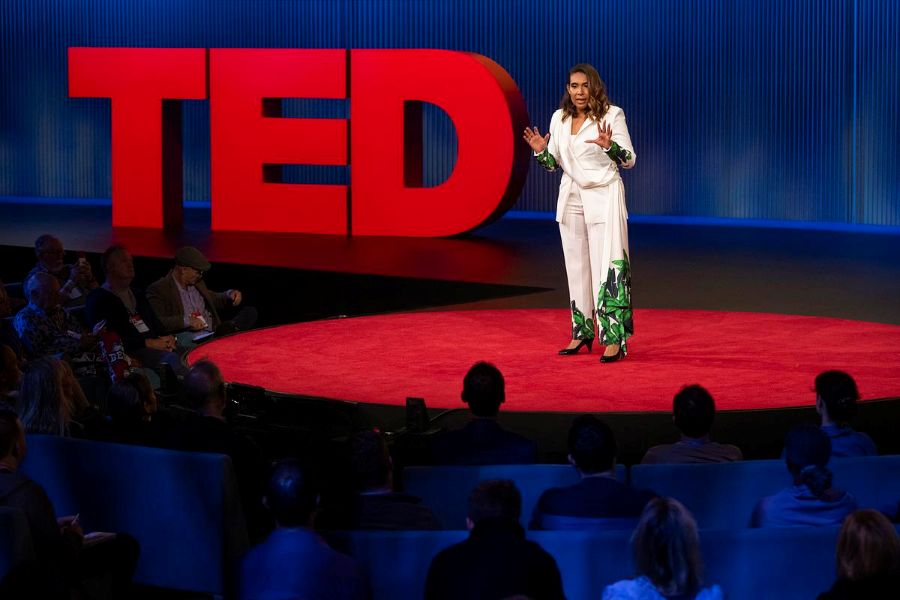
Professor Myriam Sidibe, one of Africa’s leading voices in ethical business and public health, has launched a new TED Talk titled “Sex, Soap and Alcohol”, calling on companies and philanthropies to rethink their business strategies to drive both economic growth and meaningful social impact—especially for women and girls in Africa.
Sidibe, the Chief Mission Officer at Brands on a Mission (BoaM) and former Unilever global health expert, argues that traditional business models are falling short in addressing Africa’s urgent social challenges.
In her powerful talk, now available on the TED platform, she urges brands to align with societal needs, leveraging their credibility and partnerships to bring about transformational change.
“Building a better world requires a business model designed to get us there. Without this, it is just wishful thinking,” Sidibe said. “We need to use the power of credibility, partnerships, and business to build economies that work for girls, growth, and the global good.”
In her talk, Sidibe spotlights three critical areas where businesses have successfully merged purpose with profit—and where more can be done.
Sidibe highlights alarming statistics: each year in Africa, 8.3 million women undergo unsafe abortions, 210,000 die from pregnancy-related causes, and millions remain untreated for sexually transmitted infections. Young women in Sub-Saharan Africa represent 63% of new global HIV infections.
To combat these issues, Sidibe’s organization BoaM is collaborating with governments and corporations on solutions that expand access to Sexual and Reproductive Health and Rights (SRHR). A flagship project is “Fatima“, an AI-driven animated character that educates audiences on taboo issues like menstruation, contraception, and sexual health—offering hope, dignity, and actionable solutions for girls across the continent.
Recalling her tenure at Unilever, Sidibe shares how she helped reposition Lifebuoy soap with the social mission “Help a child reach five.” The initiative not only contributed to a measurable decline in child mortality through better handwashing practices but also boosted brand trust, reaching over one billion people globally.
Sidibe points to the #NoExcuse campaign by Carling Black Label in South Africa as a standout example of a brand taking a stand against gender-based violence. The campaign successfully engaged men in conversations around harmful gender norms and domestic violence, shifting perceptions of both masculinity and the brand itself.
Professor Sidibe appealed to the private sector and development partners:
“When brands align with consumers to shift culture and norms—not just to sell products—real change happens.”