








South Sudan’s embassy in Kampala has moved to distance the national government from remarks by a Juba County official directing foreign nationals, including Ugandans, Kenyans, Eritreans and Burundians, to withdraw from small-scale retail businesses in the capital.
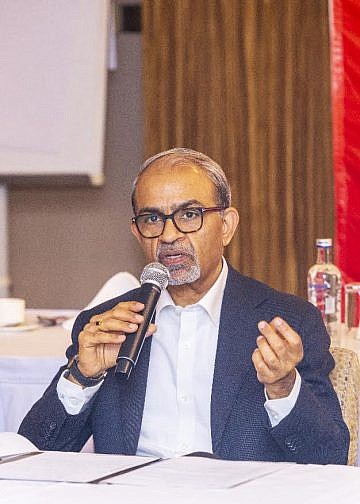
Speaking in response to the directive, Akuol Abijok Deng, Chargé d’Affaires at the South Sudan Embassy in Kampala, said the remarks by Juba County Caretaker Commissioner Kalisto Lado should not be interpreted as the official position of the South Sudanese government.
Deng also corrected the description of Lado’s position, stressing that he is not the mayor of Juba but the caretaker commissioner of Juba County, a local government official.
“As a representative of the Embassy of the Republic of South Sudan, I am here to clarify that whatever has been said by one of our officials—and point of correction, he is not a mayor, he is a caretaker commissioner of the county—so the statement doesn’t represent the position of the Republic of South Sudan.”
He said the remarks should instead be understood as coming from an official within the local government structure rather than a pronouncement by the national government in Juba.
“It is not from the state government. It is like a statement being issued here by one of the members of the local governments at the institutions.”
Deng said the South Sudanese government was expected to issue a formal communication on the matter.
“That’s not the position of the government of South Sudan, and sooner or later the government is going to release a press statement regarding that.”
The clarification comes after Lado, during a visit to Kuburi Haboba Market in Juba on Monday, October 5, directed foreigners to stay out of small-scale retail activities and leave such businesses to South Sudanese nationals.
He identified businesses such as chapati stalls, boda boda services and the retailing of tomatoes, onions and charcoal as activities that should be reserved for South Sudanese.
Lado argued that foreign traders should instead concentrate on wholesale trade, manufacturing, importing and other larger-scale investments capable of creating jobs for South Sudanese.
“Somebody should not come from his country to come and make chapati, retail kilos of onions and tomatoes in Juba. What will our women in South Sudan sell?”
He also told foreign businesspeople that they could establish companies and continue operating in South Sudan, while insisting that small-scale retail should be left to citizens
Urges Ugandans not to panic
The embassy’s clarification is particularly significant for Ugandans, who make up a substantial part of the foreign business community in Juba and have for years been involved in groceries, transport, restaurants, salons, mechanics and other informal and small businesses.
Reassured Ugandan nationals who may have become concerned by the reports.
“ I can assure our Ugandan sisters and brothers who are in South Sudan that don’t panic. There is no such and there will never be such.”
He stressed that relations between Uganda and South Sudan remained important and said the two countries’ relationship should not be undermined by comments made by an individual local government official.
“Our relationship as two countries is paramount and we value it at the highest order.”
The controversy has also revived an issue Lado has raised previously. Reports indicate that he took a similar position in 2021, when he was serving as Juba City mayor, arguing that foreigners should move away from small-scale retail and concentrate on wholesale, factories and industry.
His latest remarks therefore appear to reflect a longstanding position on the role of foreign traders in Juba’s informal economy rather than a newly announced national policy. The October 5 directive, however, attracted renewed attention because of its potential impact on traders from neighbouring East African countries.
The development also comes against a wider regional debate over the participation of foreign nationals in small-scale businesses.
In Kenya, President William Ruto announced on September 2 that the government would crack down on foreigners involved in hawking and other small-scale trading activities, arguing that local traders needed protection from competition.