








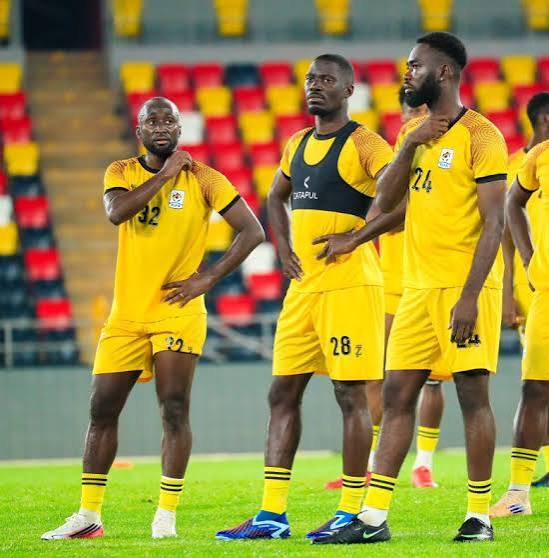
FUFA president Moses Magogo has defended the decision to recruit Ugandan neturalised players into the Uganda Cranes, saying selection for the senior national team must be based on merit rather than where a player was developed.
Uganda has naturalised at least nine players who recently featured for the Cranes in the just concluded games.
This came aftrer FUFA revealed that it had identified more than 200 professional players around the world who are eligible to represent Uganda through their heritage.
Of those, 20 had been followed up and nine joined the Cranes camp during the latest international window.
Commenting about the players, Magogo, however, said the recruitment drive should not be interpreted as a move to sideline players developed within higher you go the cooler it becomes. If you want to chill with the big boys, do like they do,” he Uganda.
Of the 35 players used by the Cranes during the September-October international break, he said, 24 were homegrown, including seven who currently play in the Uganda Premier League, while 11 were heritage players.
“The senior national team is for the best Ugandan footballers irrespective of where they play or where they were developed from. There cannot be affirmative action at this level,” Magogo said.
He challenged locally based players to improve their standards and compete for national team places rather than expect preferential treatment because they play in the domestic league.
“The higher you go the cooler it becomes. If you want to chill with the big boys, do like they do,” he said.
According to Magogo, the answer lies partly in improving the environment in which domestic players develop.
He said the third pillar of FUFA’s Technical Master Plan focuses on improving conditions for Uganda Premier League players, includingogo argued that improving those conditions would allow locally developed players to compete training, facilities, competition, welfare and motivation.
“The third pillar of the FUFA TMP is the strategy to improve the conditions for UPL based players to get proper training, facilities, competition, welfare and motivation,” he said.
Magogo argued that improving those conditions would allow locally developed players to compete for national team places on merit rather than relying on what he described as sympathy.
“It is only this that will help make them compete for places fairly in the national team pointed to European football, where leading clubs regularly recruit players from outside their own Ugandan ancestry who are developed and playing outside the country.”
He also pointed to European football, where leading clubs regularly recruit players from outside their own academies despite having established youth development systems.
“Even top clubs in Europe with the best academies also get players grown elsewhere for their senior teams. Football is not a cup of tea,” Magogo said.
Despite the increasing presence of heritage players, the FUFA president stressed that home-based and homegrown footballers would continue to be considered when they prove themselves.
He cited defender Hillary Bihogo Mukundane as an example, saying the player had performed consistently whenever called upon for national duty.
“Uganda Cranes will always consider home based and home grown players if they merit.”