





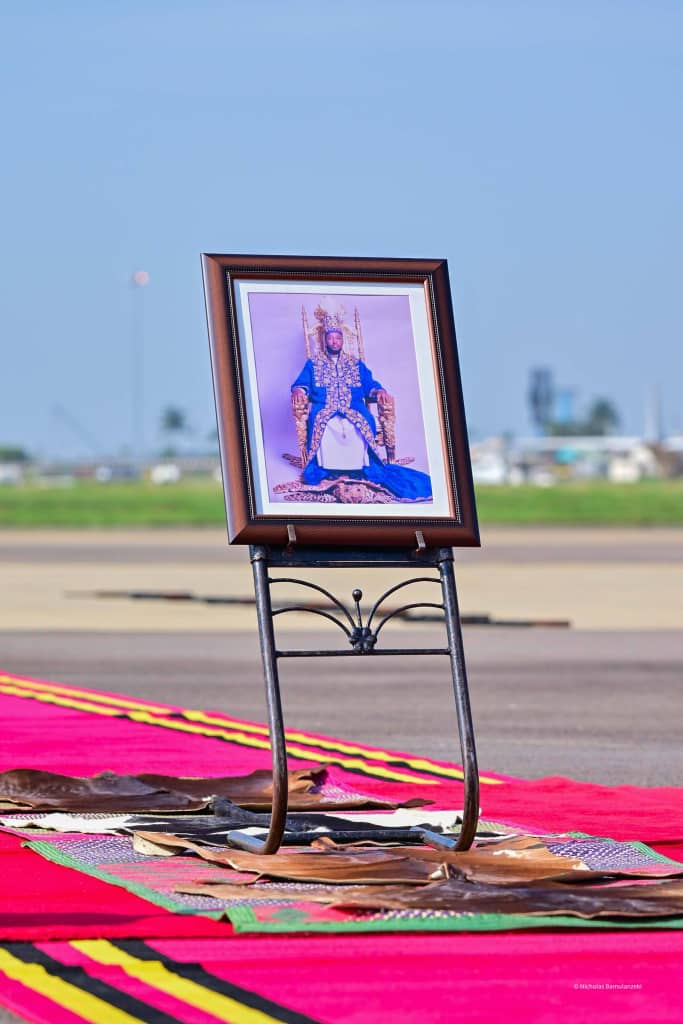
The body of the late Omukama Oyo Rukidi IV has now arrived at St John’s Cathedral in Fort Portal, where the official funeral service is underway as Tooro prepares to bid farewell to its long-serving monarch.
The arrival at the cathedral marks the first major stage of a carefully prescribed final journey that will take the late king from Karuziika Palace to the Karambi Royal Tombs, where he will be laid to rest according to traditional Batooro rituals.
The burial is not simply the conclusion of a funeral programme. It brings together Christian worship, centuries-old Tooro traditions and rituals linked to the succession of the kingdom’s throne.
The body was taken from Karuziika Palace to St John’s Cathedral on the ninth day of mourning, with the funeral service scheduled to begin at 9 a.m. and run until 1 p.m.
Archbishop Dr Steven Kaziimba Mugalu is leading the church service as the main celebrant.
To preserve the solemnity of the occasion, the programme provides for only four formal speeches: from Princess Ruth Komuntale, the Queen Mother Bisa, the head of the Babiito clan, Omusuuga Charles Kamurasi, and President Yoweri Museveni or his representative.
But the church service represents only one part of the burial.
From Karuziika Palace to Karambi
King Oyo’s body was returned to Karuziika Palace in Fort Portal on September 4, following his death abroad.
It has since remained at the palace during nine days of mourning and traditional observances.
On the burial day, the body left Karuziika Palace at 8:15 a.m. and was taken to St John’s Cathedral, where mourners have gathered for the official funeral service.
After the service, the royal hearse is expected to leave the cathedral for the Karambi Royal Tombs, with mourners accompanying it on a six-kilometre walking procession.
It is at Karambi that the religious ceremony will give way to the traditional burial rituals.
The body, traditionally referred to as Omuguta, will be taken into the royal burial grounds known as Gasani.
The traditional team will be led by the Omusuuna, the head of the ritualists responsible for conducting the prescribed ceremonies.
The body is scheduled to descend into Iziba, the prepared royal grave, at 2 p.m.
Access to the immediate burial grounds will be restricted, reflecting the private nature of some of the rituals.
The nine calls at the royal gate
One of the significant rituals begins before the body enters Gasani.
As the procession reaches the gate, the Omusuuna will identify himself to the person responsible for the royal tombs, known as the Katikiro of Gasani, and seek permission to enter with the body of the late king.
The request will be made repeatedly — nine times.
Permission to enter is granted only on the ninth call.
The number nine has a significant place in Tooro traditional practices and will feature repeatedly in both the burial and the rituals surrounding the succession of the next Omukama.
Where Christianity meets tradition
The burial brings the church and traditional institutions together, but their roles differ.
Church leaders will enter Gasani and pray while the body is placed near the prepared grave, known as Iziba.
Once the prayers are complete, the clergy and members of the public will leave.
Their departure will allow the ritualists to conduct ceremonies that, according to Babiito custom, are private and not intended for public viewing.
This division between the public religious ceremony and the private traditional rites is a defining feature of the burial.
Inside the royal grave
The grave where King Oyo will be laid to rest will have been prepared before the burial ceremony.
It consists of two levels. The upper section measures approximately six feet by six feet, while the lower section is where the king’s body will ultimately be placed.
It is within this space that the burial ceremony will also become closely connected to the succession of the Tooro throne.
After the clergy has left, Omujwera Musuuga will bring forward the prince expected to succeed King Oyo.
The prince will receive nine coffee beans from the Omusuuna and place them into the grave one at a time.
The act symbolises the prince’s participation in burying the outgoing king before taking on the responsibility of the throne.
Once this ritual is completed, the prince and other participants will leave the burial grounds, leaving the ritualists to perform further ceremonies away from public view.
The grave will subsequently be covered by people selected for the task.
A burial that also marks succession
For Tooro, the burial of a king is closely intertwined with the transition to a new reign.
The traditional burial ceremony, known as Okutabaza, is therefore not only about laying the deceased monarch to rest. It also establishes an important stage in the succession process.
By participating in the ritual burial, the prince expected to succeed King Oyo becomes the new Omukama in the traditional sense, even though the formal public enthronement will take place later.
After leaving the royal tombs, Omujwera Musuuga will hand the new king-in-waiting to his maternal uncle.
The maternal uncle will then take him to a private and undisclosed location, where he will remain under protection until the day of his formal coronation.
The Babiito are not expected to hold a conventional press conference to announce the new king.
The burial does not immediately bring the succession process to an end.
Under Tooro tradition, Okutabaza is followed by another period of rituals and preparations before the new Omukama is publicly enthroned.
That period lasts another nine days.
The formal coronation will therefore come later, after the traditional processes surrounding the burial and succession have been completed.
For mourners in Fort Portal, the journey from Karuziika Palace to St John’s Cathedral and, later, to Karambi is much more than a funeral procession.
It is the final journey of King Oyo Rukidi IV, the laying to rest of a monarch who ascended the Tooro throne as a child in 1995, and the beginning of a carefully guarded transition from one reign to another.
As the funeral service continues at St John’s Cathedral, attention now turns to the next stage of the journey — the procession to Karambi, where the final burial rites will take place.