










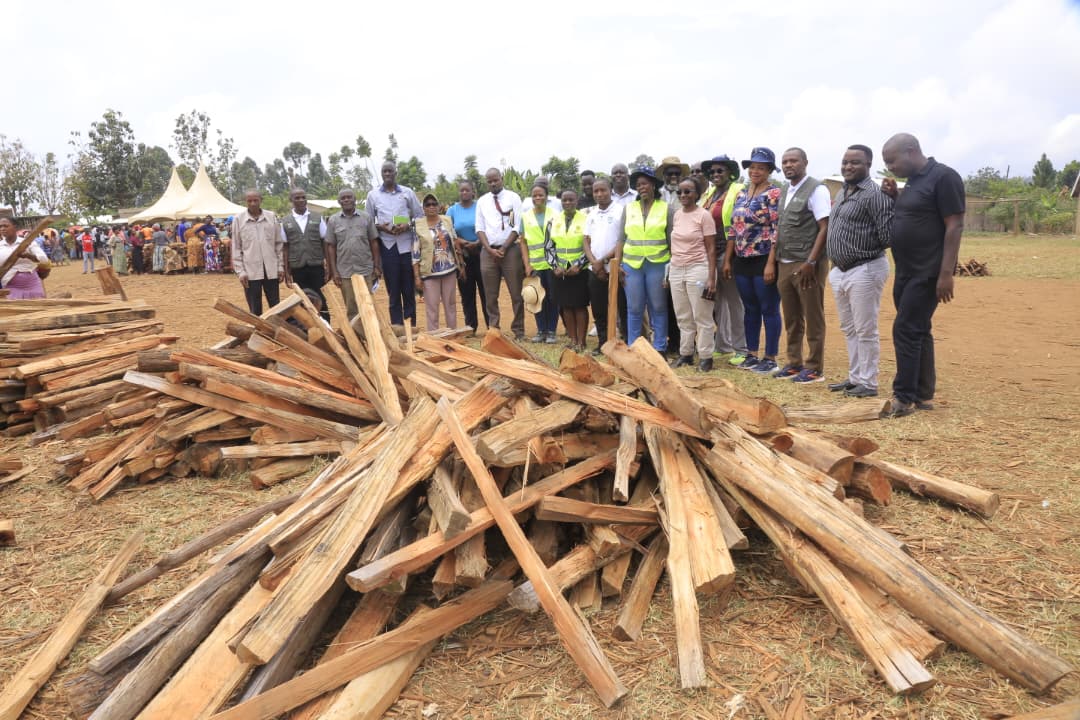
A government and World Bank technical team has taken stock of a fuelwood distribution programme in Kyangwali Refugee Settlement, with officials warning that supply must accelerate to meet annual targets.
The assessment was conducted under the Investing in Forests and Protected Areas for Climate-Smart Development (IFPA-CD) Project, implemented by the Ministry of Water and Environment with support from the World Bank.
Led by IFPA-CD National Project Coordinator Margaret Athieno Mwebesa and World Bank Task Team Leader Anita Takura, the delegation included representatives from the Uganda Wildlife Authority, the Ministry of Tourism, Wildlife and Antiquities, and the Office of the Prime Minister.
Only a Quarter of Target Delivered
Kyangwali is scheduled to receive 17,297 cubic metres of fuelwood under the current plan. However, only 6,324 cubic metres — about 26 percent — have so far been delivered.
The programme targets 15,252 refugees to receive one cubic metre each per year. A further 6,344 cubic metres have been reserved for Persons with Specific Needs (PSNs).
Officials said while progress has been registered, the delivery rate must improve to ensure all intended beneficiaries receive their allocation.
The fuelwood intervention is part of a broader landscape restoration effort aimed at reducing pressure on natural forests surrounding refugee settlements. The project promotes tree planting and farm forestry on community and private land to build a more sustainable fuel supply.
Beneficiaries reported that access to distributed fuelwood has reduced the time spent searching for firewood and lowered the risk of environmental degradation.
The Office of the Prime Minister described the initiative as a structured approach to addressing cooking energy challenges in refugee settlements, particularly for vulnerable individuals.
Speaking during the mission, IFPA-CD National Project Coordinator Margaret Atheino Mwebesa called for increased participation from fuel wood suppliers to ensure timely delivery of fuelwood while also creating livelihood opportunities for refugees.
“We are calling on more suppliers to come on board and support the fuelwood supply chain so that we can meet the wood fuel target in the refugee settlement. At the same time, we encourage the involvement of refugees themselves in the distribution chain as a way of creating employment opportunities and strengthening community ownership of the initiative,” Mwebesa said.
Officials emphasised that strengthening the supply chain will be key to meeting targets and sustaining the gains made under the World Bank-funded project, even after its completion.