










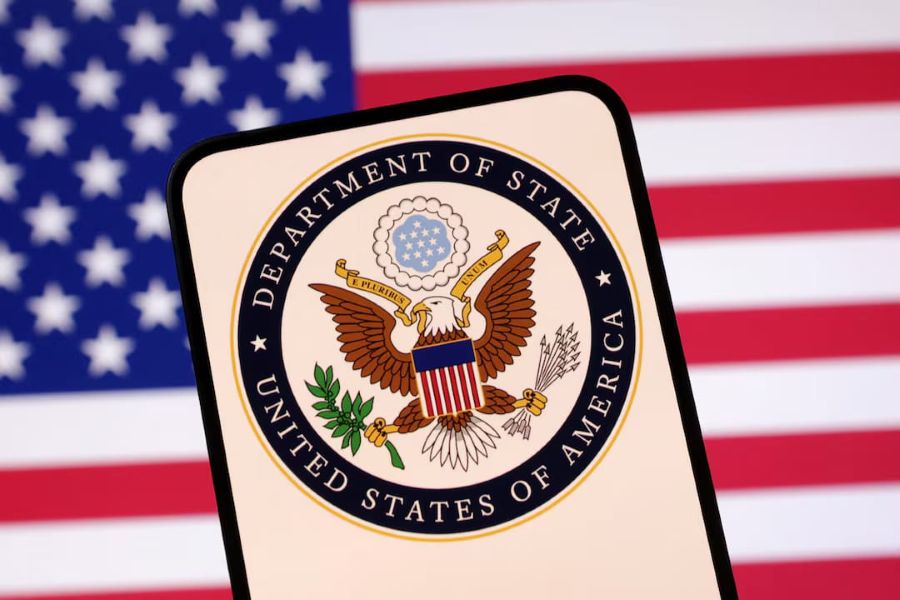
The United States government has announced a fresh round of sanctions targeting senior officials of the Palestinian Liberation Organization (PLO) and the Palestinian Authority (PA), citing violations of long-standing peace agreements and support for activities that contradict efforts to resolve the Israeli-Palestinian conflict.
In a report submitted to Congress, the U.S. State Department confirmed that both the PLO and PA are not in compliance with their obligations under the PLO Commitments Compliance Act of 1989 (PLOCCA) and the Middle East Peace Commitments Act of 2002 (MEPCA).
In response, Washington is implementing visa bans against PLO members and PA officials in accordance with section 604(a)(1) of MEPCA.
“It is in our national security interests to impose consequences and hold the PLO and PA accountable for not complying with their commitments and undermining the prospects for peace,” the Department of State said in a statement.
According to the U.S., the violations include:
Initiating and supporting actions at international bodies such as the International Criminal Court (ICC) and International Court of Justice (ICJ), which the U.S. says are meant to internationalize the conflict with Israel rather than resolve it through direct negotiations.
Undermining UN Security Council Resolutions 242 and 338, which form the backbone of internationally recognized frameworks for a two-state solution.
Supporting terrorism and incitement, especially through official textbooks that glorify violence, and by continuing the controversial practice of providing payments to individuals convicted of terrorism and their families.
These payments, often referred to by critics as “pay-for-slay” programs, have long been a source of friction between the PA and Western donors.
The move marks a serious escalation in U.S. efforts to pressure Palestinian leaders to return to compliance with past peace commitments and rein in support for violence.
Though the State Department did not specify which individuals would be affected, the visa bans are expected to hit senior-level officials with ties to diplomatic missions, international advocacy efforts, and governance within the Palestinian territories.
The announcement could further strain already-frosty U.S.-Palestinian relations, which have been volatile amid rising tensions in the West Bank and Gaza.
While no immediate response has been issued by the Palestinian Authority, past sanctions have been met with harsh criticism, with Palestinian leaders accusing Washington of bias and double standards in its support for Israel.