











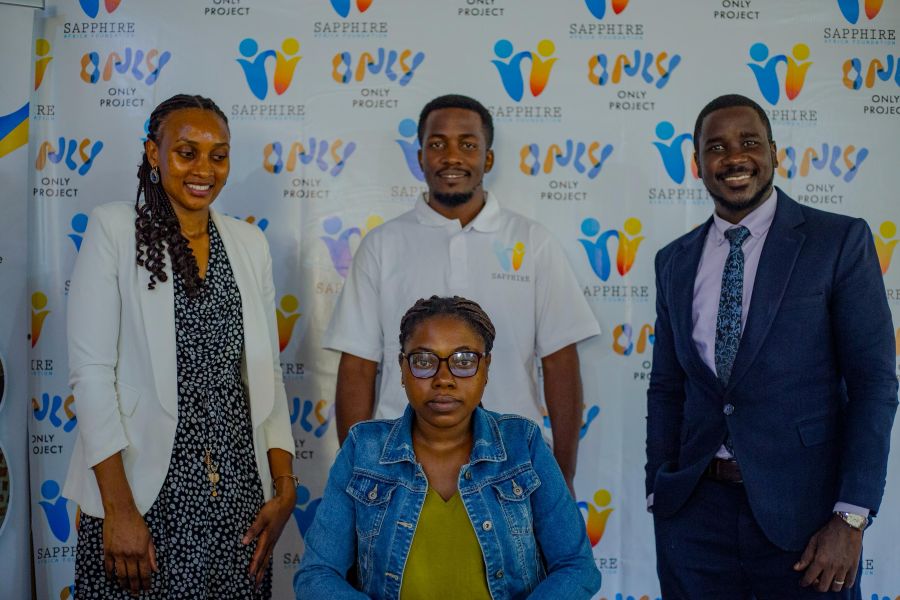
Health experts and advocates are urging the Ugandan government to take immediate action against Duchenne Muscular Dystrophy (DMD), a rare but aggressive genetic disorder that is silently threatening the lives of hundreds of children each year.
The Sapphire Africa Foundation, a leading voice in rare disease advocacy, warns that children born with Duchenne are “running against time” due to the condition’s rapid progression and Uganda’s failure to incorporate it into national health and disability strategies.
Duchenne Muscular Dystrophy primarily affects boys, typically manifesting between the ages of two and six. It weakens muscles over time, leading to loss of mobility, spinal deformities, breathing difficulties, and eventually heart failure.
Globally, DMD affects about 1 in every 3,500 to 5,000 male births. In Uganda, it is estimated that at least 300 children are born with the condition annually, although many cases go undiagnosed due to poor awareness and limited access to diagnostic services.
Paul Collins Rubaihayo, Executive Director of Sapphire Africa Foundation, said Duchenne must be recognized in Uganda’s broader healthcare and disability strategies if families are to receive the attention and resources they deserve. He emphasized that formal policy recognition would enable early screening, access to treatment, research partnerships, and financial support for affected families.
Despite the severity of the disease, Duchenne remains virtually invisible in Uganda’s national health priorities. As a result, many families resort to superstition when symptoms like frequent falls or muscle weakness appear—especially in rural areas where such signs are often misinterpreted as witchcraft or curses.
Health workers are often the first to identify developmental delays, yet many lack the training or resources to recognize Duchenne early. Betty Elizabeth Furaha, a medical practitioner, noted that it is at the clinics where red flags become apparent.
She explained that while some parents believe their children will “catch up” over time, Duchenne only worsens as the child grows. She added that although there is currently no cure, multidisciplinary care—such as physiotherapy, respiratory support, counseling, and educational therapy—can significantly improve quality of life and prolong survival.
The human cost of the disease is deeply personal for Rhonah Carolyn Kimpaye, a mother living with Duchenne who is now raising a child with the same condition. Kimpaye first experienced symptoms at the age of 11 and eventually required a wheelchair by her early twenties.
Her son’s condition, she says, is even more severe. By the time he was three, he had already started falling frequently. His scoliosis is advanced, his muscles are weak, and attending school is a daily struggle.
Despite the challenges, Kimpaye has become an advocate for awareness. She said many people in her family had never heard of Duchenne, underscoring the urgent need for greater public education. For families like hers, she explained, understanding and support can make all the difference.
The Sapphire Africa Foundation is calling on the Ugandan government to take concrete steps in combating Duchenne. These include integrating DMD screening into national child health policies, providing genetic counseling for at-risk families, establishing specialized care centers, training frontline health workers, and launching public awareness campaigns.
The organization also encourages couples to consider pre-marital health checks as a way to understand their genetic risks.
Rubaihayo stressed that time is the greatest enemy when dealing with Duchenne. “Every day without action is a day lost for a child who could have had a better future,” he said. “Government recognition would show these families that they are not forgotten.”