










The Kampala Rice Traders Association has appealed to the government to intervene in what they describe as unfair tax and documentation challenges affecting rice imports from Tanzania.
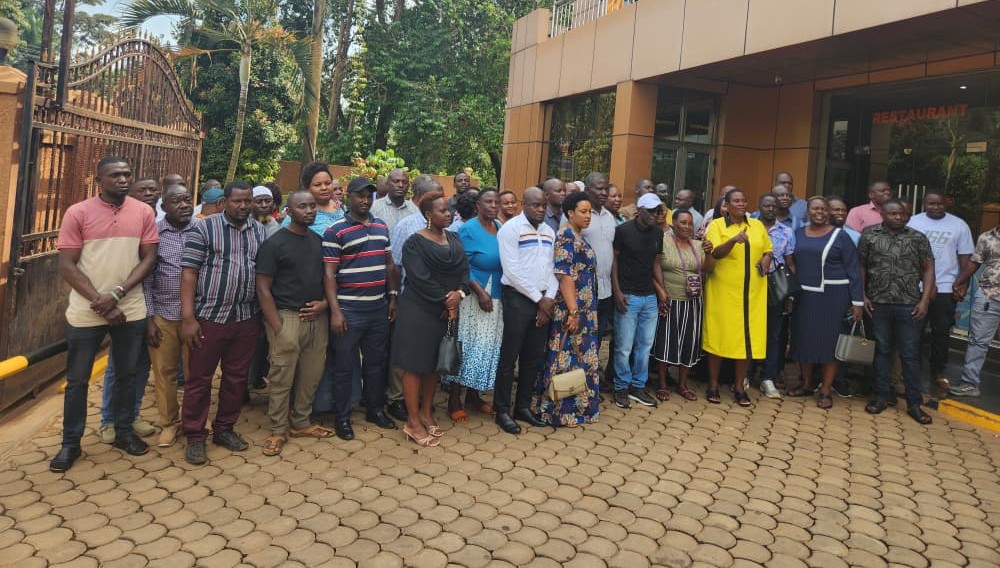
The appeal was made on Tuesday during a meeting held at Kenlon Hotel in Mengo, where the traders engaged with a representative from Operation Wealth Creation.
During the meeting, they delivered a letter addressed to Gen. Salim Saleh, the Chief Coordinator of Operation Wealth Creation, through his Personal Assistant on Development, Tony Ssempijja.
Soeaking at the meeting, association’s chairman, Livingston Ssenyonga said rice traders are struggling to compete with companies that enjoy tax exemptions and to comply with new documentation requirements at the border.
“We are facing challenges at the border when importing rice from Tanzania. Some companies we compete with are given tax exemptions, including a 30% waiver, which creates an uneven playing field,” Ssenyonga said.
Ssenyonga added that some companies are enjoying unfair advantages through tax exemptions, leaving genuine rice traders struggling under a heavy tax burden.
“Some companies are feasting from our plate with bigger portions because they’re privileged with tax exemptions, while genuine traders like us are left to carry the full tax burden,” Ssenyonga said.
Robert Ssentongo, the secretary geneal Kampala Rice Traders Association pointed out another big challenge of the Electronic Fiscal Document (EFD) system a digital invoicing requirement that Uganda Revenue Authority (URA) now demands for all imports.
“EFDs are electronic fiscal documents that can only be issued by registered companies with electronic systems of exporting rice,” he said.
“The problem is that in Tanzania, we buy rice directly from local farmers who do not own companies and therefore cannot issue those documents.”
Ssentongo noted that the situation is similar to Kenyan traders buying cereals directly from Ugandan farmers who also lack such systems.
“If Kenyans come here to buy maize or other cereals, they buy directly from farmers or middlemen who don’t have electronic systems to issue EFDs. It’s the same case in Tanzania,” he explained.
He added that unless Tanzania changes its tax policy to require every grain broker to acquire electronic systems for issuing fiscal documents, Ugandan traders will remain unable to meet URA’s current requirements.
“We appeal to the government and the Uganda Revenue Authority to suspend that system until Tanzania’s tax policy allows each broker to issue the documents URA needs,” Ssentongo urged.
The traders are also seeking an audience with Gen. Salim Saleh to present their concerns and explore practical solutions.
“We need an appointment with Gen. Saleh to explain the challenges we face and to see how we can move forward together, so that URA can collect its taxes properly without forcing anyone out of business,” Ssentongo said.
Responding to the traders’ concerns, Tonny Ssempijja, the Personal Assistant to Gen. Salim Saleh on Development, assured them that their letter would be delivered to the Operation Wealth Creation (OWC) Chief Coordinator for review and support.
“I’ve heard your concerns, and I assure you that I will deliver your letter to the General before the end of Tuesday,” Ssempijja said.
“I’m impressed that you’re not asking for financial assistance, but rather seeking support to streamline your operations and ease the heavy burden you’re carrying.”