





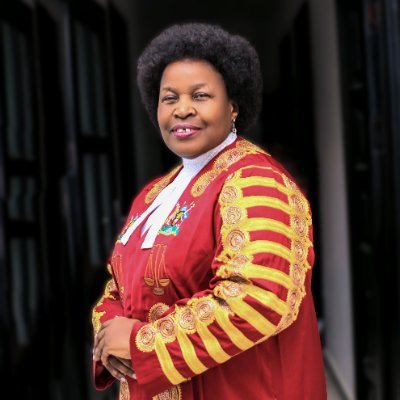
Former Supreme Court Justice Esther Kitimbo Kisaakye has challenged President Yoweri Museveni over what she described as an escalating crackdown on opposition leaders and their supporters following the January 14 general elections.
In a strongly worded statement posted on X on Sunday, Justice Kisaakye questioned whether the arrests, abductions, and alleged attacks on opposition figures could be taking place without the President’s knowledge or approval, given his position as Head of State and Commander-in-Chief of the armed forces.
“Can all of the above be happening without your knowledge or consent?” she asked, adding that “if repression exists, legitimacy is in question.”
President Museveni was declared winner of the presidential election on January 17 with 71.65 per cent of the vote, according to the Electoral Commission. However, the period following the announcement has been marked by reports of heightened security operations targeting leaders and supporters of the opposition National Unity Platform (NUP).
Justice Kisaakye cited the continued security presence around the home of NUP president Robert Kyagulanyi, popularly known as Bobi Wine, who last week said he had gone into hiding for fear of his safety.
She also raised concern over the arrest and terrorism charges brought against NUP vice president for the Central Region, Muwanga Kivumbi, noting that the charges contradict earlier reports that his home was attacked on election night by armed men in uniform, an incident in which several people were reportedly killed.
The former justice further claimed that two other NUP vice presidents—Dr Lina Zedriga (Northern Region) and Jolly Tukamushaba (Western Region)—had been abducted and that their whereabouts remain unknown.
Justice Kisaakye also pointed to the detention of veteran opposition leader Dr Kizza Besigye, whom she said is being held unlawfully and denied access to his personal doctors.
Among other cases highlighted were the imprisonment of Catholic priest Fr Ssekabira over alleged links to Mr Kyagulanyi, the de-licensing of civil society organisations, and the arrest of activists such as Sarah Birete on what she described as questionable charges.
“Many other Ugandan citizens are missing or in unlawful detention for their political views or for supporting opposition candidates,” she wrote.
Justice Kisaakye served on Uganda’s Supreme Court for more than a decade and was widely regarded as an independent and outspoken judicial voice.
Her estrangement from the political establishment became public following her dissenting opinions in politically sensitive cases, most notably the 2016 presidential election petition in which she faulted the electoral process and openly challenged the legitimacy of the outcome.
Following that decision, Justice Kisaakye reported facing intimidation and threats, and she later left the country. She has since lived in exile, frequently speaking out on governance, judicial independence, and human rights in Uganda.
In her latest statement, she said she is among many Ugandans forced to flee the country out of fear, mentioning Uganda Law Society president Isaac Ssemakadde as one of those also living abroad.
Justice Kisaakye also criticised the Internet shutdown imposed during the election period, saying the vote was “secured in darkness,” and argued that a genuinely won election would not require repression.
“If you genuinely won this election, why prevent opposition leaders from using lawful and constitutional means to challenge the election results if they wish to?” she asked.
She urged President Museveni to use his authority to restore constitutional governance, rein in security forces, stop the labelling of political opponents as terrorists, and end abductions and violence.
“Uganda deserves dignity. Uganda deserves justice. Uganda deserves peace,” she wrote, signing off with the national motto: “For God and my country.”
The government has previously defended post-election security operations as necessary to maintain law and order and national security. President Museveni and senior security officials have accused some opposition actors of inciting violence, allegations the opposition has consistently denied.