






















Uganda has rolled out a nationwide mandatory newborn screening programme for sickle cell disease (SCD) in a major push to reduce deaths and long-term complications linked to the genetic condition.
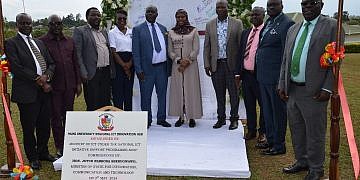
The programme was launched on Monday at the Ministry of Health headquarters by the Permanent Secretary, Dr Diana Atwine, under the theme: “Every child in Uganda must have a known sickle cell status.”
The initiative will ensure that all babies born in Uganda are tested for sickle cell disease at birth, allowing health workers to identify affected children early and place them on life-saving treatment before symptoms develop.
Dr Atwine said the government has fully integrated sickle cell prevention, diagnosis and care into the public health system to ensure no child is missed.
“We have created sickle cell disease prevention, diagnosis and care into our public health system. We no longer want this to be verticalised. Everywhere you go in our hospitals, children will be screened at birth, and those found with sickle cell disease will be followed up,” Dr Atwine said.
She explained that government has also established dedicated sickle cell clinics across the country, staffed with specialists to handle complicated cases.
“We have children coming in with many complications, including organ failure. That is why we need highly specialised care, and that is why we have established sickle cell clinics where these children can receive proper treatment,” she added.
According to Dr Atwine, health workers across Uganda have been trained using standardised clinical guidelines to ensure uniform and quality care.
“Government has disseminated clinical guidelines and trained our health workers all over the country so that they all know how to take care of children with sickle cell disease,” she said.
The new programme will also benefit from the introduction of rapid testing kits, similar to those used for HIV, which will make screening easier and faster.
“We are now introducing newborn screening services nationwide. We have rapid tests that have come on board, and these will ease screening. We are making sure the test kits are available in health facilities as we scale up newborn testing,” Dr Atwine said.
She added that medicines for sickle cell disease have been included on the national essential medicines list, ensuring consistent availability in public health facilities.
Uganda is one of the countries most affected by sickle cell disease in Africa, with about 13.3% of the population carrying the sickle cell trait and more than 20,000 babies born with the disease every year.
Dr Atwine also used the launch to encourage couples to know their sickle cell status before having children.
“With the excitement of Valentine’s Day, we encourage couples to take time to know their sickle cell status before planning for childbirth. If you both find that you are carriers, reconsider the relationship,” she said.
“Those love feelings can be very strong, but the risk of producing a child with sickle cell disease is too great and costly. The repercussions will one day outweigh that love,” she added.
The launch builds on government’s wider efforts to fight sickle cell disease. In October last year, while launching the Sickle Cell Prevention and Management Scale-Up Programme in Soroti, Health Minister Dr Jane Ruth Aceng directed the Director General of Health Services to immediately establish a National Taskforce for the Prevention of Sickle Cell Disease.
The taskforce is expected to coordinate prevention, screening, treatment and public education as Uganda works to reduce the heavy burden of the disease on families and the health system.