









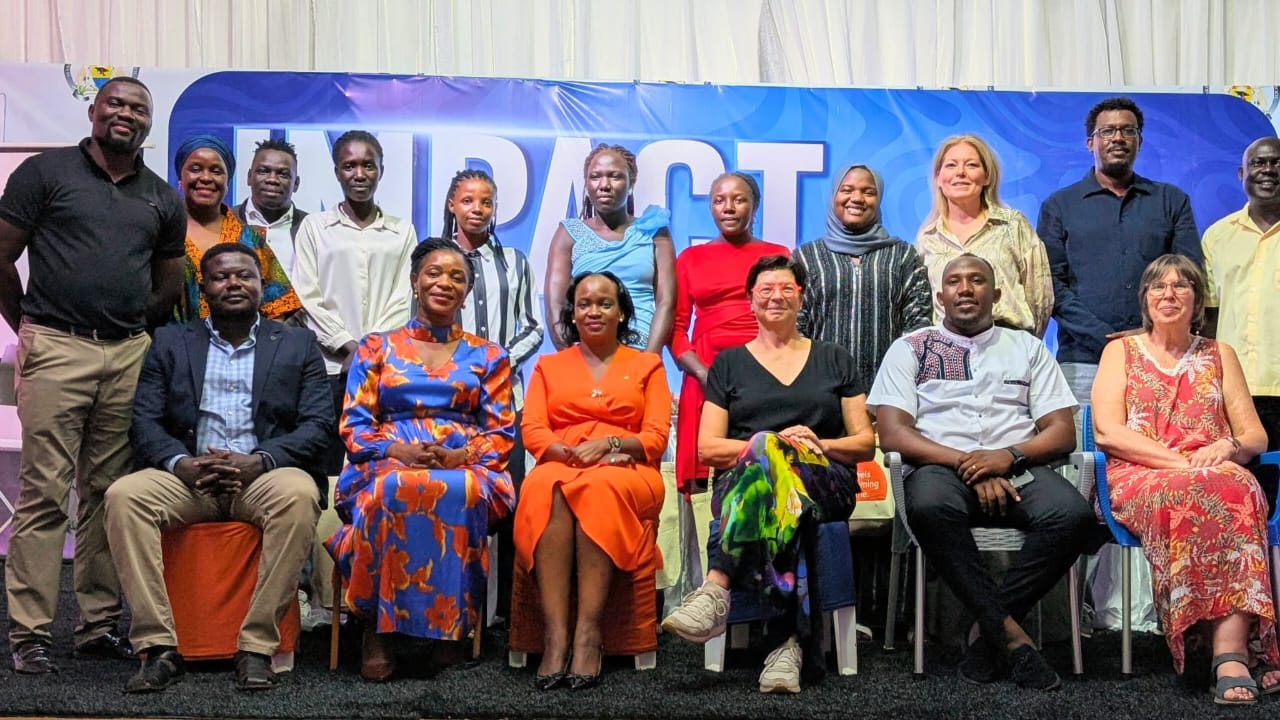
A growing academic partnership between Uganda and Belgium is injecting fresh momentum into student-led enterprises after 20 high-potential startups completed the Impact Week 2026 Ideation Bootcamp at Makerere University Business School (MUBS).
The bootcamp, organised by the MUBS Entrepreneurship Innovation and Incubation Center in collaboration with Thomas More University of Applied Sciences, brought together more than 100 students for intensive, hands-on business training and cross-border mentorship.
Throughout the week, Ugandan participants worked closely with Belgian coaches and peers, gaining international exposure and structured feedback on their business models, market strategies and growth plans.
Dr. Diana Nandagire Ntamu, Director of the MUBS Entrepreneurship Innovation and Incubation Center, said the partnership—established in 2022—extends beyond short-term training engagements.
“We have partnered with this university since 2022 to support our young people to generate innovative ideas, nurture them and eventually help them start their own businesses,” she said.
She emphasised that the objective is long-term enterprise development rather than short-lived competition success.
“Running a business is a journey. What we see here are the early steps of these startups, but we will continue to support them through coaching and mentoring,” she added.
Associate Professor Rachael Mindra-Katoroogo, Acting Deputy Principal of MUBS, described the bootcamp as evidence that universities can play a direct and practical role in economic transformation.
“We have to move beyond the classroom to make entrepreneurship work,” she said.
She noted that international collaborations help students apply academic knowledge to real-world challenges, particularly through innovation and emerging technologies.
“We must use artificial intelligence to help us think, develop and approach business differently,” she said.
Keynote speaker Enock Julius Naika, Chief Executive Officer of Famunera, pointed to limited access to affordable financing as a major obstacle facing youth-led enterprises.
“Many don’t have access to affordable financing, and most lack the collateral required by banks,” he said.
However, he encouraged participants to leverage emerging technologies such as artificial intelligence to reduce operational costs and improve efficiency.
“With artificial intelligence, many processes can be automated, reducing expenditure on human resources and easing early-stage pressures,” he noted.
At the close of the bootcamp, three startups were recognised for their innovation and potential impact: African Bead, which blends fashion and cultural heritage through handcrafted beadwork bags; Selfresh Africa, which provides off-grid cold storage solutions to reduce post-harvest losses; and EA Value Venture, which focuses on value addition through matooke processing.
Organisers said the bootcamp signals a stronger role for international academic partnerships in shaping Uganda’s next generation of entrepreneurs—transforming university students into future employers rather than job seekers.