





















Pearl Bank has entered a four-year strategic partnership with the Joint Clinical Research Centre (JCRC) to establish a specialized Bone Marrow Transplant (BMT) Centre in Uganda, in a move aimed at expanding access to life-saving treatment for patients battling sickle cell disease, HIV-related complications and other complex blood disorders.
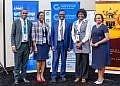
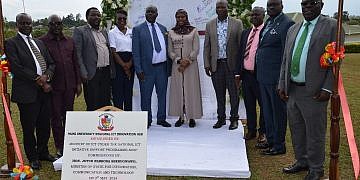
The partnership was unveiled at JCRC’s offices in Lubowa, Entebbe, where Pearl Bank presented a dummy cheque worth shs200 million as part of its financial commitment to the project.
JCRC plans to raise USD 4 million through a nationwide fundraising campaign to finance the establishment of the BMT facility. Once operational, the centre is expected to help close critical gaps in Uganda’s specialized healthcare services, strengthen local capacity to manage advanced blood disorders, and position the institution as a regional hub for stem cell research, regenerative medicine and gene therapy.
To streamline fundraising efforts, JCRC will host an online donation link on its website, enabling contributions through mobile money platforms, Visa and Mastercard payments, as well as QR code channels. Funds raised will be deposited into a designated Pearl Bank account.
Pearl Bank Managing Director Julius Kakeeto described the collaboration as both philanthropic and strategic.
“This partnership is not just a philanthropic endeavor, but a strategic investment that aligns seamlessly with Uganda’s national development framework, particularly the Agro-Industrialization, Tourism, Minerals, and Science & Technology Innovation (ATMS) strategy,” Kakeeto said.
He noted that the Science, Technology and Innovation pillar plays a pivotal role in accelerating value addition across sectors, adding that investment in the BMT Centre would strengthen Uganda’s medical research ecosystem and specialized healthcare infrastructure.
“As part of our Corporate Social Investment pillar in health, we believe a healthy nation is a wealthy nation. We are pleased to form this four-year partnership toward this noble cause. One of the wards will be named the Pearl Ward,” he added.
Uganda continues to grapple with a heavy burden of hematological diseases. An estimated 17,000 babies are born with sickle cell disease each year, with up to 80 percent dying before their fifth birthday due to limited access to specialized care. Health experts indicate that one in seven Ugandans carries the sickle cell trait, underscoring the scale of the genetic risk within the population.
The country also records more than 34,000 new cancer cases annually, resulting in over 22,000 deaths. Blood cancers, particularly leukemia and lymphoma among children, account for a significant share of this mortality burden.
Medical specialists note that bone marrow transplantation remains a proven, potentially curative intervention for sickle cell disease and several benign and malignant blood disorders, including leukemia and lymphoma. Beyond its therapeutic value, bone marrow transplantation has also contributed to scientific advances in HIV research. Globally, nine individuals living with HIV who underwent bone marrow transplants for underlying blood cancers have achieved remission of both their cancer and HIV, providing important insights for ongoing cure research.
Speaking at the launch, Francesco Arezzo, President of Rotary International, described the initiative as transformative for the country’s health sector.
“Uganda has always been a beacon of resilience in Africa. With the launch of this Bone Marrow Transplant Centre, we are not just saving lives; we are restoring hope. This is Rotary at its best: service above self, transforming communities,” he said.
JCRC Board Chairperson Charles Ibingira said the facility would ease the financial and emotional strain faced by families forced to seek treatment abroad.
“This centre ensures Ugandans can access world-class care at home — dignified, equitable and lifesaving,” he noted.
Minister of Health Jane Ruth Aceng said the project aligns with Uganda’s Vision 2040 development agenda and represents a major milestone in the fight against sickle cell disease and cancer.
Minister for Science, Technology and Innovation Monica Musenero confirmed that the initiative has government backing. Speaking both in her official capacity and as a Sickle Cell Ambassador, she pledged a personal contribution of $1,000 toward the project, describing the cause as both personal and nationally significant.
JCRC Executive Director Cissy Kityo Mutuluuza said the centre represents hope and a second chance at life for thousands of Ugandans.
“This centre is about hope, dignity and giving Ugandans a second chance at life. We call on individuals, corporations, governments and partners to join this mission. Every contribution counts,” she said.
She commended Pearl Bank for its shs200 million contribution, noting that the support will accelerate efforts to establish the much-needed facility.