










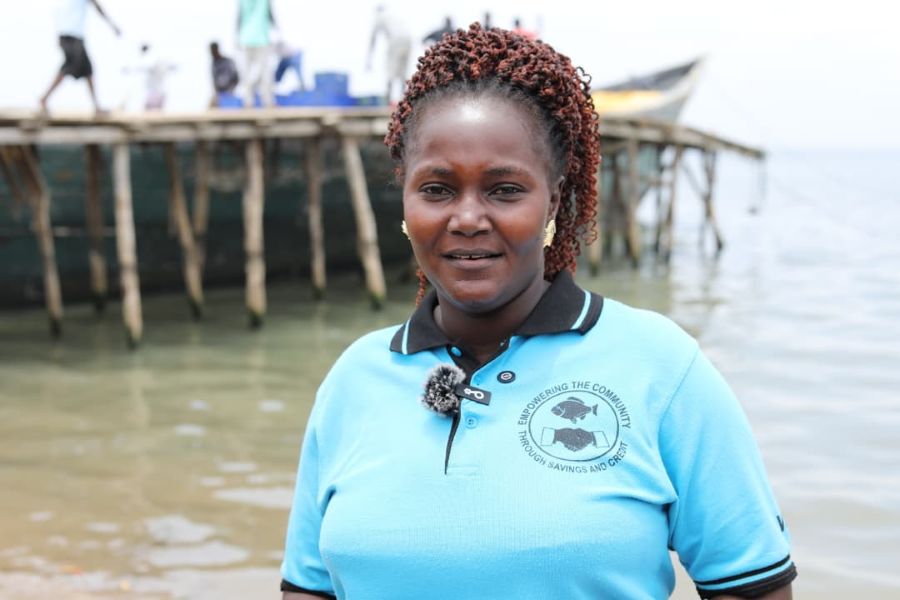
On the busy shores of Lake Albert at Kanara Landing Site in western Uganda, Sifah Kawambe now stands as a symbol of what access to credit and community support can achieve.
Just a few years ago, Kawambe’s life looked very different.
The 31-year-old resident of Ntoroko East A Cell in Kanyansi Ward, Kanara Town Council, worked as a housemaid earning a modest monthly salary that barely covered her basic needs.
“Before I joined this group, I had nothing. I was employed as a housemaid here and I was earning Shs70,000 monthly, which was not enough,” Kawambe recalls.
Today, she is one of the most visible entrepreneurs at Kanara Landing Site, where her fishing business employs more than 30 people.
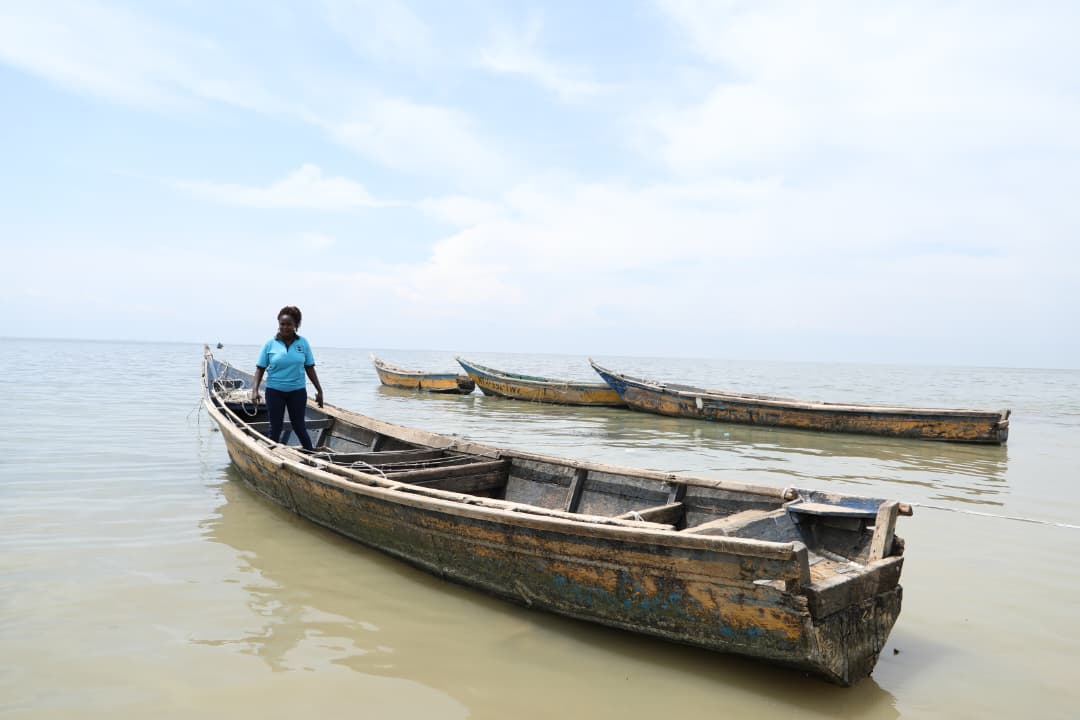
Kawambe now owns eight boats and 10 water engines and has invested in property in Ntoroko District and across the border in the Democratic Republic of the Congo.
Her transformation began modestly in 2018 when she joined the Kanara Tuendelee Village Savings and Loans Association (VSLA), a local savings group with 48 members.
“At first we started small. When I got my first loan, I bought good fishing nets. Later I bought one engine and one boat, and after some time I constructed more boats and added engines,” she explains.
While the savings group gave Kawambe access to small loans and financial discipline, a major turning point came in June 2025 when the group received funding under the Local Economic Growth Support (LEGS) Project.
The initiative is implemented by the Microfinance Support Centre in partnership with the Islamic Development Bank and the Ministry of Local Government.
Through the programme, the Tuendelee savings group received Shs72 million to construct a community cargo boat to facilitate cross-border trade.
“The support that we got from Microfinance helped us to construct a boat. The money was not enough, so we members added Shs20 million to make a bigger boat that travels between Uganda and Congo,” Kawambe explains.
The cargo vessel now ferries goods between Kanara and trading centres in eastern Congo, creating new opportunities for trade and boosting the incomes of group members.
“Since the boat started operating between Uganda and Congo, we always have money in the group. Members can now access loans easily to grow their businesses,” she says.
For Kawambe, access to credit from the savings group proved transformative.
“With the loans I got from the group, I expanded my fishing business. Now I have 10 engines and eight boats, and I employ many workers,” she says.
Her enterprise now supports not only her family but also dozens of people in the surrounding fishing community.
“It has created jobs not only for our members but also for other people in the community. Many people now work on our boats and in our businesses,” Kawambe says.
The income generated has enabled her to diversify her investments and secure a better future for her children.
“From this group and the support of government, I have been able to construct my lodge worth about Shs22 million, buy land in different places and take my children to better schools,” she says.
Empowering communities through finance
Kawambe credits the Microfinance Support Centre and government-backed financial inclusion programmes for helping communities like Kanara access opportunities that would otherwise be out of reach.
“I thank the Microfinance Support Centre and government for not leaving the people of Kanara behind, but for involving us in government programmes like this one,” she says.
“I encourage women and men to join groups like Tuendelee. As you see me today, I was once a maid, but now I am self-employed and respected because of this group,” Kawambe adds.
According to Williams Okweda, Regional Manager for Western Uganda at the Microfinance Support Centre, the LEGS Project was designed to extend financial services to underserved communities.
“Today we are in Kanara Town Council in Ntoroko District assessing the impact of Microfinance Support Centre funding under the Local Economic Growth Support Project,” Okweda says.
The initiative currently operates in 17 districts across Uganda, with the Kabarole Zone covering four districts in western Uganda.
“We partnered with organised community groups that were already mobilising savings among themselves. With funding ranging from Shs10 million to Shs30 million, these groups have been able to grow their businesses and expand their savings,” he explains.
Through the programme, communities have invested in income-generating activities such as fishing, transport services and agro-machinery.
“Community livelihoods have changed. People are able to increase their incomes, take their children to school and access better medical services,” he says.
For districts like Ntoroko District, which remain geographically remote and underserved by formal financial institutions, programmes such as LEGS play a critical role.
“Government felt such communities should not be left behind, which is why we came in to support them through organised savings groups,” Okweda says.
During the first phase of the project, more than $10 million was invested nationwide. In the Kabarole Zone alone, Shs8.12 billion supported 134 projects, benefiting more than 25,000 people.
Despite widespread scepticism about government-funded credit schemes, Okweda says the programme has recorded promising repayment rates.
“After training these groups and working closely with them, the repayment rate is now over 80 percent, which is very encouraging,” he says.
Following the success of the pilot phase, the programme is expected to expand further.
Okweda says Phase Two of the LEGS Project will soon roll out to more districts across the country, with the aim of reaching thousands more entrepreneurs like Kawambe—people who, with access to finance and community support, are turning modest beginnings into thriving businesses.