








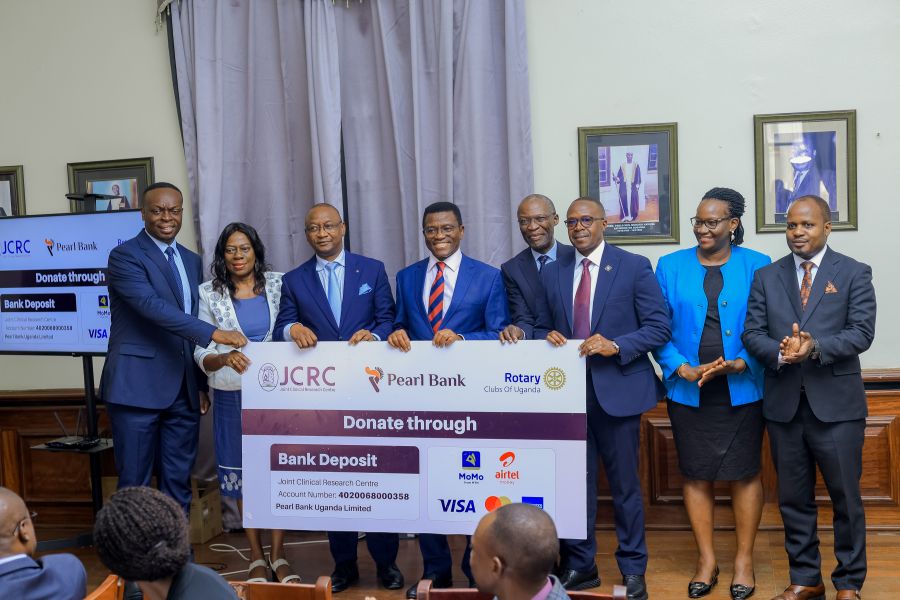
The Joint Clinical Research Centre (JCRC), in partnership with Pearl Bank and Rotary International, has intensified efforts to establish Uganda’s first Bone Marrow Transplant (BMT) facility, a development expected to transform treatment for patients suffering from sickle cell disease and other blood disorders.
The proposed facility, located in Lubowa, is expected to provide life-saving treatment for thousands of Ugandans who currently have to seek specialized care abroad. Once completed, East Africa will have only two such centres—one in Uganda and another in Kenya.
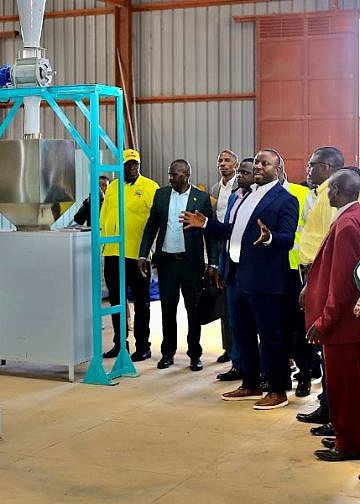
Officials from the three institutions recently met the Katikkiro of Buganda, Charles Peter Mayiga, to rally support for the fundraising campaign aimed at raising $4 million (approximately Shs15.2 billion) required to complete the project.
Speaking during the engagement, JCRC Executive Director, Cissy Kityo, underscored the urgent need for the facility, describing sickle cell disease as a major public health challenge in Uganda.
“Uganda ranks among the countries with the highest burden of sickle cell disease in Sub-Saharan Africa, with over 20,000 children born with the condition every year,” she said. “While bone marrow transplant has been available globally for over 40 years, Uganda still lacks the capacity to offer this life-saving treatment.”
Dr. Kityo added that the proposed centre will not only provide a cure for sickle cell disease but will also treat other conditions, including leukemia, lymphoma, and related blood disorders.
“This facility will bring hope to Ugandans. It is an investment in our people and in the future of healthcare in this country,” she noted.
Pearl Bank Managing Director, Julius Kakeeto, said the bank’s partnership in the initiative aligns with Uganda’s broader development agenda, particularly the ATMS strategy, which prioritizes science, technology, and innovation.
“As a financial institution, we recognize the importance of investing in science and innovation. This project will give hope and a second chance at life to many Ugandans,” Kakeeto said.
The bank has already committed Shs200 million towards the initiative and will host an online donation platform on the JCRC website to enable contributions through mobile money, bank transfers, and card payments.
Rotary District 9213 Governor, Geoffrey Martin Kitakule, called for collective action, emphasizing the need for unity in addressing the burden of sickle cell disease.
“We all have family members, friends, and relatives who need this treatment. We cannot do this alone—we must come together to ensure this facility is completed so that Ugandans can receive treatment locally,” he said.
In his remarks, the Katikkiro, Charles Peter Mayiga, welcomed the initiative and reaffirmed Buganda Kingdom’s commitment to supporting health-related causes.
He noted that stigma surrounding sickle cell disease had historically hindered progress, with many communities associating the condition with curses. However, sustained awareness campaigns have helped to change these perceptions.
“Sickle cell is a serious problem, and efforts to address it must continue. With advancements in science such as bone marrow transplant, we now have an opportunity to find a cure. We must rely on science to improve health outcomes,” Mayiga said.
He added that promoting public health remains critical to building productive communities and pledged Buganda Kingdom’s support in mobilizing resources for the project.
The initiative marks a significant step toward strengthening Uganda’s healthcare system by localizing specialized treatment and reducing the financial burden on patients forced to seek care abroad.