









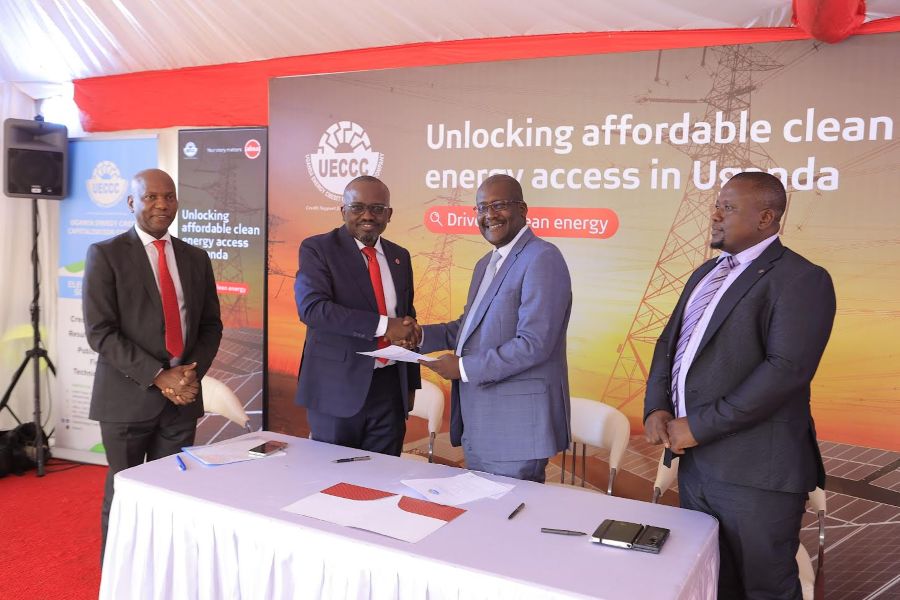
Absa Bank Uganda has entered into a partnership with the Uganda Energy Credit Capitalisation Company (UECCC), securing a Shs 11.085 billion concessional credit facility aimed at expanding access to affordable clean energy financing across the country.
The funding, structured under the Government’s Electricity Access Scale-Up Project (EASP), will support financing for eligible clean energy companies involved in solar home systems, institutional solar installations, productive-use equipment for small enterprises, and clean cooking technologies.
The agreement comes amid persistent challenges in Uganda’s energy sector, where electricity access continues to lag despite growth in generation capacity.
National installed capacity has surpassed 2,000 megawatts, according to the Electricity Regulatory Authority, but electrification levels remain uneven—averaging 60%, with urban access at 76.4% compared to 42.4% in rural areas.
Limited access to affordable financing, coupled with high connection costs and infrastructure constraints, has slowed adoption of modern energy solutions. As a result, over 90% of households still rely on biomass fuels such as firewood and charcoal for cooking.
Under the partnership, UECCC will extend concessional capital to Absa through a financial intermediation model, enabling the bank to on-lend to approved Energy Service Companies, including Greenlight Planet Uganda Limited.
The facility is expected to provide working capital and inventory financing, addressing liquidity gaps that have constrained growth in the sector.
The three-year facility will be disbursed in performance-based tranches, with on-lending rates capped at 15% per annum to improve affordability for end users while maintaining commercial viability.
Absa Bank Uganda Managing Director David Wandera said the initiative aligns with the bank’s strategy to expand sustainable financing while supporting clients transitioning to cleaner energy.
“This partnership enables us to deliver accessible and well-structured financing solutions that address climate risks while unlocking growth opportunities in underserved sectors,” Wandera said.
UECCC Managing Director Roy Nyamutale Baguma described the agreement as a significant step in mobilising private capital for renewable energy investments.
“Channeling concessional funding through the banking system allows energy companies to scale while ensuring financing remains accessible and aligned with strong environmental and social standards,” he noted.
The facility is expected to enhance productivity among small and medium enterprises, expand market reach for clean energy providers, and strengthen Uganda’s broader energy value chain.
Analysts say the transaction reflects a growing shift toward blended finance models in Uganda, aimed at de-risking investments and attracting private sector participation in critical development sectors.