










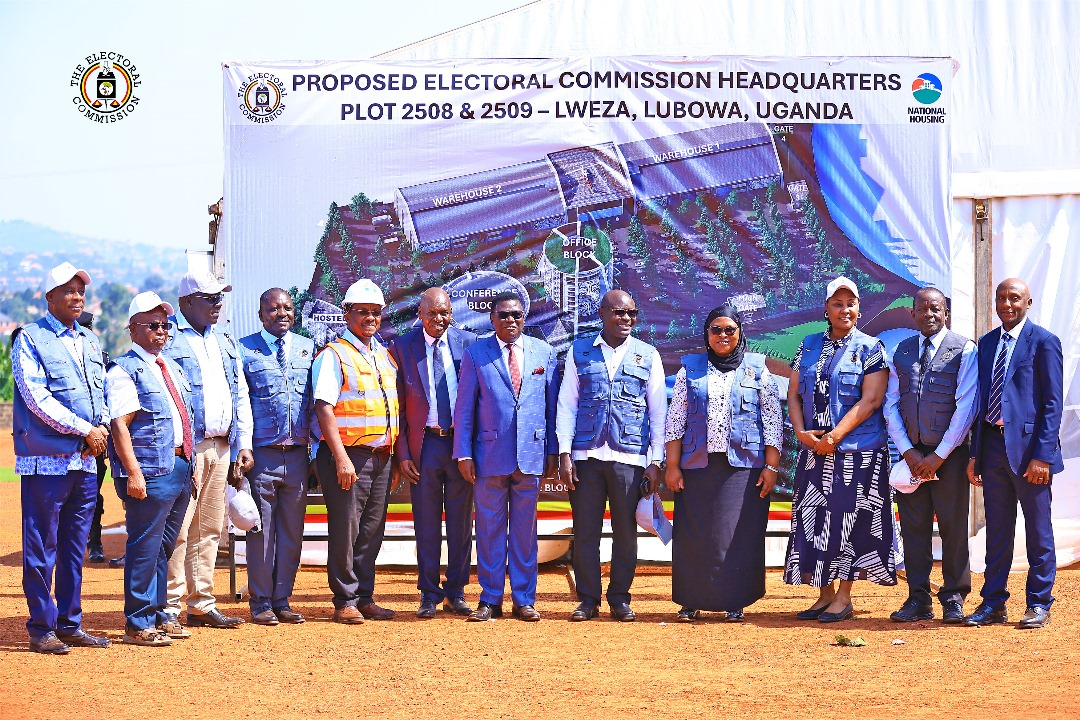
The Electoral Commission has requested Shs62 billion from government for the construction of its new headquarters in Lubowa, Wakiso District.
The request was presented by John Teira while presenting the committee’s report on the 2026/27 ministerial policy statement for the Electoral Commission.
According to Teira, the proposed headquarters will strengthen the Commission’s institutional capacity and improve electoral preparedness.
“The project is crucial for enhancing the operational efficiency, institutional capacity, cost-saving in the long term and electoral preparedness for the upcoming electoral activities,” Teira said.
He warned that failure to release the requested funds in the 2026/27 financial year could delay the project and affect preparations for future elections.
“Failure to provide the Shs62Bn required in FY2026/27 risks stalling the project and undermining the commission’s preparedness for the upcoming critical electoral milestones,” he added.
Teira recommended that government prioritise the allocation of the funds to support the construction works at Lubowa.
Currently, the Electoral Commission is operating from rented offices at the National Housing and Construction Company premises on Seventh Street in Kampala’s Industrial Area after vacating its former headquarters on Jinja Road to pave way for the Kampala-Jinja Expressway project.
The new Electoral Commission headquarters in Lubowa will be constructed by the National Housing and Construction Company, which is expected to provide the land, design, construction and furnishing of the facility within 18 months.
In June 2025, the Electoral Commission unveiled land for its new headquarters in Lubowa, Wakiso District. The groundbreaking ceremony was presided over by Robinah Nabbanja, who said the project would strengthen democratic processes through continued investment in national institutions.
The same grounds were used as venue for the nomination of presidential candidates and later as the national tally centre for the January 2026 presidential elections.
However, these operations were conducted in tents.