


President Museveni has issued a stern warning to non-performing government officials, saying he will no longer tolerate poor service delivery and a culture of dependence on government allowances.
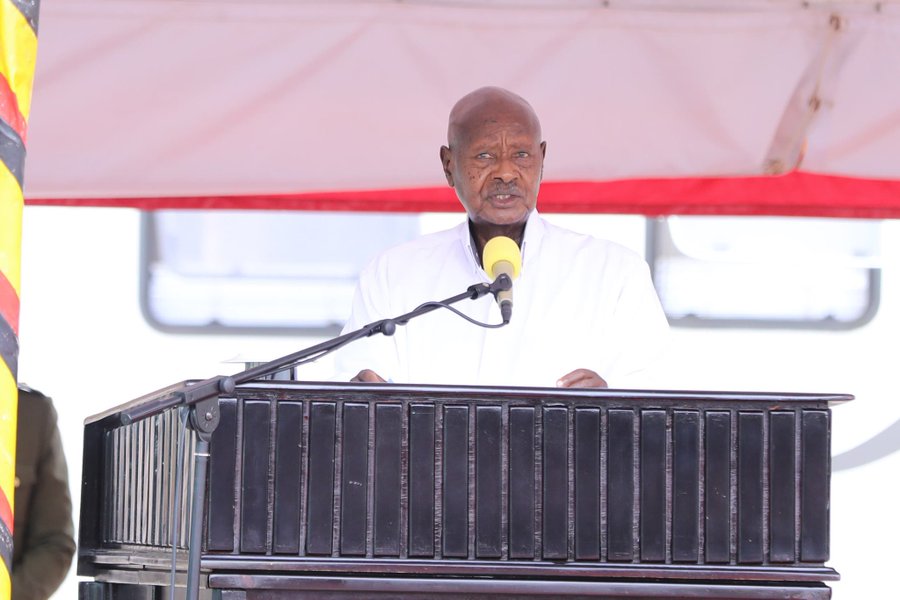
Speaking during his State of the Nation Address, Museveni said leaders who are unable or unwilling to effectively serve the people should step aside.
“Either you lead or stay at home. Don’t pretend to lead people,” the President said.
Museveni reflected on Uganda’s transformation over the years, noting that many experts had doubted that communities operating under subsistence and pre-capitalist systems could transition into a money economy.
“Professionals could not believe we could transform these communities. Many thought it was impossible, which is why very few members of the elite supported us,” he said.
The President criticized what he described as a growing culture of entitlement among public officials, particularly those who demand allowances and facilitation to carry out their duties.
“When I hear leaders saying they need allowances to reach their people and help them get out of poverty, I feel like vomiting,” Museveni said.
He accused some officials of remaining in Kampala despite receiving facilitation intended to enable them to engage with communities in the field.
“Out of politeness, I have been keeping quiet, hoping people would learn. But now I must speak plainly. Even those who receive government allowances do not go to the field; they stay in Kampala,” he said.
Museveni dismissed demands for motorcycles and other facilitation by some local government officials, arguing that public servants should prioritize service delivery over personal comfort.
“You hear people saying a parish chief needs a motorcycle. For what? Let him ride a bicycle. It is healthy for him. Even a sub-county chief can ride a bicycle; the sub-county is not that big,” he said.
The President described the dependence on allowances and facilitation as “parasitism” and said the time had come to confront the issue directly.
“I am sick and tired of this parasitic culture. I have been polite and avoided speaking about it, hoping people would change. Now it is time to talk straight to everybody,” he said.
Drawing from his own experiences right from the 1960s when as young man he led efforts to change the way people in the Ankole cattle corridor carried out farming, Museveni said effective leadership is rooted in understanding people’s problems and providing practical solutions rather than relying on financial resources.
“We had no money, but we had the correct analysis and the correct prescription. That is why people joined us in large numbers,” he said.
The President cited the transformation of Uganda’s dairy sector as an example of what can be achieved through strategic planning and community mobilization.
He noted that initiatives aimed at improving cattle farming had not only improved household incomes but also reduced the country’s reliance on imported dairy products.
According to Museveni, Uganda is saving an estimated USD 1.56 billion that would otherwise be spent on importing milk products and is now earning about USD 285 million annually from dairy exports.
“We used to import packaged milk. Today, Uganda is a major exporter of milk and dairy products,” he said.
Museveni urged leaders at all levels to focus on delivering tangible results for citizens rather than seeking personal benefits, emphasizing that accountability and commitment are essential for Uganda’s continued socio-economic transformation.