








Refugee women entrepreneurs in Uganda have appealed to the government and the Kampala Capital City Authority (KCCA) to establish a gazetted market where they can legally sell their products, saying the lack of designated trading spaces has left many vulnerable to arrests and the confiscation of their merchandise.
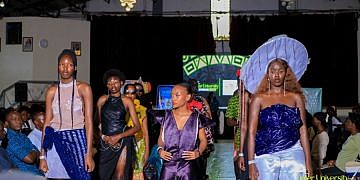
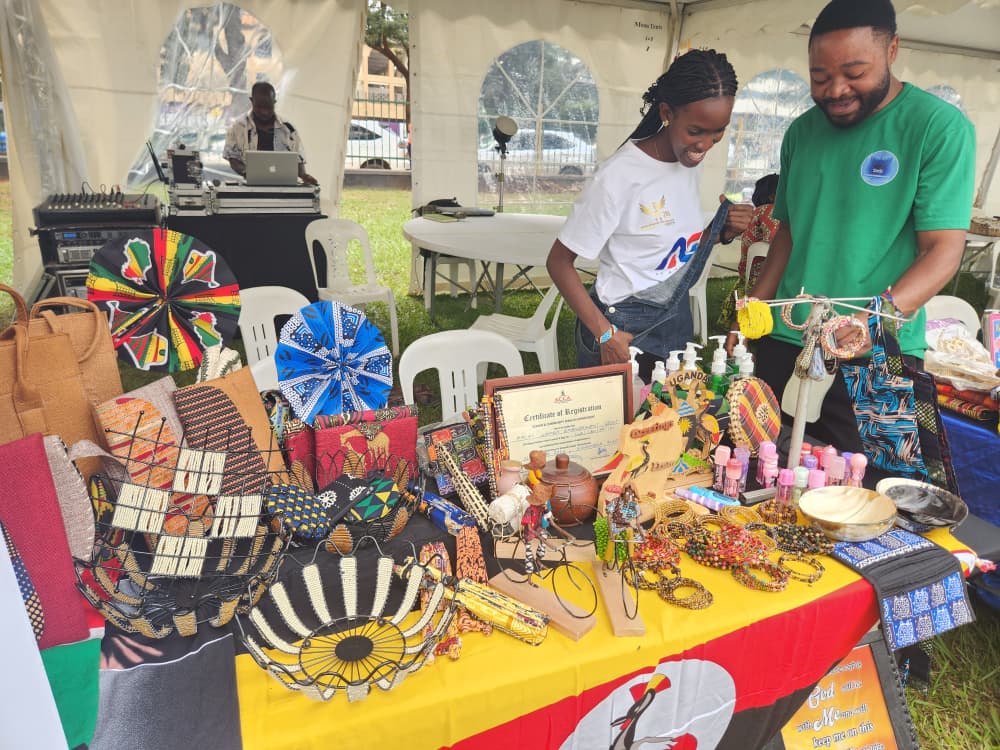
The appeal was made during the two-day High Economy Uganda Trade Fair, organised by the Association of Refugee Women in Uganda at City Square in Kampala. The exhibition brought together refugee women of different nationalities who showcased handmade products, including crochet items, energy-saving charcoal stoves, crafts and other locally made goods.
Keghah Roger Nuah, Technical Advisor at the Association of Refugee Women in Uganda, said the trade fair was intended to showcase the entrepreneurial potential of refugee women while linking them to markets and development partners.
“We are showcasing refugee women enterprises. We are showcasing what refugee women can do. We have refugee women involved in crafts and different micro-enterprises across various value chains. Refugee women can contribute to and drive innovation in the Ugandan economy,” Rozenua said.
He explained that the event also aimed to attract stakeholders who can support refugee-owned businesses and create sustainable markets for their products.
“This trade fair is a platform where we are showcasing these businesses and inviting different stakeholders who can further support refugee businesses and create markets for refugee women’s products,” he said.

Rozenua noted that with declining humanitarian funding, refugee women need sustainable economic opportunities rather than continued dependence on relief aid.
“The previous method of providing aid and food is no longer sustainable. We are facing global financial challenges and funding cuts. The way forward is to build resilience so that refugee women become self-sustaining. We are empowering them with skills so they can earn an income and graduate from depending on aid,” he said.
He said the Association of Refugee Women in Uganda has grown from a small support group for Congolese refugees into a national membership organisation representing women refugees from the Democratic Republic of Congo, Somalia, Sudan, South Sudan, Burundi and Rwanda, with more than 14,000 members.
While commending Uganda’s progressive refugee policy, Rozenua said one of the biggest challenges facing refugee women entrepreneurs is the lack of legal trading spaces.
“We thank Uganda for its open-door refugee policy because refugees can move freely, work and do business. However, one of the greatest challenges is that when these women bring their products into Kampala, KCCA arrests them and confiscates their merchandise. Sometimes, when they see KCCA enforcement vehicles, they abandon their goods and run away,” he said.
He urged KCCA to adopt a more humane approach when dealing with small-scale refugee traders.
“There are many stories behind those boxes. A woman is simply trying to earn money for food, school fees, rent or medical bills. We appeal to KCCA to find a solution where, even if there is enforcement action, the women can recover their products instead of losing everything.”
Rozenua also proposed the establishment of a dedicated refugee market in Kampala.
“If space is allocated and designated as a marketplace for refugee women, it will even boost tourism. People from within Uganda and beyond will come to see how refugees are innovating and contributing to the economy,” he said.
Graca Iranga, a Congolese refugee and proprietor of La Bella’s Crochets, said refugee women continue to struggle to access formal markets, forcing many to resort to hawking.
“Some refugees who have shops struggle to obtain licences, making it difficult to operate. Their products are often confiscated by KCCA,” Iranga said.
She appealed to the government to issue refugee entrepreneurs with special permits and identification that would enable them to operate without constant interference.
“We ask the government to provide permits and allocate space for refugee women to operate from. Most of us are orphans and widows. Because we have to earn a living, we are forced into door-to-door business, which often gets us into trouble. We are appealing for a well-located marketplace where we can legally sell our products,” she said.
The women expressed hope that establishing a dedicated refugee market would not only protect their livelihoods but also strengthen their contribution to Uganda’s economy through entrepreneurship, innovation and job creation.