








Uganda has asked Saudi Arabia to open up more market opportunities for Ugandan sugar and other agricultural products as the government intensifies efforts to expand exports, attract investment and strengthen economic cooperation with the Gulf nation.
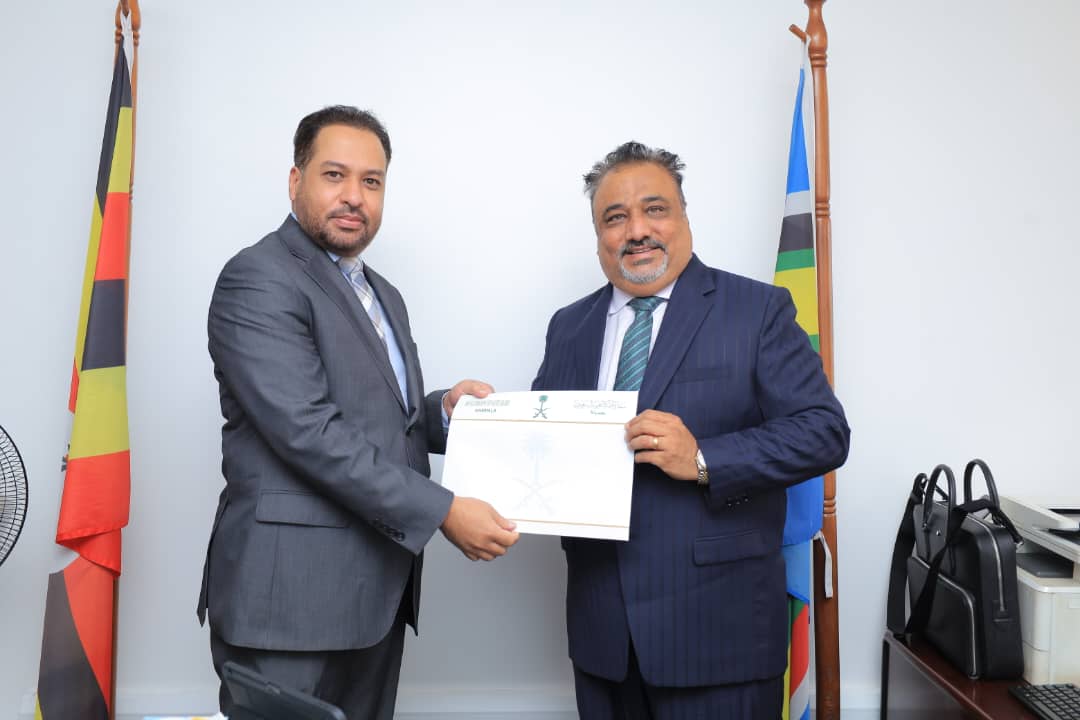
The Minister of Trade, Industry and Cooperatives, Sanjay Tanna, said Uganda is ready to work with Saudi investors and buyers to unlock opportunities in agro-processing, manufacturing, technology, tourism and other sectors.
Speaking during a meeting with the Ambassador of the Kingdom of Saudi Arabia to Uganda, Mohammed Bin Khalil Faroudah, Tanna said Uganda has immense production potential and requires stronger partnerships to access international markets.
“We are here to work. Uganda is ready for business. The opportunities are immense, and we need your collaboration and support,” the minister said.
Tanna said agro-processing remains one of the priority areas for cooperation between Uganda and Saudi Arabia, with the government shifting towards a demand-driven production model where farmers produce according to market needs rather than speculative production that often results in oversupply and low prices.
He specifically appealed to Saudi Arabia to support Uganda’s sugar industry by purchasing more Ugandan sugar, noting that the country currently produces nearly 300,000 tonnes of surplus sugar annually.
According to the minister, Uganda has the capacity to increase sugar production to about 500,000 tonnes if additional export markets are secured.
“We need your support to find markets for our products. Uganda has enormous agricultural potential and is one of the most fertile countries in the region,” he said.
The minister said increased access to markets such as Saudi Arabia would help strengthen the sugar value chain, support farmers, create jobs and increase foreign exchange earnings.
Besides sugar, Tanna highlighted investment and export opportunities in other agricultural value chains, including maize, beans, milk, poultry, beef, fish, cassava, cocoa, honey and shea butter.
He said Uganda is seeking partnerships that will promote value addition and industrialisation rather than continued export of raw materials.
“We need your support to find markets for our products. Uganda has enormous agricultural potential and is one of the most fertile countries in the region,” he said.
Beyond agriculture, the minister invited Saudi investors to explore opportunities in tourism, mineral value addition, manufacturing and technology-driven industries.
He cited Uganda’s tourism attractions, including , , the source of the River Nile and the Rwenzori Mountains, as areas with investment potential.
In the digital economy, Tanna revealed that discussions are underway with a Saudi company interested in establishing a data centre in Uganda in partnership with an Indian firm.
“I have already briefed the Minister of ICT, and we shall continue discussions before formally engaging you on the proposed data centre project,” he said.
He added that Saudi Arabia’s growing investments in artificial intelligence and digital infrastructure present opportunities for cooperation as Uganda expands its technology sector.
Responding to Uganda’s proposals, Saudi Ambassador to Uganda Mohammed Bin Khalil Faroudah welcomed efforts to strengthen bilateral economic relations and called for faster implementation of the Saudi-Uganda Joint Technical Committee for Trade Development.
The committee, established in 2025, is expected to provide a platform for both countries to address trade barriers, promote investment and develop practical areas of cooperation.
“We need to fast-track the implementation of the Joint Technical Committee. The officials and technical groups from both countries should meet together to discuss how to move this forward. I am more than willing,” Ambassador Faroudah said.
Trade imbalance drives push for new markets
Uganda’s renewed push for Saudi market access comes amid a significant trade imbalance between the two countries.
Uganda currently exports goods and services worth about US$9.11 million (approximately Shs33 billion) to Saudi Arabia, mainly coffee, agricultural products, chilled meat and labour services.
On the other hand, Uganda imports goods worth approximately US$149.15 million (about Shs544 billion) from Saudi Arabia, including plastics, fertilisers, sugar and other products.
This leaves Uganda with a trade deficit of about US$140 million (approximately Shs511 billion).
The government says increasing exports of sugar and other value-added agricultural products, alongside attracting Saudi investment into manufacturing and technology, will be critical in narrowing the trade gap and accelerating economic growth.